Vidakis Nectarios, Petousis Markos, Mountakis Nikolaos, Maravelakis Emmanuel, Zaoutsos Stefanos, Kechagias John D
Mechanical Engineering Department, Hellenic Mediterranean University, Estavromenos, 71410 Heraklion, Crete, Greece.
Department of Electronic Engineering, Hellenic Mediterranean University, Chania, Greece.
Int J Adv Manuf Technol. 2022;121(1-2):785-803. doi: 10.1007/s00170-022-09376-w. Epub 2022 May 21.
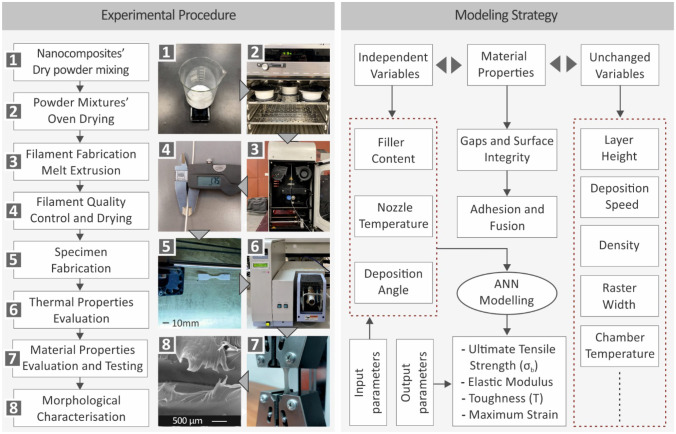
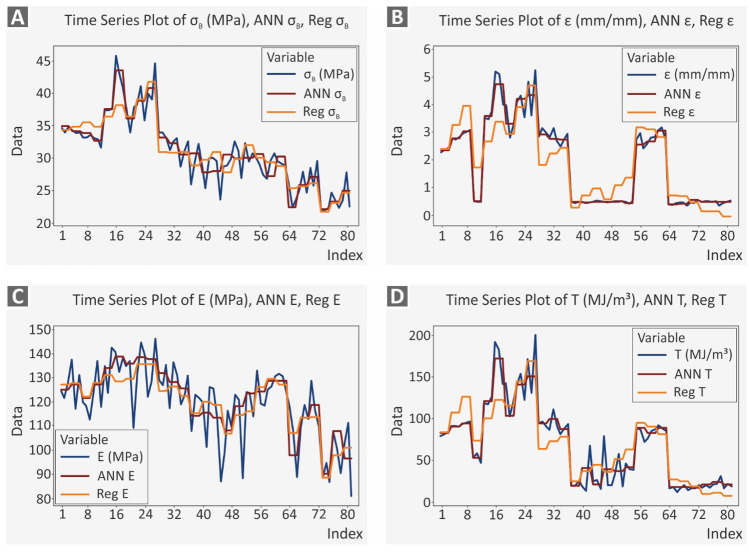
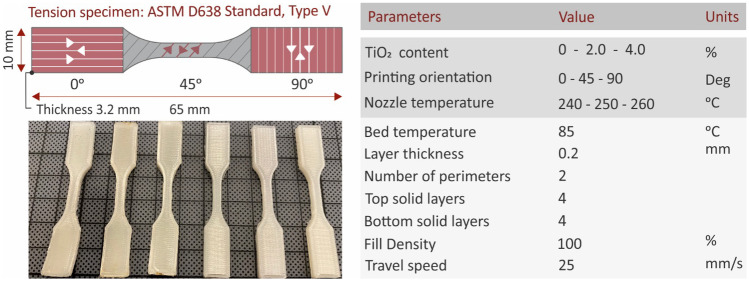
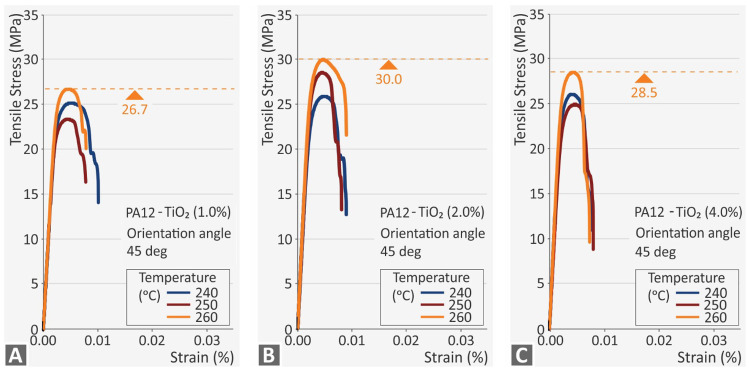
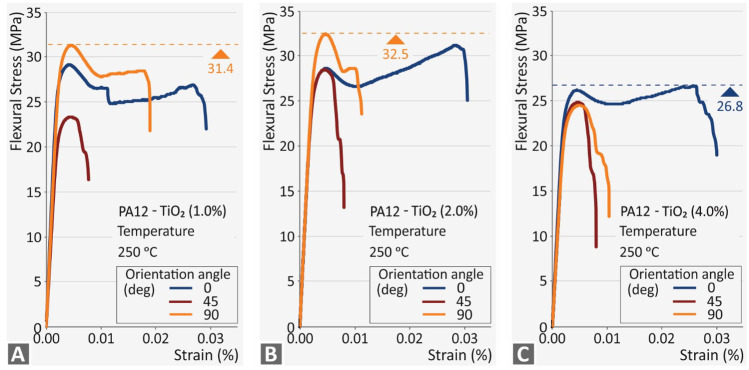
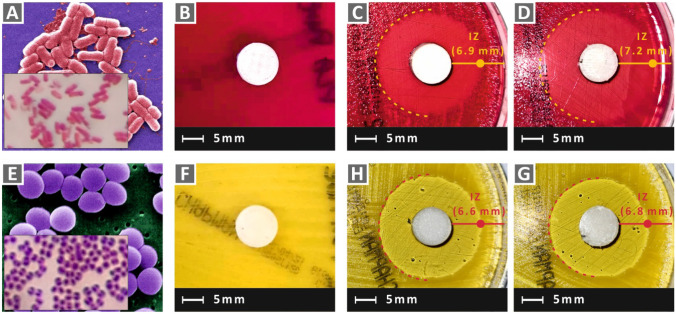
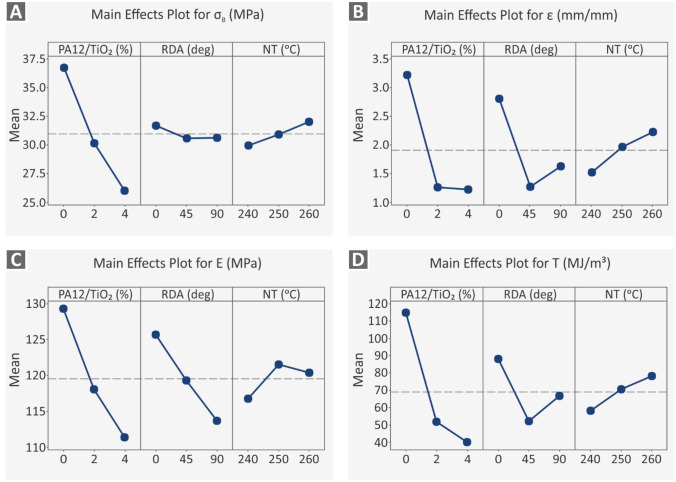
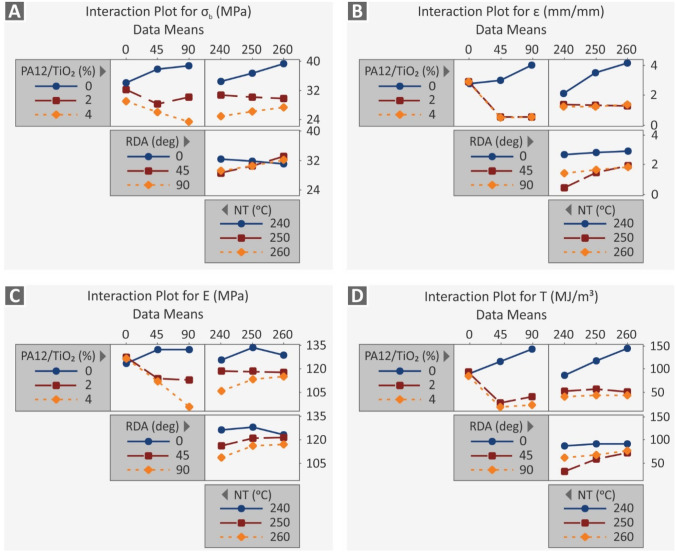
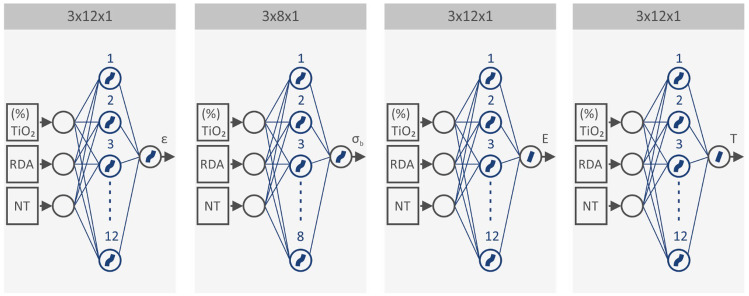
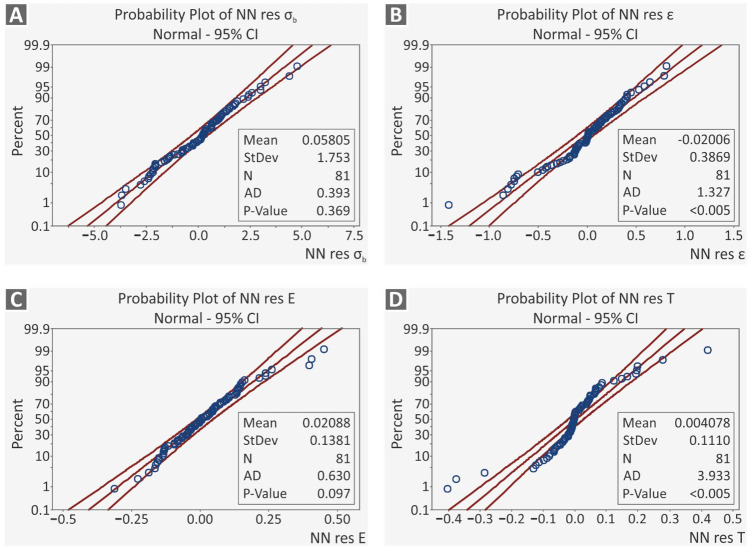
This study investigates the mechanical response of antibacterial PA12/TiO nanocomposite 3D printed specimens by varying the TiO loading in the filament, raster deposition angle, and nozzle temperature. The prediction of the antibacterial and mechanical performance of such nanocomposites is a challenging field, especially nowadays with the covid-19 pandemic dilemma. The experimental work in this study utilizes a fully factorial design approach to analyze the effect of three parameters on the mechanical response of 3D printed components. Therefore, all combinations of these three parameters were tested, resulting in twenty-seven independent experiments, in which each combination was repeated three times (a total of eighty-one experiments). The antibacterial performance of the fabricated PA12/TiO nanocomposite materials was confirmed, and regression and arithmetic artificial neural network (ANN) models were developed and validated for mechanical response prediction. The analysis of the results showed that an increase in the TiO% loading decreased the mechanical responses but increased the antibacterial performance of the nanocomposites. In addition, higher nozzle temperatures and zero deposition angles optimize the mechanical performance of all TiO% nanocomposites. Independent experiments evaluated the proposed models with mean absolute percentage errors (MAPE) similar to the ANN models. These findings and the interaction charts show a strong interaction between the studied parameters. Therefore, the authors propose the improvement of predictions by utilizing artificial neural network models and genetic algorithms as future work and the spreading of the experimental area with extra variable parameters and levels.
本研究通过改变长丝中TiO的负载量、光栅沉积角度和喷嘴温度,研究了抗菌PA12/TiO纳米复合材料3D打印试样的力学响应。预测此类纳米复合材料的抗菌和力学性能是一个具有挑战性的领域,尤其是在当前新冠疫情的困境下。本研究中的实验工作采用全因子设计方法来分析这三个参数对3D打印部件力学响应的影响。因此,对这三个参数的所有组合进行了测试,共进行了27次独立实验,其中每个组合重复三次(总共81次实验)。证实了所制备的PA12/TiO纳米复合材料的抗菌性能,并开发了回归模型和算术人工神经网络(ANN)模型用于力学响应预测并进行了验证。结果分析表明,TiO%负载量的增加会降低纳米复合材料的力学响应,但会提高其抗菌性能。此外,较高的喷嘴温度和零沉积角度可优化所有TiO%纳米复合材料的力学性能。独立实验用与人工神经网络模型相似的平均绝对百分比误差(MAPE)评估了所提出的模型。这些发现和交互图表明所研究的参数之间存在强烈的相互作用。因此,作者建议将利用人工神经网络模型和遗传算法改进预测作为未来的工作,并扩大具有额外可变参数和水平的实验范围。