Vidakis Nectarios, Petousis Markos, Korlos Apostolos, Velidakis Emmanouil, Mountakis Nikolaos, Charou Chrisa, Myftari Adrian
Mechanical Engineering Department, Hellenic Mediterranean University, 71410 Heraklion, Greece.
Department of Industrial Engineering and Management, International Hellenic University, 14th km Thessaloniki-N. Moudania, Thermi, 57001 Thessaloniki, Greece.
Polymers (Basel). 2021 Aug 17;13(16):2752. doi: 10.3390/polym13162752.
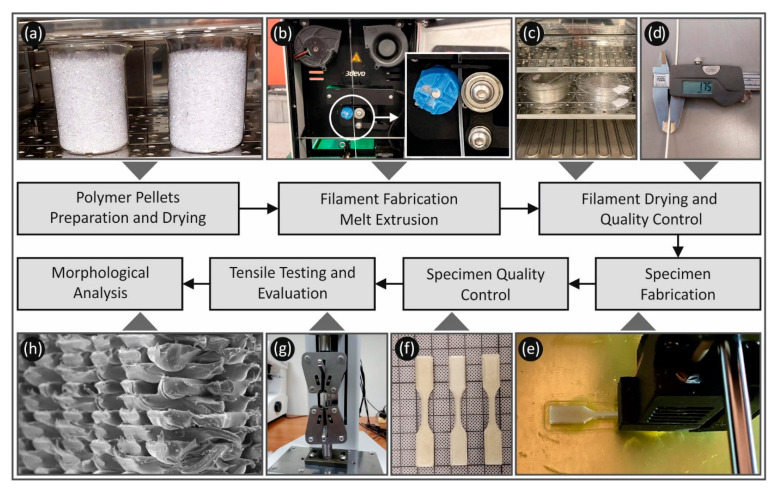
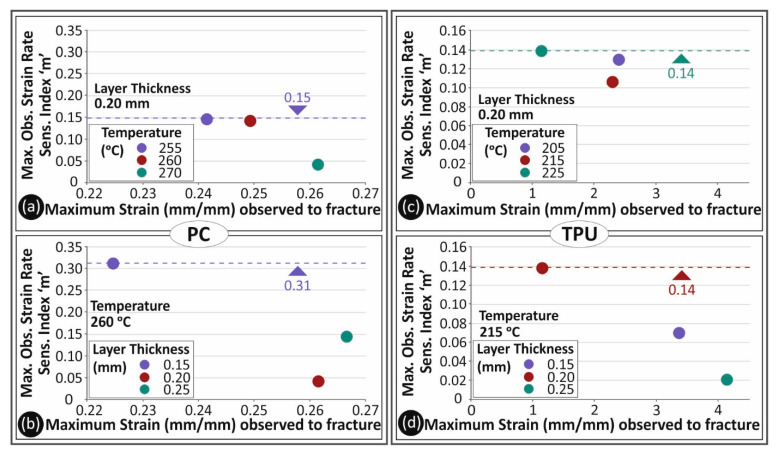
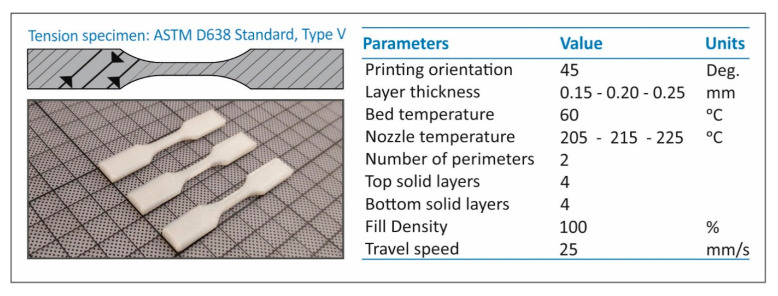
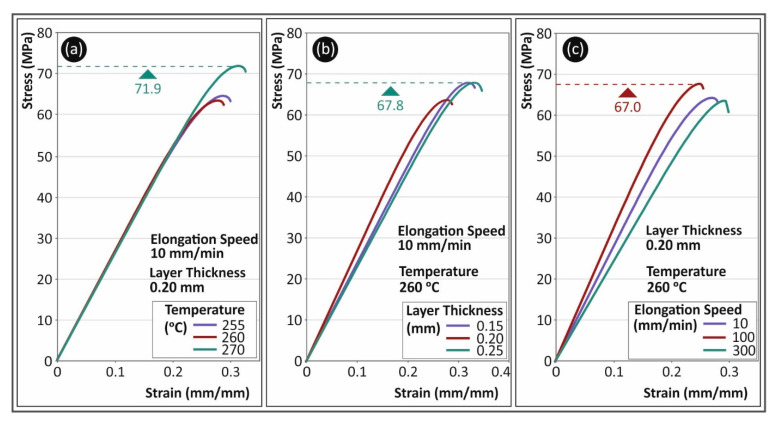
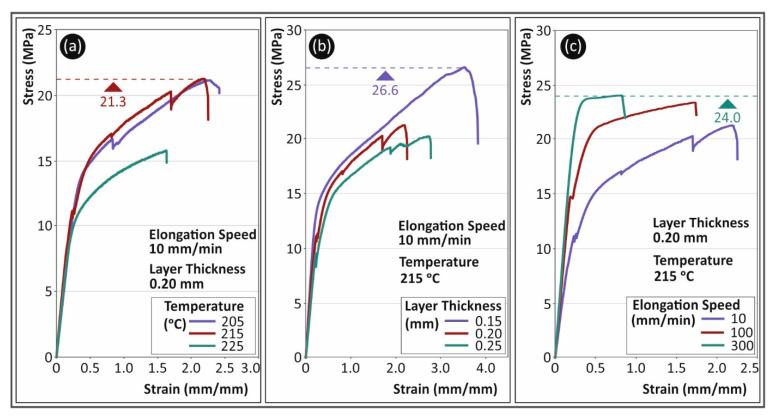
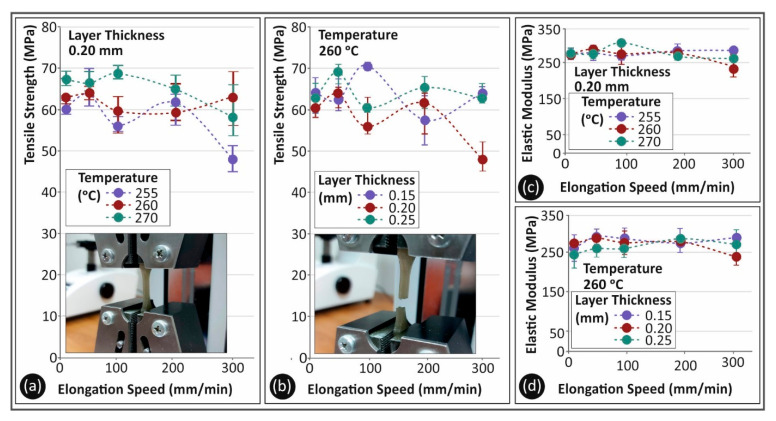
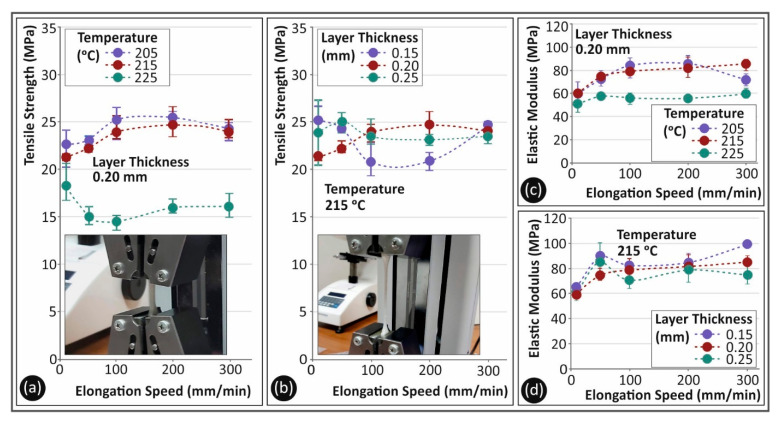
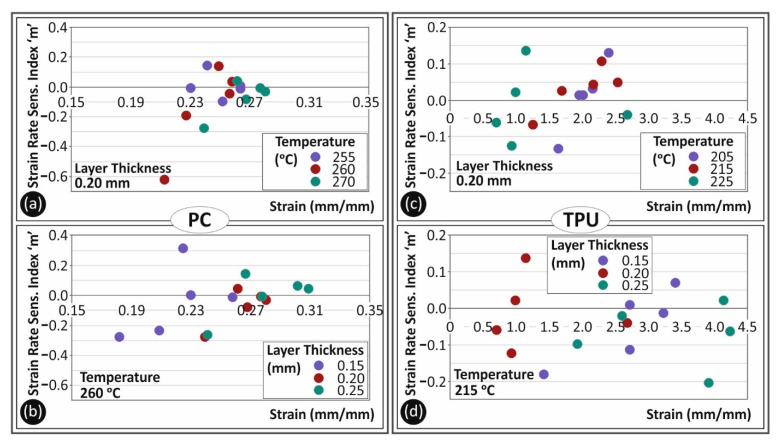
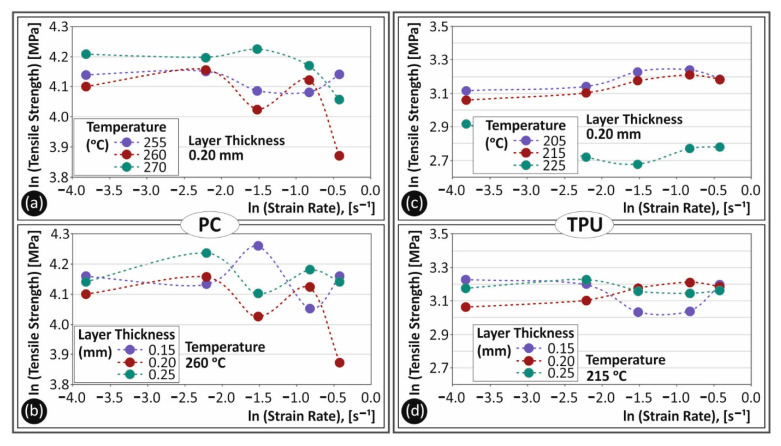
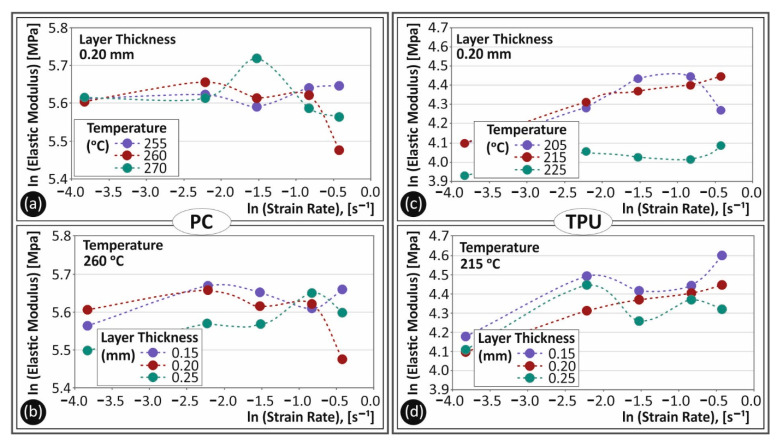
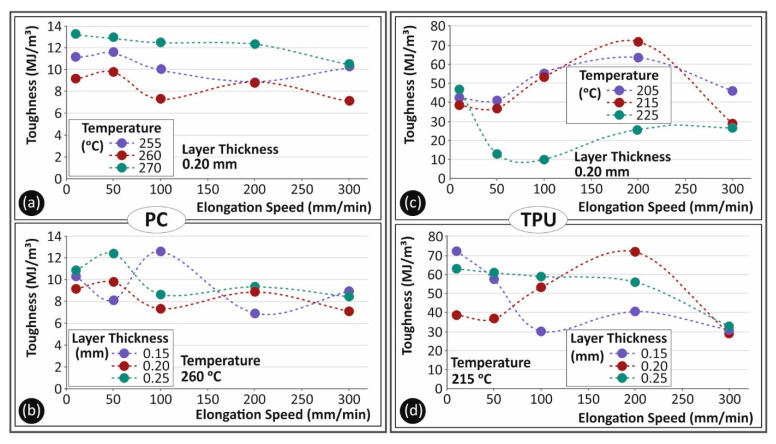
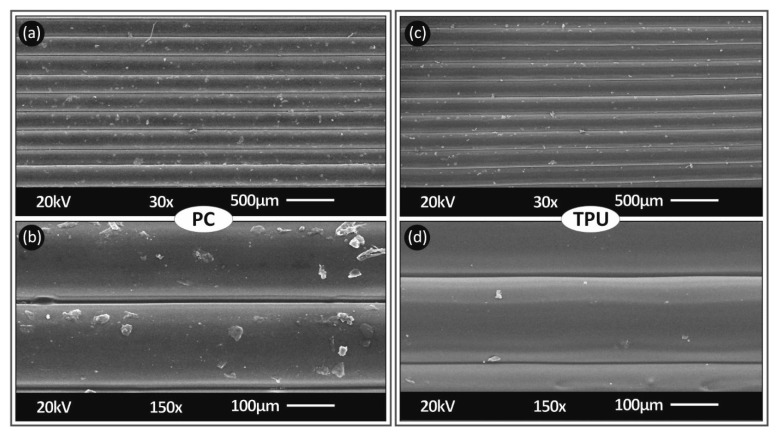
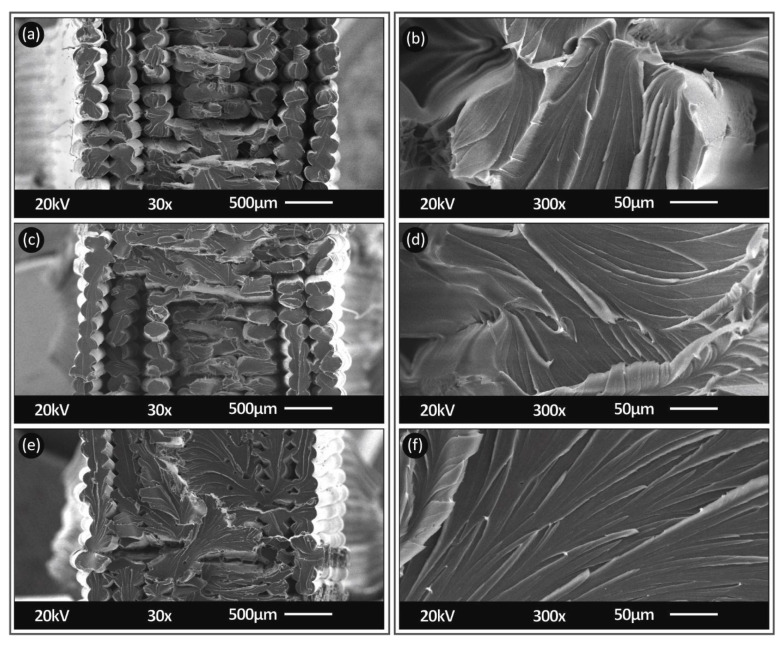
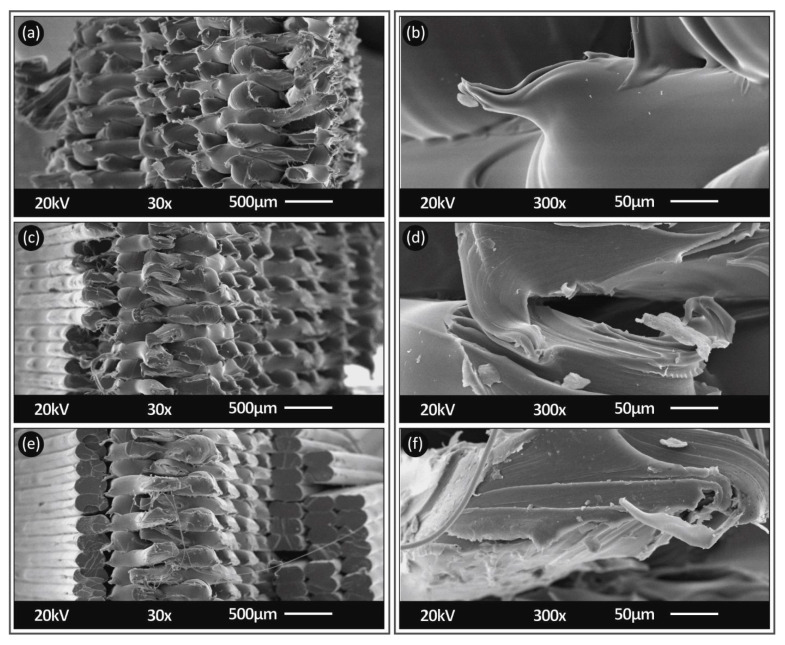
In this work, strain rate sensitivity was studied for 3D-printed polycarbonate (PC) and thermoplastic polyurethane (TPU) materials. Specimens were fabricated through fused filament fabrication (FFF) additive manufacturing (AM) technology and were tested at various strain rates. The effects of two FFF process parameters, i.e., nozzle temperature and layer thickness, were also investigated. A wide analysis for the tensile strength (MPa), the tensile modulus of elasticity (MPa), the toughness (MJ/m) and the strain rate sensitivity index '' was conducted. Additionally, a morphological analysis was conducted using scanning electron microscopy (SEM) on the side and the fracture area of the specimens. Results from the different strain rates for each material were analyzed, in conjunction with the two FFF parameters tested, to determine their effect on the mechanical response of the two materials. PC and TPU materials exhibited similarities regarding their temperature response at different strain rates, while differences in layer height emerged regarding the appropriate choice for the FFF process. Overall, strain rate had a significant effect on the mechanical response of both materials.
在这项工作中,研究了3D打印聚碳酸酯(PC)和热塑性聚氨酯(TPU)材料的应变速率敏感性。通过熔融长丝制造(FFF)增材制造(AM)技术制备试样,并在不同应变速率下进行测试。还研究了两个FFF工艺参数,即喷嘴温度和层厚的影响。对拉伸强度(MPa)、拉伸弹性模量(MPa)、韧性(MJ/m)和应变速率敏感性指数“”进行了广泛分析。此外,使用扫描电子显微镜(SEM)对试样的侧面和断裂区域进行了形态分析。结合测试的两个FFF参数,分析了每种材料在不同应变速率下的结果,以确定它们对两种材料力学响应的影响。PC和TPU材料在不同应变速率下的温度响应方面表现出相似性,而在FFF工艺的合适选择方面,层高度存在差异。总体而言,应变速率对两种材料的力学响应都有显著影响。