Tao Huaqiang, Tao Yunxia, Yang Chen, Li Wenming, Zhang Wei, Li Xueyan, Gu Ye, Hong Yujing, Yang Huilin, Liu Yu, Yang Xing, Geng Dechun
Department of Orthopedics, The First Affiliated Hospital of Soochow University, Suzhou, China.
Anesthesiology Department, Suzhou Municipal Hospital (North District), Nanjing Medical University Affiliated Suzhou Hospital, Suzhou, China.
Front Pharmacol. 2022 May 12;13:875611. doi: 10.3389/fphar.2022.875611. eCollection 2022.
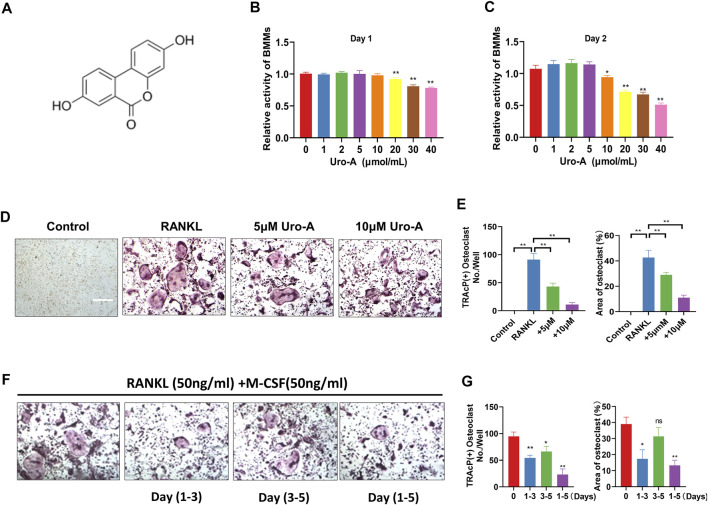
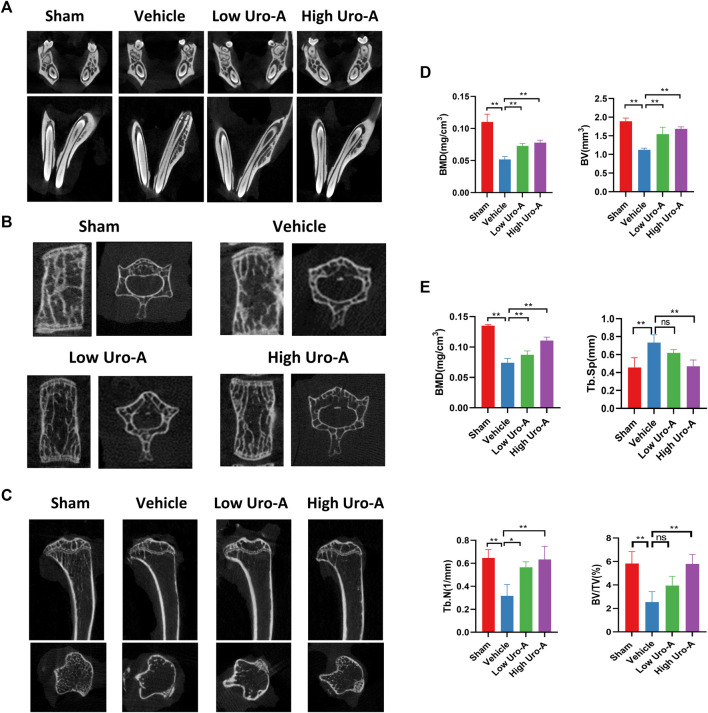
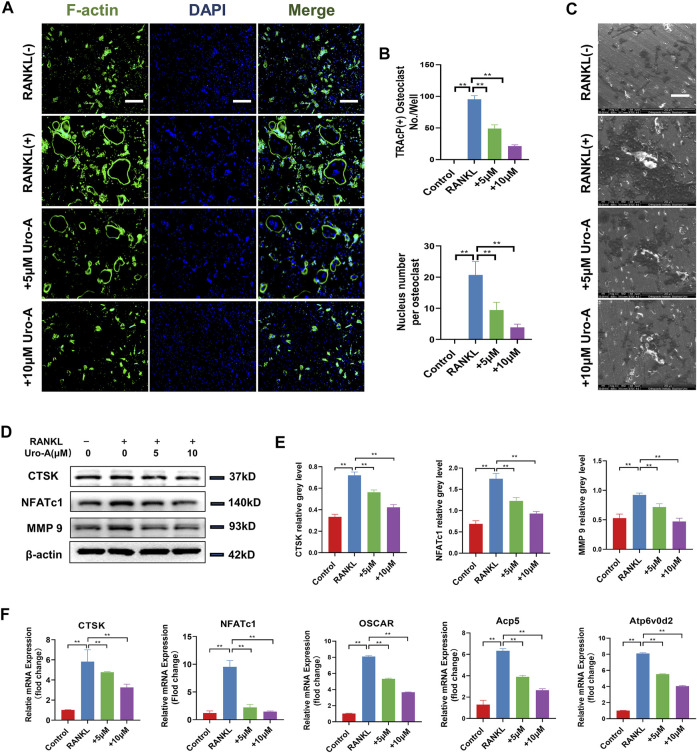
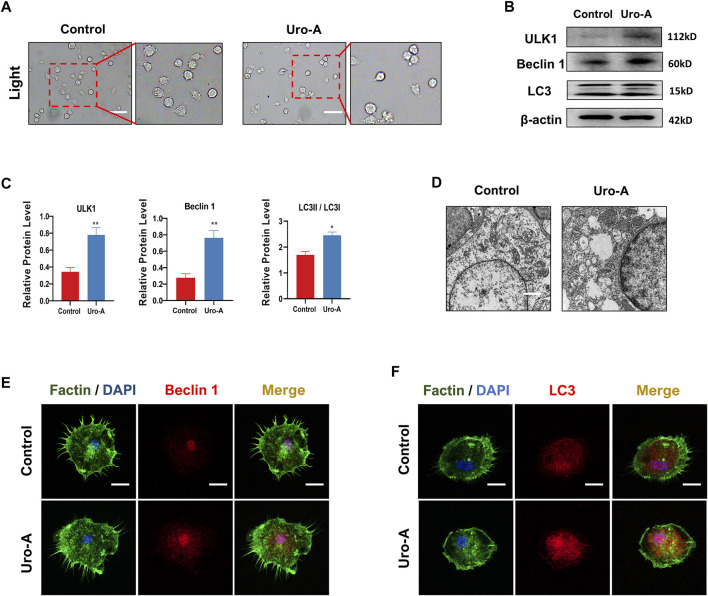
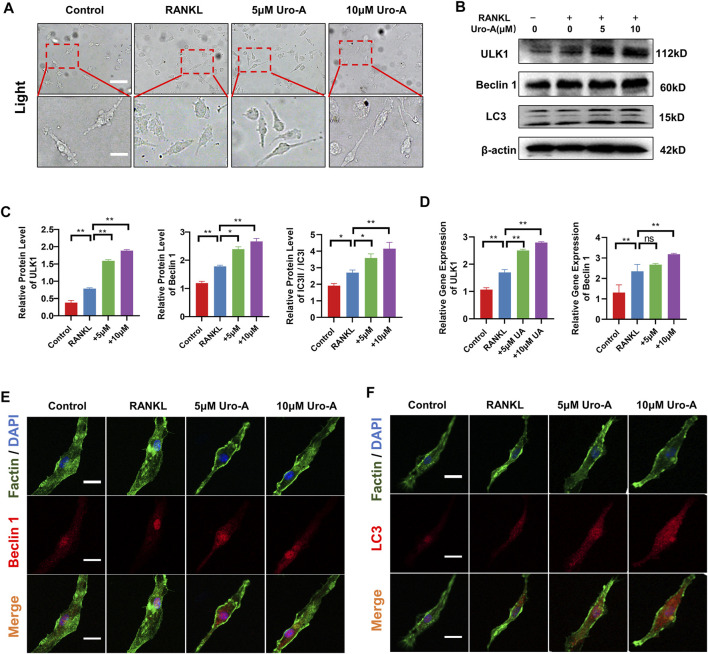
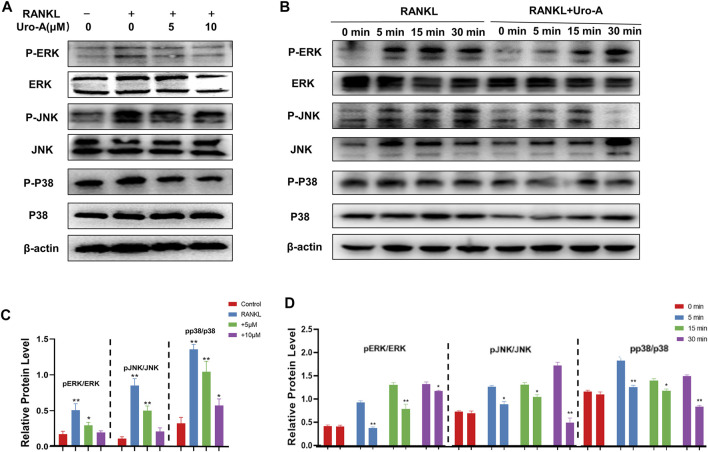
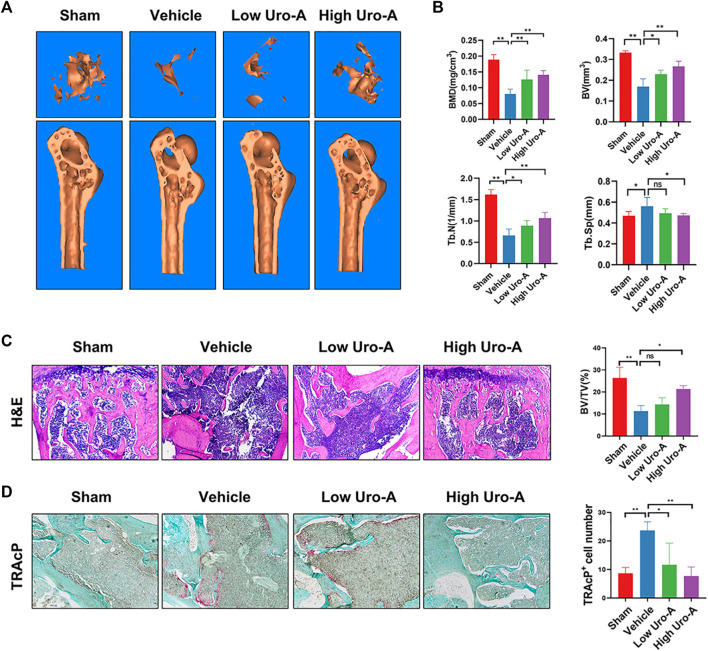
Senile osteoporosis (SOP) is a systemic bone disease that is significantly associated with age and eventually leads to deteriorated bone strength and increased fracture risk. Urolithin A (Uro-A) is a gut microbiome-derived compound that is mainly produced from pomegranates and some nuts. Uro-A has attracted great attention in recent years in view of its protective effects on aging-related diseases, including muscle dysfunction, kidney disease and knee injury. However, its protective influence and possible mechanisms in senile osteoporosis remain unclear. Our study describes the beneficial effect of Uro-A on bone marrow macrophages (BMMs). The results demonstrated that Uro-A inhibited receptor activator for nuclear factor-κB ligand (RANKL)-induced osteoclastogenesis in BMMs in a concentration-dependent manner. Uro-A significantly reduced the expression of osteoclast-related genes and bone resorption. Mechanistically, we found that the autophagy ability of BMMs was significantly enhanced in the early stage of Uro-A treatment, accompanied by the activation of LC3 and Beclin 1. At the same time, this enhanced autophagy activity was maintained until the later stage after stimulation with RANKL. Furthermore, we found that the MARK signaling pathway was blocked by Uro-A treatment. In a mouse model of aging, Uro-A effectively inhibited bone loss in the proximal femur, spine and tibia of aging mice. These results indicated that Uro-A is a robust and effective treatment for preventing senile osteoporosis bone loss.
老年性骨质疏松症(SOP)是一种与年龄显著相关的全身性骨病,最终会导致骨强度下降和骨折风险增加。尿石素A(Uro-A)是一种源自肠道微生物群的化合物,主要由石榴和一些坚果产生。鉴于Uro-A对包括肌肉功能障碍、肾脏疾病和膝关节损伤在内的与衰老相关疾病具有保护作用,近年来它备受关注。然而,其在老年性骨质疏松症中的保护作用及可能机制仍不清楚。我们的研究描述了Uro-A对骨髓巨噬细胞(BMMs)的有益作用。结果表明,Uro-A以浓度依赖的方式抑制骨髓巨噬细胞中核因子κB受体活化因子配体(RANKL)诱导的破骨细胞生成。Uro-A显著降低破骨细胞相关基因的表达和骨吸收。从机制上讲,我们发现Uro-A处理早期BMMs的自噬能力显著增强,同时伴有LC3和Beclin 1的激活。同时,这种增强的自噬活性在RANKL刺激后的后期仍得以维持。此外,我们发现Uro-A处理会阻断MARK信号通路。在衰老小鼠模型中,Uro-A有效抑制了衰老小鼠股骨近端、脊柱和胫骨的骨质流失。这些结果表明,Uro-A是预防老年性骨质疏松症骨质流失的一种强大而有效的治疗方法。