Zhao Yongchao, Shao Guoxi, Liu Xingang, Li Zhengwei
Department of Orthopedics, The Second Hospital of Jilin University, Changchun, China.
Front Pharmacol. 2022 May 11;13:866625. doi: 10.3389/fphar.2022.866625. eCollection 2022.
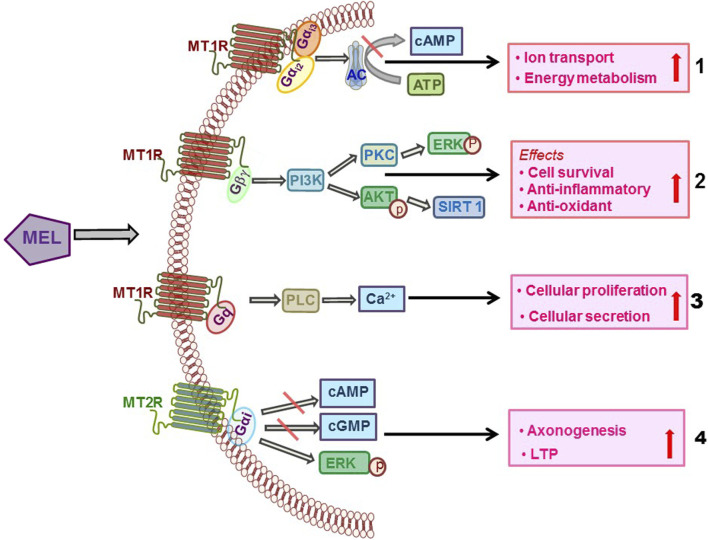
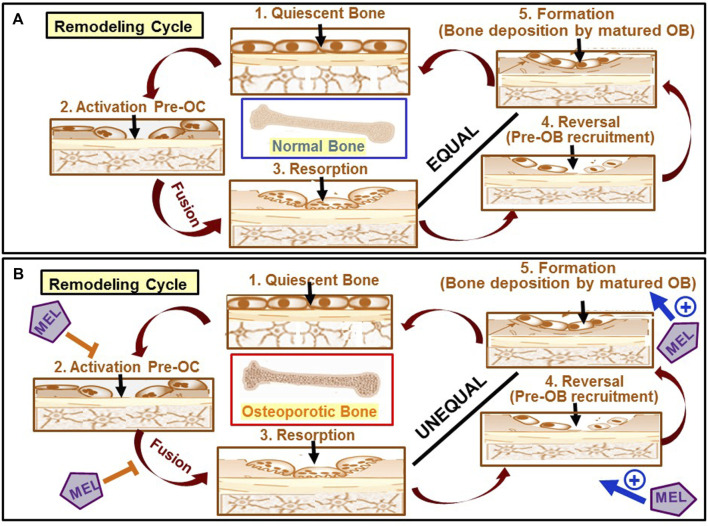
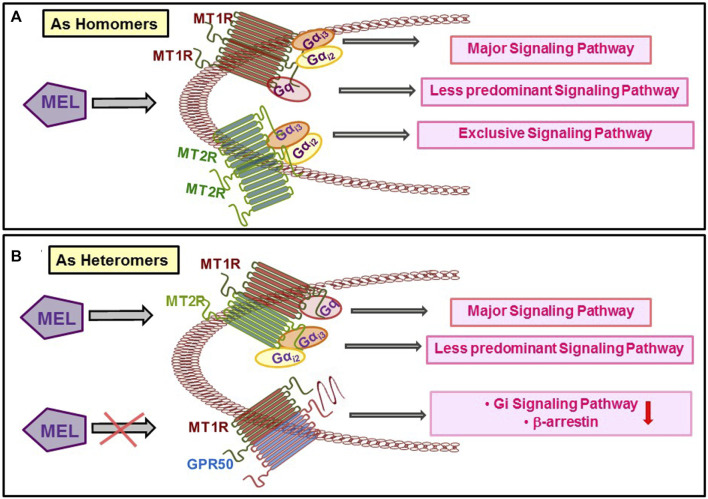
Melatonin is a bioamine produced primarily in the pineal gland, although peripheral sites, including the gut, may also be its minor source. Melatonin regulates various functions, including circadian rhythm, reproduction, temperature regulation, immune system, cardiovascular system, energy metabolism, and bone metabolism. Studies on cultured bone cells, preclinical disease models of bone loss, and clinical trials suggest favorable modulation of bone metabolism by melatonin. This narrative review gives a comprehensive account of the current understanding of melatonin at the cell/molecular to the systems levels. Melatonin predominantly acts through its cognate receptors, of which melatonin receptor 2 (MT2R) is expressed in mesenchymal stem cells (MSCs), osteoblasts (bone-forming), and osteoclasts (bone-resorbing). Melatonin favors the osteoblastic fate of MSCs, stimulates osteoblast survival and differentiation, and inhibits osteoclastogenic differentiation of hematopoietic stem cells. Produced from osteoblastic cells, osteoprotegerin (OPG) and receptor activator of nuclear factor kappa B ligand (RANKL) critically regulate osteoclastogenesis and melatonin by suppressing the osteoclastogenic RANKL, and upregulating the anti-osteoclastogenic OPG exerts a strong anti-resorptive effect. Although the anti-inflammatory role of melatonin favors osteogenic function and antagonizes the osteoclastogenic function with the participation of SIRT signaling, various miRNAs also mediate the effects of the hormone on bone cells. In rodent models of osteoporosis, melatonin has been unequivocally shown to have an anti-osteoporotic effect. Several clinical trials indicate the bone mass conserving effect of melatonin in aging/postmenopausal osteoporosis. This review aims to determine the possibility of melatonin as a novel class of anti-osteoporosis therapy through the critical assessment of the available literature.
褪黑素是一种主要由松果体产生的生物胺,不过包括肠道在内的外周部位也可能是其次要来源。褪黑素调节多种功能,包括昼夜节律、生殖、体温调节、免疫系统、心血管系统、能量代谢和骨代谢。对培养的骨细胞、骨质流失的临床前疾病模型以及临床试验的研究表明,褪黑素对骨代谢具有有益的调节作用。本叙述性综述全面阐述了目前从细胞/分子水平到系统水平对褪黑素的认识。褪黑素主要通过其同源受体发挥作用,其中褪黑素受体2(MT2R)在间充质干细胞(MSC)、成骨细胞(骨形成细胞)和破骨细胞(骨吸收细胞)中表达。褪黑素有利于MSC向成骨细胞分化,刺激成骨细胞存活和分化,并抑制造血干细胞向破骨细胞的分化。由成骨细胞产生的骨保护素(OPG)和核因子κB受体激活剂配体(RANKL)通过抑制破骨细胞生成的RANKL来严格调节破骨细胞生成,而上调抗破骨细胞生成的OPG则发挥强大的抗吸收作用。尽管褪黑素的抗炎作用有利于成骨功能,并在SIRT信号通路的参与下拮抗破骨细胞生成功能,但各种微小RNA(miRNA)也介导该激素对骨细胞的作用。在骨质疏松症的啮齿动物模型中,褪黑素已被明确证明具有抗骨质疏松作用。多项临床试验表明,褪黑素对衰老/绝经后骨质疏松症具有骨质保留作用。本综述旨在通过对现有文献的批判性评估,确定褪黑素作为一类新型抗骨质疏松治疗药物的可能性。