Department of Epidemiology and Health Statistics, School of Public Health, Xi'an Jiaotong University Health Science Center, Xi'an, China.
Department of Public Health, College of Health Science, Salale University, Fitche, Ethiopia.
Front Public Health. 2022 May 11;10:834592. doi: 10.3389/fpubh.2022.834592. eCollection 2022.
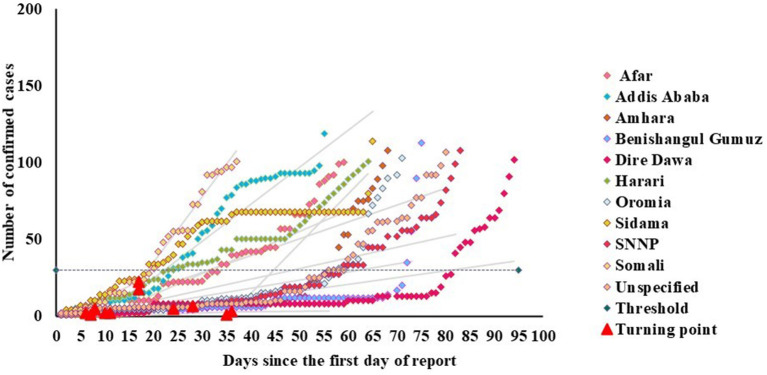
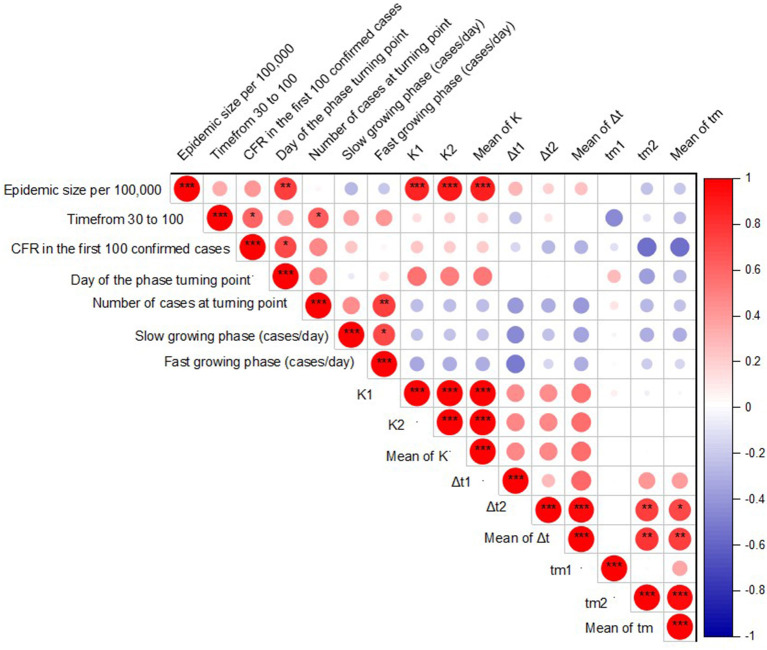
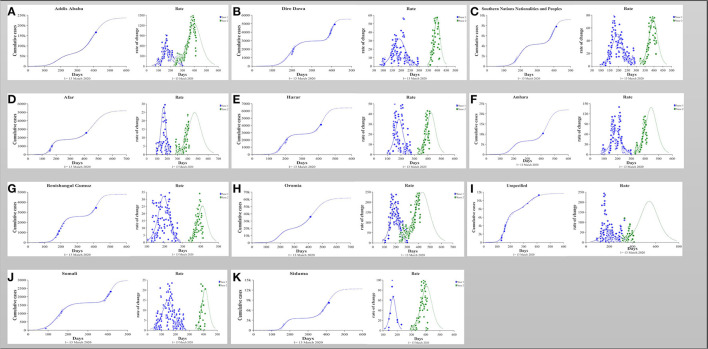
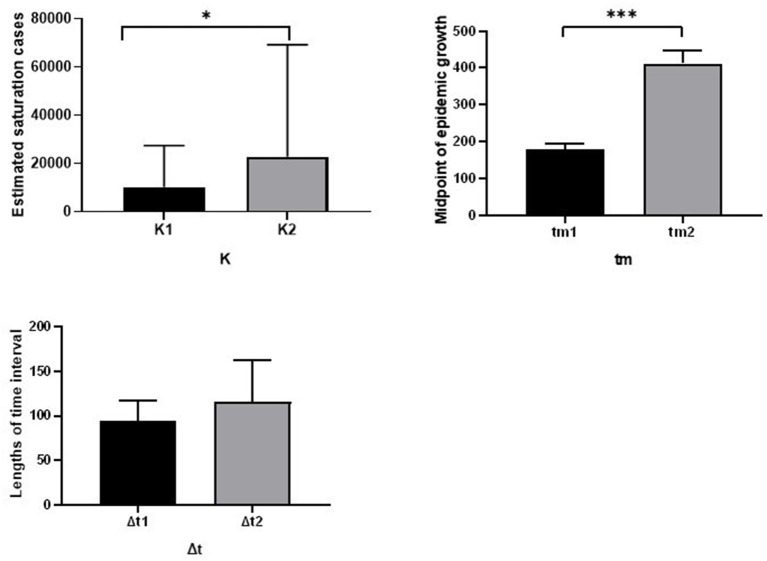
In Ethiopia, multiple waves of the COVID-19 epidemic have been observed. So far, no studies have investigated the characteristics of the waves of epidemic waves in the country. Identifying the epidemic trend in Ethiopia will inform future prevention and control of COVID-19. This study aims to identify the early indicators and the characteristics of multiple waves of the COVID-19 epidemics and their impact on the overall epidemic size in Ethiopia. We employed the Jointpoint software to identify key epidemic characteristics in the early phase of the COVID-19 epidemic and a simple logistic growth model to identify epidemic characteristics of its subsequent waves. Among the first 100 reported cases in Ethiopia, we identified a slow-growing phase (0.37 [CI: 0.10-0.78] cases/day), which was followed by a fast-growing phase (1.18 [0.50-2.00] cases/day). The average turning point from slow to fast-growing phase was at 18 days after first reported. We identified two subsequent waves of COVID-19 in Ethiopia during 03/2020-04/2021. We estimated the number of COVID-19 cases that occurred during the second wave (157,064 cases) was >2 times more than the first (60,016 cases). The second wave's duration was longer than the first (116 vs. 96 days). As of April 30th, 2021, the overall epidemic size in Ethiopia was 794/100,000, ranging from 1,669/100,000 in the Harari region to 40/100,000 in the Somali region. The epidemic size was significantly and positively correlated with the day of the phase turning point (r = 0.750, = 0.008), the estimated number of cases in wave one (r = 0.854, < 0.001), and wave two (r = 0.880, < 0.001). The second wave of COVID-19 in Ethiopia is far greater, and its duration is longer than the first. Early phase turning point and case numbers in the subsequent waves predict its overall epidemic size.
在埃塞俄比亚,已经观察到多波 COVID-19 疫情。到目前为止,尚无研究调查该国疫情波的特征。确定埃塞俄比亚的疫情趋势将为 COVID-19 的未来预防和控制提供信息。本研究旨在确定 COVID-19 疫情多波的早期指标和特征及其对总体疫情规模的影响。我们使用 Jointpoint 软件识别 COVID-19 疫情早期阶段的关键特征,并使用简单的逻辑增长模型识别其后续波的疫情特征。在埃塞俄比亚报告的前 100 例病例中,我们确定了一个缓慢增长阶段(0.37 [CI:0.10-0.78] 例/天),随后是快速增长阶段(1.18 [0.50-2.00] 例/天)。从首次报告之日起,从缓慢增长阶段到快速增长阶段的平均转折点为 18 天。我们确定了 2020 年 3 月至 2021 年 4 月期间埃塞俄比亚的两波 COVID-19。我们估计第二波(157,064 例)发生的 COVID-19 病例数是第一波(60,016 例)的两倍多。第二波的持续时间长于第一波(116 天对 96 天)。截至 2021 年 4 月 30 日,埃塞俄比亚的总体疫情规模为 794/100,000,从哈拉里地区的 1,669/100,000 到索马里地区的 40/100,000 不等。疫情规模与阶段转折点(r = 0.750, = 0.008)、第一波估计病例数(r = 0.854, < 0.001)和第二波(r = 0.880, < 0.001)呈显著正相关。埃塞俄比亚的第二波 COVID-19 远远大于第一波,其持续时间也长于第一波。后续波的早期阶段转折点和病例数可预测其总体疫情规模。