Wang Ruxia, Li Kelin, Sun Li, Jiao Hongchao, Zhou Yunlei, Li Haifang, Wang Xiaojuan, Zhao Jingpeng, Lin Hai
Key Lab for Animal Biotechnology and Disease Control, Department of Animal Science, Shandong Agricultural University, Tai'an, 271000, China.
Institute of Biological Resources, Jiangxi Academy of Sciences, Nanchang, 330096, China.
Anim Nutr. 2022 May 2;10:68-85. doi: 10.1016/j.aninu.2022.04.010. eCollection 2022 Sep.
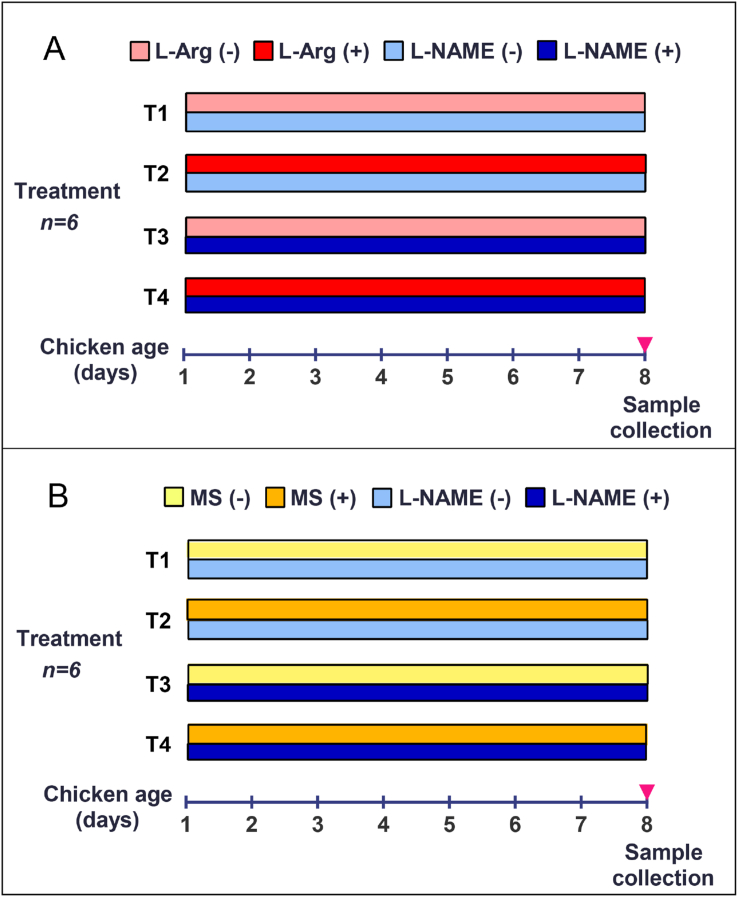
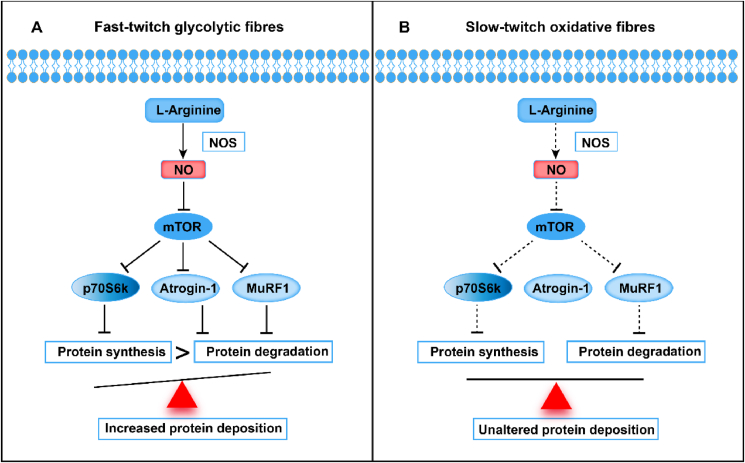
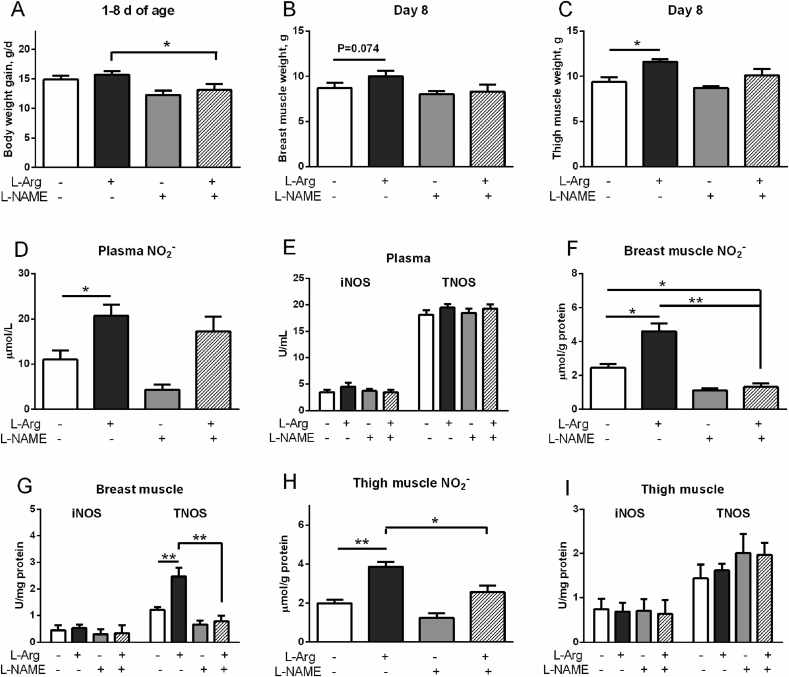
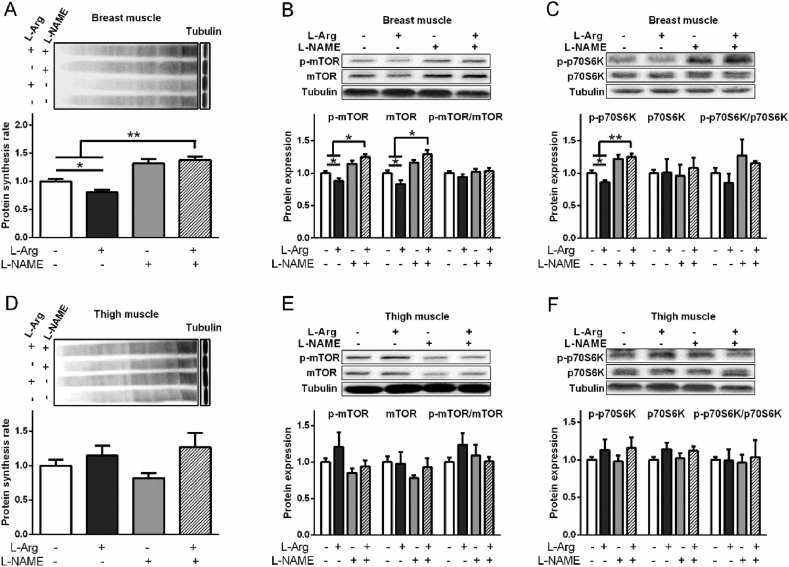
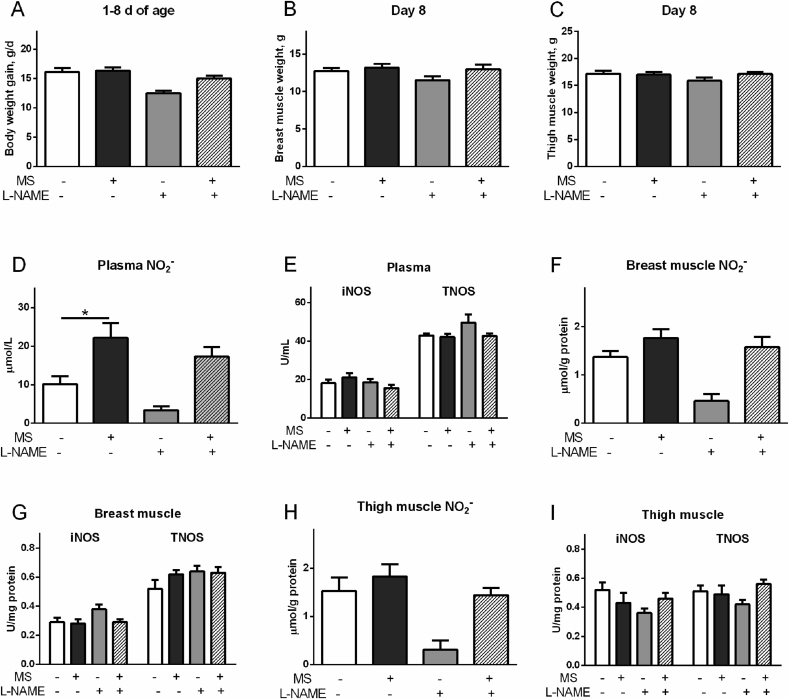
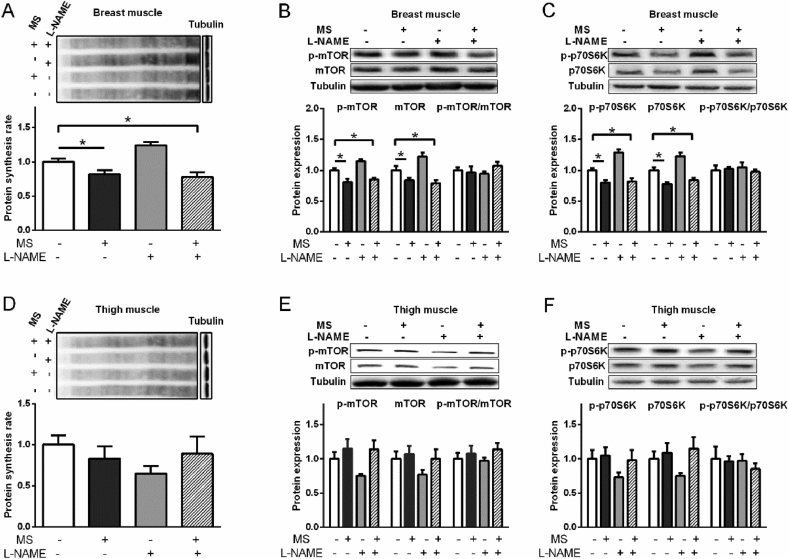
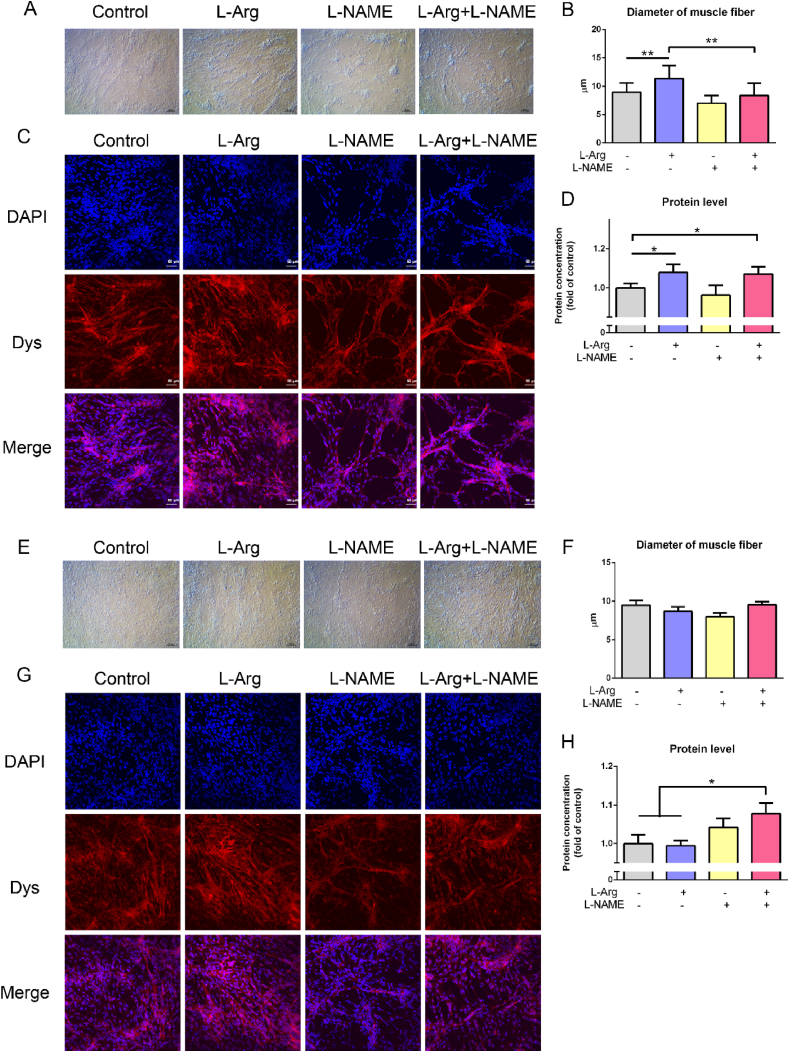
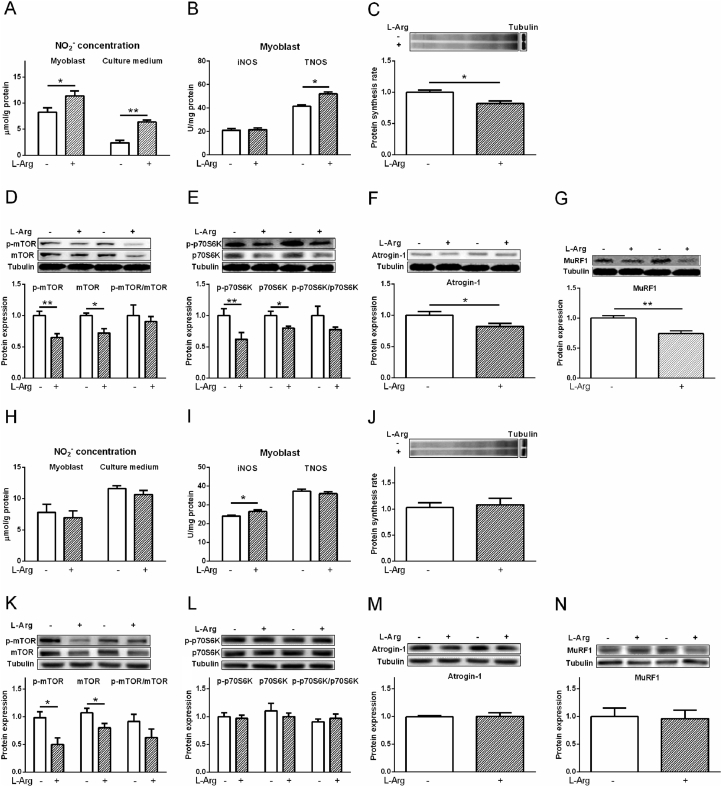
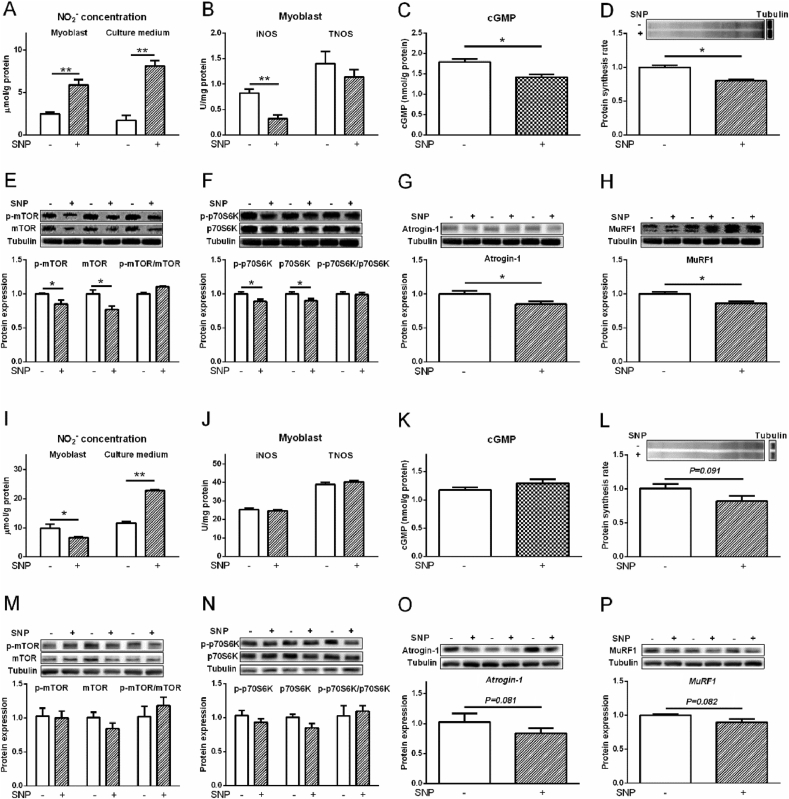
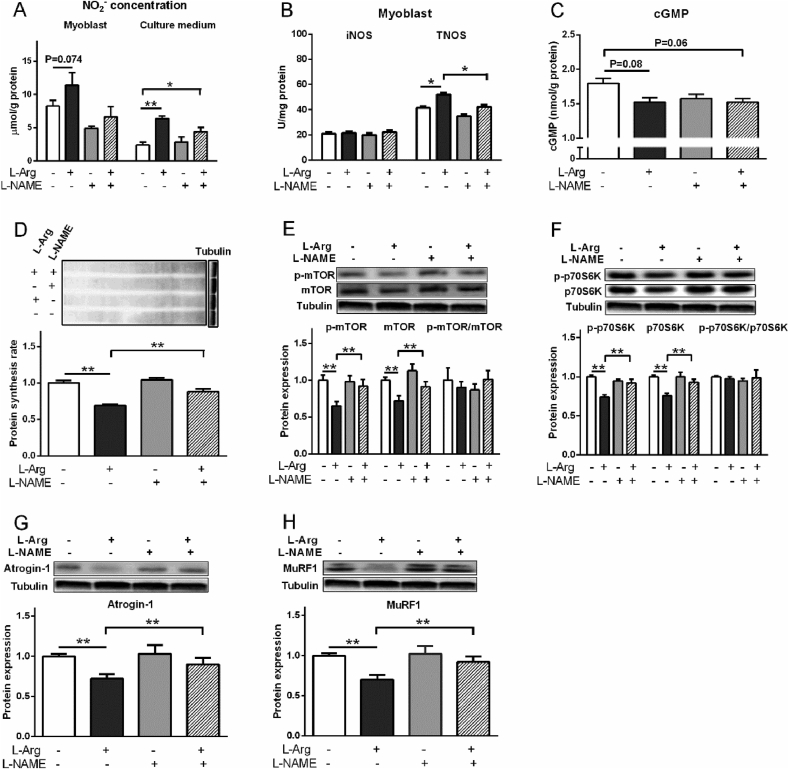
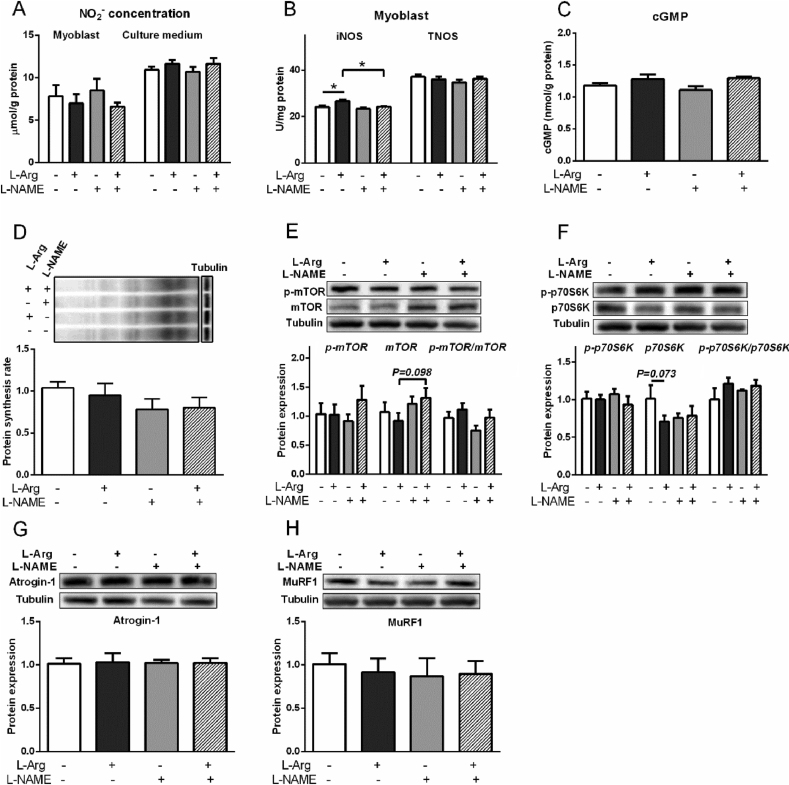
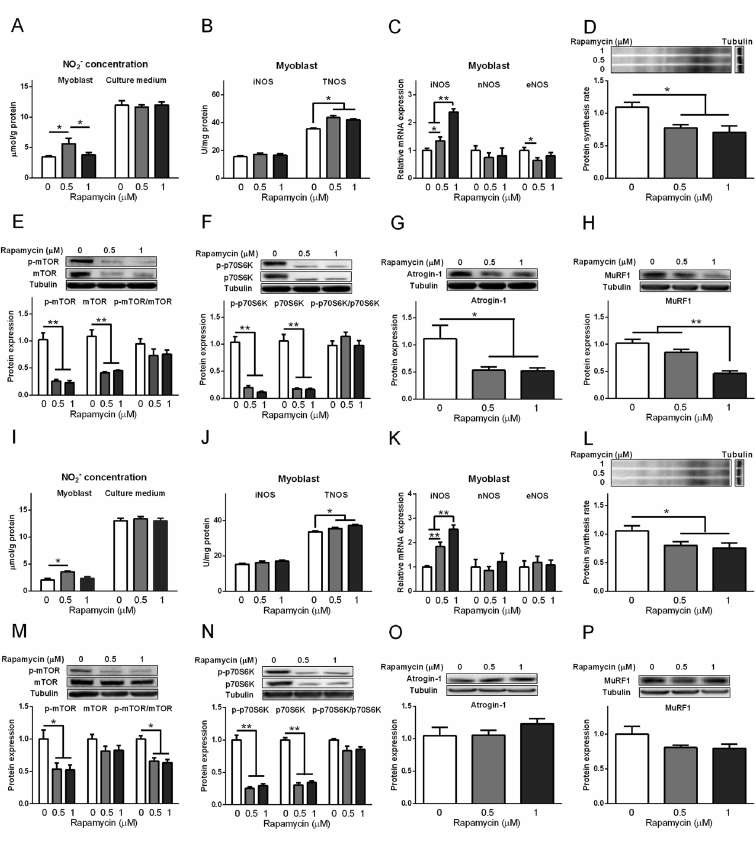
L-Arginine (L-Arg), the precursor of nitric oxide (NO), plays an important role in muscle function. Fast-twitch glycolytic fibres are more susceptible to age-related atrophy than slow-twitch oxidative fibres. The effect of L-Arg/NO on protein metabolism of fast- and slow-twitch muscle fibres was evaluated in chickens. In Exp. 1, 48 chicks at 1 day old were divided into 4 groups of 12 birds and subjected to 4 treatments: basal diet without supplementation or supplemented with 1% L-Arg, and water supplemented with or without L-nitro-arginine methyl ester (L-NAME, 18.5 mM). In Exp. 2, 48 chicks were divided into 4 groups of 12 birds fed with the basal diet and subjected to the following treatments: tap water (control), tap water supplemented with L-NAME (18.5 mM), or molsidomine (MS, 0.1 mM), or 18.5 mM L-NAME + 0.1 mM MS (NAMS). The regulatory effect of L-Arg/NO was further investigated in vitro with myoblasts obtained from chicken embryo pectoralis major (PM) and biceps femoris (BF). In vivo, dietary L-Arg supplementation increased breast (+14.94%, < 0.05) and thigh muscle mass (+23.40%, < 0.05); whereas, MS treatment had no detectable influence. However, L-NAME treatment blocked the beneficial influence of L-Arg on muscle development. L-Arg decreased ( < 0.05) protein synthesis rate, phosphorylated mTOR and ribosomal protein S6 kinase beta-1 (p70S6K) levels in breast muscle, which was recovered by L-NAME treatment. In vitro, L-Arg or sodium nitroprusside (SNP) reduced protein synthesis rate, suppressed phosphorylated mTOR/p70S6K and decreased atrogin-1 and muscle RING finger 1 (MuRF1) in myoblasts from PM muscle ( < 0.05). L-NAME abolished the inhibitory effect of L-Arg on protein synthesis and the mTOR/p70S6K pathway. However, myoblasts from BF muscle showed the weak influence. Moreover, blocking the mTOR/p70S6K pathway with rapamycin suppressed protein synthesis of the 2 types of myoblasts; whereas, the protein expression of atrogin-1 and MuRF1 levels were restricted only in myoblasts from PM muscle. In conclusion, L-Arg/NO/mTOR/p70S6K pathway enhances protein accumulation and muscle development in fast-twitch glycolytic muscle in chickens. L-Arg/NO regulates protein turnover in a muscle fibre specific way, which highlights the potential clinical application in fast-twitch glycolytic muscle fibres.
L-精氨酸(L-Arg)作为一氧化氮(NO)的前体,在肌肉功能中发挥着重要作用。快肌糖酵解纤维比慢肌氧化纤维更容易受到与年龄相关的萎缩影响。本研究评估了L-Arg/NO对鸡快肌和慢肌纤维蛋白质代谢的影响。在实验1中,将48只1日龄雏鸡分为4组,每组12只,进行4种处理:不添加任何物质的基础日粮、添加1% L-Arg的基础日粮、添加L-硝基精氨酸甲酯(L-NAME,18.5 mM)的饮水以及不添加L-NAME的饮水。在实验2中,将48只雏鸡分为4组,每组12只,饲喂基础日粮,并进行以下处理:自来水(对照组)、添加L-NAME(18.5 mM)的自来水、莫西多明(MS,0.1 mM)或18.5 mM L-NAME + 0.1 mM MS(NAMS)。利用从鸡胚胸大肌(PM)和股二头肌(BF)获取的成肌细胞,在体外进一步研究了L-Arg/NO的调节作用。在体内,日粮中添加L-Arg可增加胸肌质量(+14.94%,P < 0.05)和大腿肌肉质量(+23.40%,P < 0.05);而MS处理未产生可检测到的影响。然而,L-NAME处理阻断了L-Arg对肌肉发育的有益影响。L-Arg降低了(P < 0.05)胸肌中的蛋白质合成速率、磷酸化mTOR和核糖体蛋白S6激酶β-1(p70S6K)水平,L-NAME处理可使其恢复。在体外,L-Arg或硝普钠(SNP)降低了PM肌成肌细胞中的蛋白质合成速率,抑制了磷酸化mTOR/p70S6K,并降低了atrogin-1和肌肉环状指蛋白1(MuRF1)的水平(P < 0.05)。L-NAME消除了L-Arg对蛋白质合成和mTOR/p70S6K途径的抑制作用。然而,BF肌成肌细胞受到的影响较弱。此外,用雷帕霉素阻断mTOR/p70S6K途径可抑制两种成肌细胞的蛋白质合成;而atrogin-1和MuRF1的蛋白质表达水平仅在PM肌成肌细胞中受到限制。总之,L-Arg/NO/mTOR/p70S6K途径增强了鸡快肌糖酵解肌中的蛋白质积累和肌肉发育。L-Arg/NO以肌肉纤维特异性方式调节蛋白质周转,这突出了其在快肌糖酵解肌纤维中的潜在临床应用价值。