Parker Jane K, Kelly Christine E, Gane Simon B
School of Chemistry, Food and Pharmacy, University of Reading, Reading, UK.
AbScent, 14 London Road, Andover, Hampshire UK.
Commun Med (Lond). 2022 May 24;2:58. doi: 10.1038/s43856-022-00112-9. eCollection 2022.
Parosmia is a debilitating condition in which familiar smells become distorted and disgusting, with consequences for diet and mental health. It is a feature of post-infectious olfactory loss, particularly resulting from COVID-19. There is currently little understanding of its pathophysiology, and the prevailing hypothesis for the underlying mechanism is aberrant growth of regenerating olfactory sensory neurons after damage.
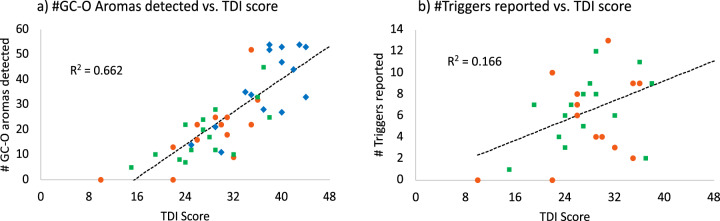
We use gas-chromatograph olfactometry to individually present components of a complex olfactory mixture as a rapid screening tool for assessment of both quantitative and qualitative olfactory dysfunction in those with and without parosmia. This allows them to report the associated sensory effects and to identify those molecules which are altered or parosmic in nature.
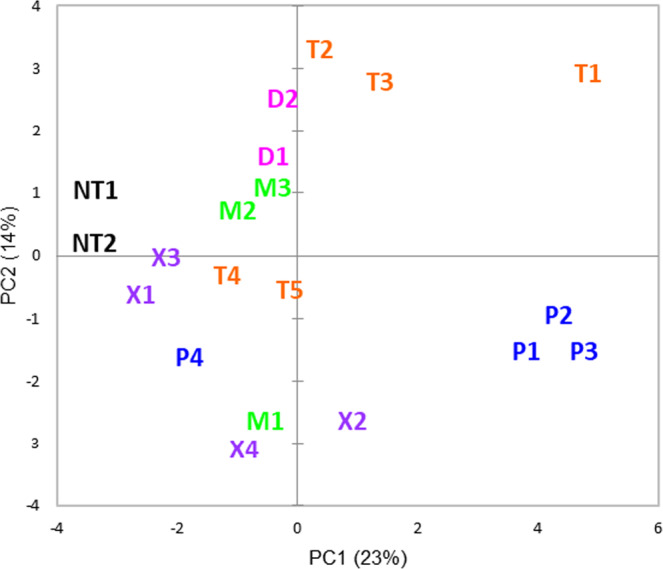
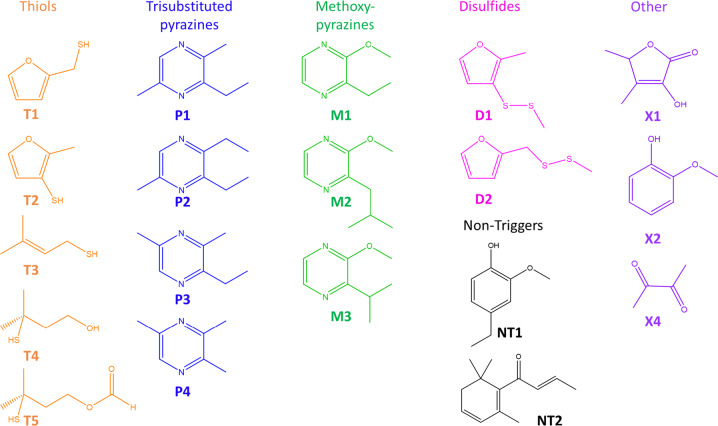
Here we show 15 different molecular triggers of this symptom. These trigger molecules are common to many in the parosmic volunteer group and share certain characteristics such as extremely low olfactory threshold and common molecular structure.
We posit that specific highly odour-active molecules are the cause of the parosmic symptom in most cases and initiate the sense of disgust, suggesting that parosmia is, at least in part, a receptor-level phenomenon.
嗅觉倒错是一种使人衰弱的病症,在此病症中,熟悉的气味会变得扭曲且令人厌恶,对饮食和心理健康产生影响。它是感染后嗅觉丧失的一个特征,尤其是由新冠病毒引起的。目前对其病理生理学了解甚少,关于潜在机制的主流假说是受损后再生的嗅觉感觉神经元异常生长。
我们使用气相色谱嗅觉测量法单独呈现复杂嗅觉混合物的成分,作为评估有无嗅觉倒错者定量和定性嗅觉功能障碍的快速筛查工具。这使他们能够报告相关的感觉效应,并识别那些性质改变或有嗅觉倒错的分子。
在此我们展示了这种症状的15种不同分子触发因素。这些触发分子在嗅觉倒错志愿者组的许多人中都很常见,并具有某些特征,如极低的嗅觉阈值和共同的分子结构。
我们认为特定的高气味活性分子在大多数情况下是嗅觉倒错症状的原因,并引发厌恶感,这表明嗅觉倒错至少部分是一种受体水平的现象。