Gombash Sara E, Lee Priscilla W, Sawdai Elizabeth, Lovett-Racke Amy E
Department of Neuroscience, The Ohio State University, Columbus, OH, United States.
Department of Microbial Infection and Immunity, The Ohio State University, Columbus, OH, United States.
Front Neurol. 2022 May 16;13:796933. doi: 10.3389/fneur.2022.796933. eCollection 2022.
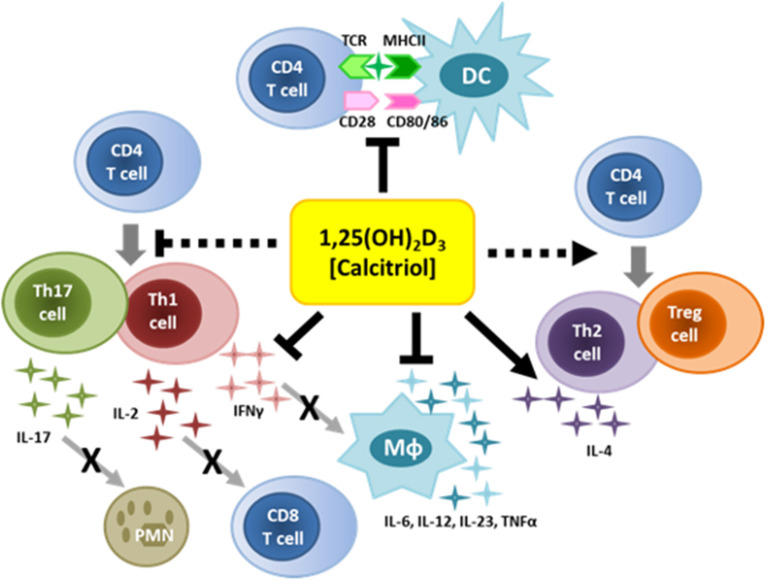
Vitamin D insufficiency during childhood has been linked to the development of multiple sclerosis (MS), typically an adult-onset inflammatory demyelinating disease of the central nervous system (CNS). Since vitamin D was known to have immunoregulatory properties on both innate and adaptive immunity, it was hypothesized that low vitamin D resulted in aberrant immune responses and the development of MS. However, vitamin D receptors are present on many cell types, including neurons, oligodendrocytes, astrocytes and microglia, and vitamin D has profound effects on development and function of the CNS. This leads to the possibility that low vitamin D may alter the CNS in a manner that makes it vulnerable to inflammation and the development of MS. This review analysis the role of vitamin D in the immune and nervous system, and how vitamin D insufficiency in children may contribute to the development of MS.
儿童期维生素D不足与多发性硬化症(MS)的发生有关,多发性硬化症通常是一种成人起病的中枢神经系统(CNS)炎性脱髓鞘疾病。由于已知维生素D对先天性免疫和适应性免疫均具有免疫调节特性,因此推测低维生素D水平会导致异常免疫反应并引发多发性硬化症。然而,维生素D受体存在于许多细胞类型中,包括神经元、少突胶质细胞、星形胶质细胞和小胶质细胞,并且维生素D对中枢神经系统的发育和功能具有深远影响。这就导致低维生素D可能以某种方式改变中枢神经系统,使其易受炎症影响并引发多发性硬化症。本综述分析了维生素D在免疫和神经系统中的作用,以及儿童维生素D不足可能如何导致多发性硬化症的发生。