Department of Clinical Microbiology and Immunology, Sackler School of Medicine, Tel-Aviv University, Tel-Aviv, Israel.
Microbiol Spectr. 2022 Jun 29;10(3):e0111222. doi: 10.1128/spectrum.01112-22. Epub 2022 Jun 2.
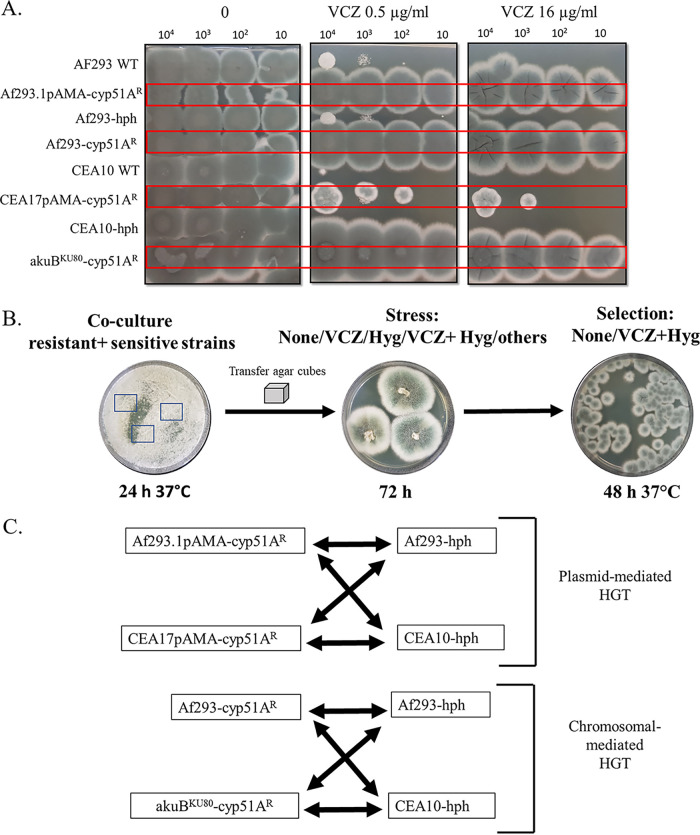
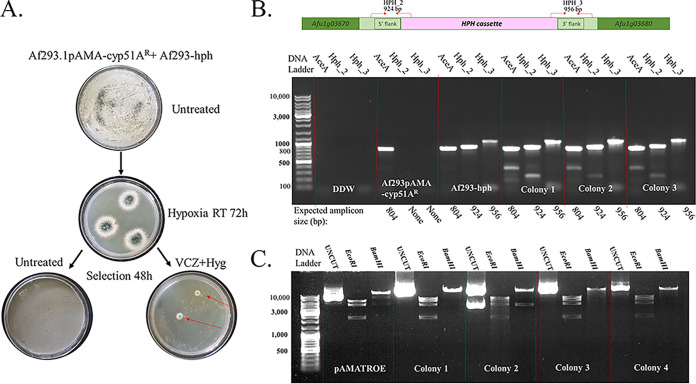
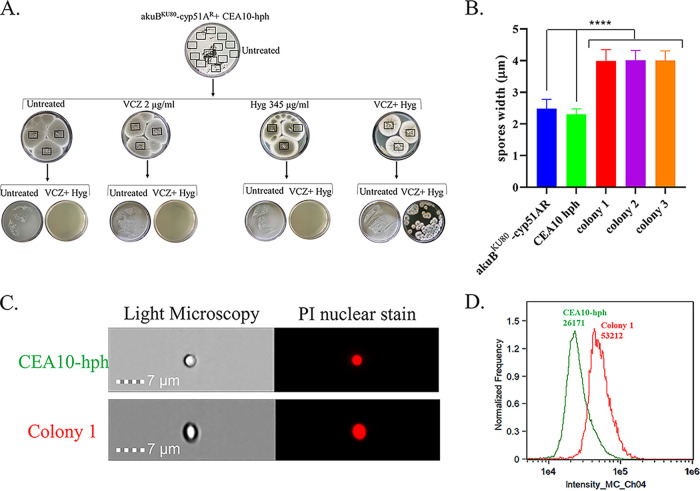
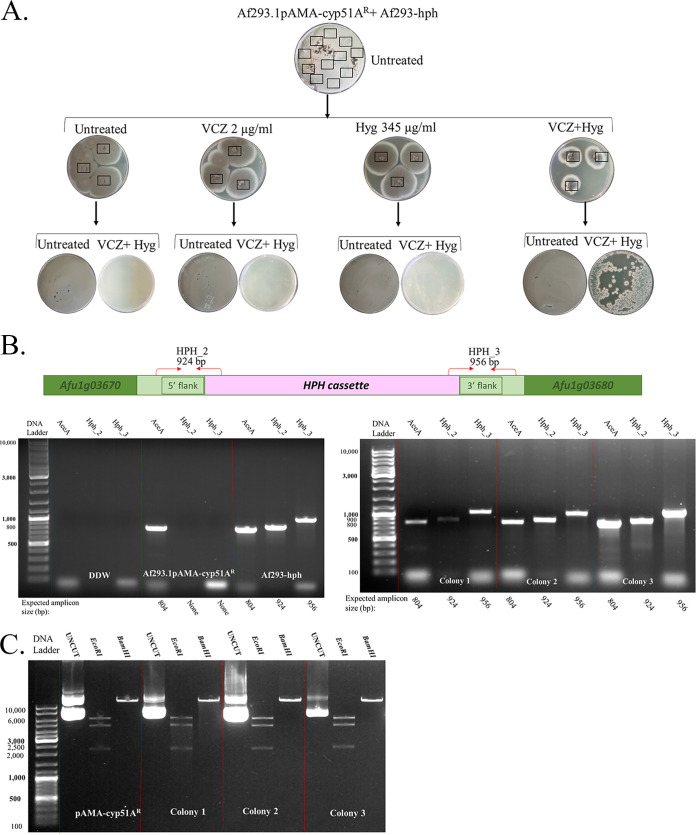
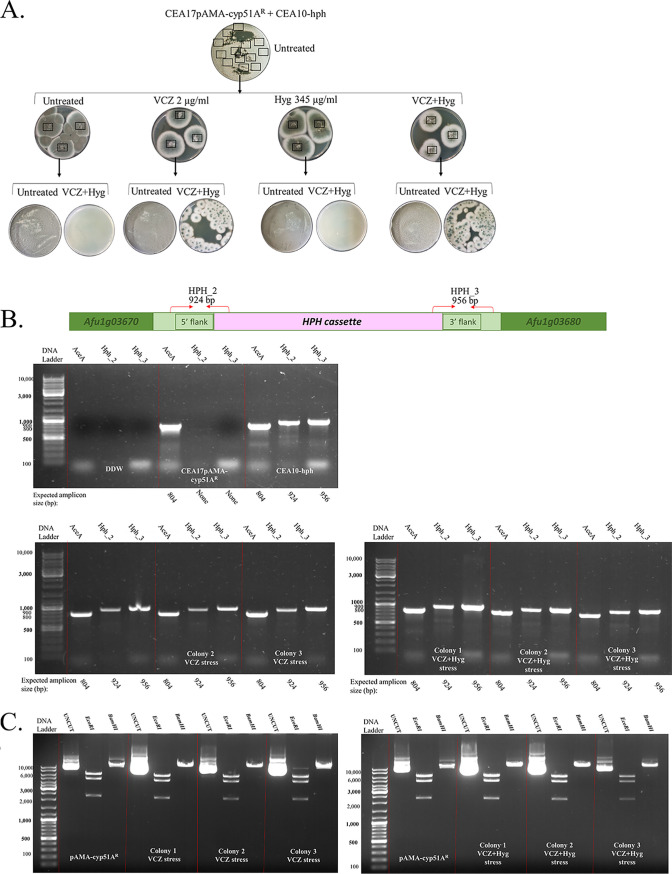
Aspergillus fumigatus is the primary mold pathogen in humans. It can cause a wide range of diseases in humans, with high mortality rates in immunocompromised patients. The first-line treatments for invasive A. fumigatus infections are the triazole antifungals that inhibit Cyp51 lanosterol demethylase activity, blocking ergosterol biosynthesis. However, triazole-resistant strains of A. fumigatus are increasingly encountered, leading to increased mortality. The most common triazole resistance mechanisms in A. fumigatus are alterations in the gene or promoter. We tested the hypothesis that A. fumigatus can acquire triazole resistance by horizontal gene transfer (HGT) of resistance-conferring gene . HGT has not been experimentally analyzed in filamentous fungi. Therefore, we developed an HGT assay containing donor A. fumigatus strains carrying resistance-conferring mutated either in its chromosomal locus or in a self-replicating plasmid, and recipient strains that were hygromycin resistant and triazole sensitive. Donor and recipient A. fumigatus strains were cocultured and transferred to selective conditions, and the recipient strain tested for transferred triazole resistance. We found that chromosomal transfer of triazole resistance required selection under both voriconazole and hygromycin, resulting in diploid formation. Notably, plasmid-mediated transfer was also activated by voriconazole or hypoxic stress alone, suggesting a possible route to HGT of antifungal resistance in A. fumigatus, both in the environment and during host infection. This study provides, for the first time, preliminary experimental evidence for HGT mediating antifungal resistance in a pathogenic fungus. It is well known that bacteria can transfer antibiotic resistance from one strain to another by horizontal gene transfer (HGT), leading to the current worldwide crisis of rapidly emerging antibiotic-resistant bacteria. However, in fungi, HGT events have only been indirectly documented by whole-genome sequencing. This study directly examined fungal HGT of antibiotic resistance in a laboratory setting. We show that HGT of antifungal triazole resistance occurs in the important human fungal pathogen Aspergillus fumigatus. Importantly, we show a plasmid-mediated transfer of triazole resistance occurs under conditions likely to prevail in the environment and in infected patients. This study provides an experimental foundation for future work identifying the drivers and mechanistic underpinnings of HGT in fungi.
烟曲霉是人类主要的霉菌病原体。它可以引起人类广泛的疾病,免疫功能低下的患者死亡率很高。侵袭性烟曲霉感染的一线治疗方法是三唑类抗真菌药物,它抑制 Cyp51 羊毛甾醇脱甲基酶活性,阻断麦角固醇生物合成。然而,烟曲霉的三唑耐药株越来越多,导致死亡率增加。烟曲霉中最常见的三唑耐药机制是 基因或启动子的改变。我们测试了烟曲霉可以通过水平基因转移(HGT)获得三唑耐药性的假设,其中耐药基因被转移。水平基因转移尚未在丝状真菌中进行实验分析。因此,我们开发了一种 HGT 测定法,其中包含携带耐药性的供体烟曲霉菌株,这些菌株要么在其染色体基因座中携带耐药性突变,要么在自我复制质粒中携带耐药性突变,以及对潮霉素有抗性但对三唑敏感的受体菌株。供体和受体烟曲霉菌株被共培养并转移到选择性条件下,然后测试受体菌株是否转移了三唑耐药性。我们发现,三唑耐药性的染色体转移需要在伏立康唑和潮霉素的选择下进行,导致二倍体的形成。值得注意的是,质粒介导的转移也被伏立康唑或低氧应激单独激活,这表明在环境中和宿主感染过程中,烟曲霉对抗真菌耐药性的 HGT 可能是一种途径。这项研究首次提供了水平基因转移介导致病性真菌中抗真菌耐药性的初步实验证据。众所周知,细菌可以通过水平基因转移(HGT)将抗生素耐药性从一种菌株转移到另一种菌株,导致目前全球范围内抗生素耐药细菌迅速出现的危机。然而,在真菌中,HGT 事件仅通过全基因组测序间接记录。本研究直接在实验室环境中检查了真菌对抗生素的 HGT。我们表明,烟曲霉中的重要人类真菌病原体中存在抗真菌三唑类药物耐药性的 HGT。重要的是,我们表明在环境中和感染患者中可能存在的条件下,质粒介导的三唑类耐药性转移。这项研究为未来识别真菌中 HGT 的驱动因素和机制基础提供了实验基础。