Reaney Matthew, Allen Veleka, Sehnert Amy J, Fang Liang, Hagège Albert A, Naidu Srihari S, Olivotto Iacopo
IQVIA, 3 Forbury Place, 23 Forbury Road, Reading, RG1 3JH, UK.
IQVIA, New York, NY, USA.
Pharmacoecon Open. 2022 Jul;6(4):563-574. doi: 10.1007/s41669-022-00335-5. Epub 2022 Jun 2.
Currently, there is no patient-reported outcome (PRO) instrument specifically designed to evaluate hypertrophic cardiomyopathy (HCM).
We present the development and psychometric validation of a novel PRO measure, the HCM Symptom Questionnaire version 1.0 (HCMSQv1.0).
Cognitive debriefing interviews and a card-sorting task were conducted in 33 patients with HCM to support development of the HCMSQv1.0, showing the scale to be interpretable and relevant to patients' experiences. Baseline blinded data from two trials (EXPLORER-HCM and MAVERICK-HCM) were pooled (N = 299) to develop the scoring algorithm of HCMSQv1.0. Measurement properties were examined, followed by a meaningful-change analysis to interpret scores. Rasch modeling, mixed-model repeated measures, exploratory factor analysis, confirmatory factor analysis, and missing-data simulation analysis informed the number of domains and the items in each domain.
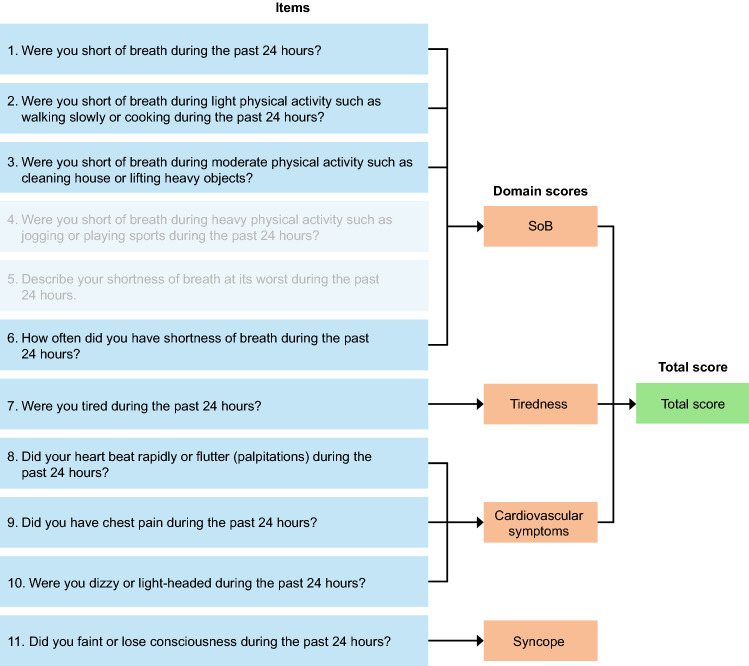
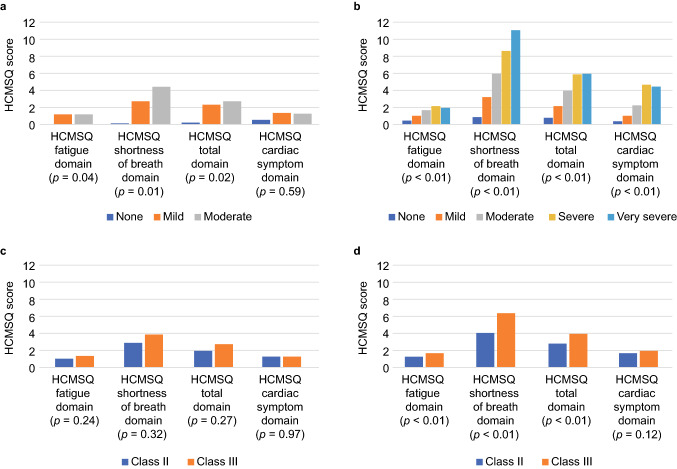
The scoring algorithm for HCMSQv1.0 consists of four domains: shortness of breath, tiredness, cardiovascular symptoms, and syncope; plus a total score, with higher scores indicating more severe symptoms. Item characteristics, internal consistency, test-retest reliability, construct validity, and responsiveness were acceptable. A clinically meaningful responder definition of 1-2 points on the HCMSQv1.0 score for shortness of breath and total score, and approximately 1 point on the tiredness and cardiovascular symptom scores, was calculated based on distribution- and anchor-based methods.
Our findings support the HCMSQv1.0 as a fit-for-purpose PRO instrument for assessing treatment benefit in patients with HCM. Studies in larger patient populations are ongoing to confirm responder definition and scoring approaches encompassing key HCM symptoms.
目前,尚无专门设计用于评估肥厚型心肌病(HCM)的患者报告结局(PRO)工具。
我们介绍一种新型PRO测量工具——肥厚型心肌病症状问卷1.0版(HCMSQv1.0)的开发及心理测量学验证。
对33例HCM患者进行认知性深入访谈和卡片分类任务,以支持HCMSQv1.0的开发,结果表明该量表具有可解释性且与患者经历相关。汇总两项试验(EXPLORER-HCM和MAVERICK-HCM)的基线盲态数据(N = 299)以制定HCMSQv1.0的评分算法。检查测量属性,随后进行有意义变化分析以解释分数。Rasch模型、混合模型重复测量、探索性因子分析、验证性因子分析和缺失数据模拟分析为确定领域数量和每个领域中的条目提供了依据。
HCMSQv1. 的评分算法包括四个领域:呼吸急促、疲劳、心血管症状和晕厥;再加上一个总分,分数越高表明症状越严重。条目特征、内部一致性、重测信度、结构效度和反应度均可接受。基于分布法和锚定法计算得出,HCMSQv1.0呼吸急促和总分的临床有意义的反应者定义为1至2分,疲劳和心血管症状分数约为1分。
我们的研究结果支持HCMSQv1.0作为一种适用于评估HCM患者治疗获益的PRO工具。正在对更大患者群体进行研究,以确认涵盖HCM关键症状的反应者定义和评分方法。