Key Laboratory of Bio-based Material Science & Technology (Ministry of Education), Northeast Forestry University, Harbin 150040, P.R. China.
Bioproducts Institute, Department of Chemical & Biological Engineering, Department of Chemistry, and Department of Wood Science, 2360 East Mall, The University of British Columbia, Vancouver, BC V6T 1Z3, Canada.
Chem Rev. 2022 Jul 13;122(13):11604-11674. doi: 10.1021/acs.chemrev.2c00125. Epub 2022 Jun 2.
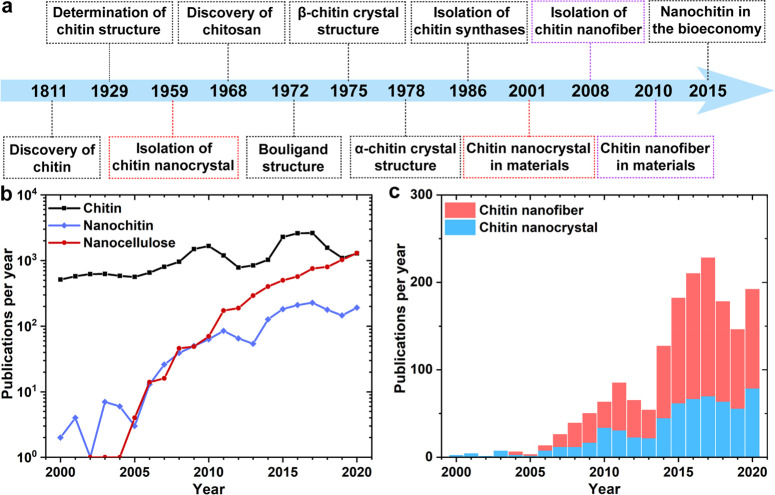
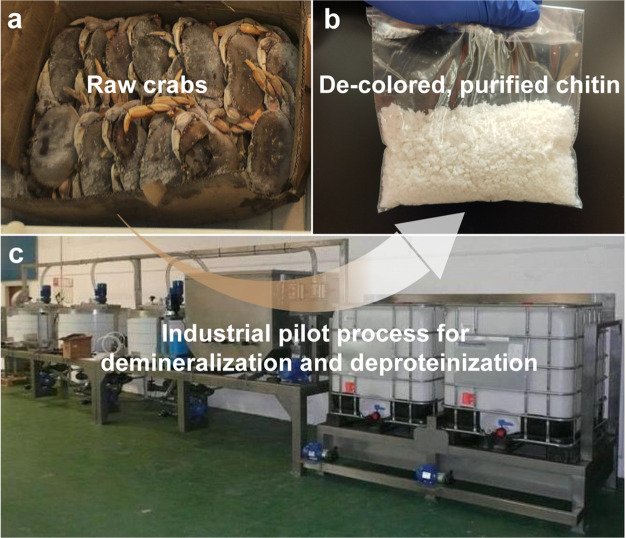
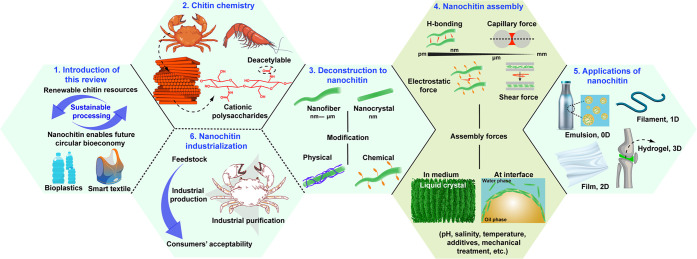
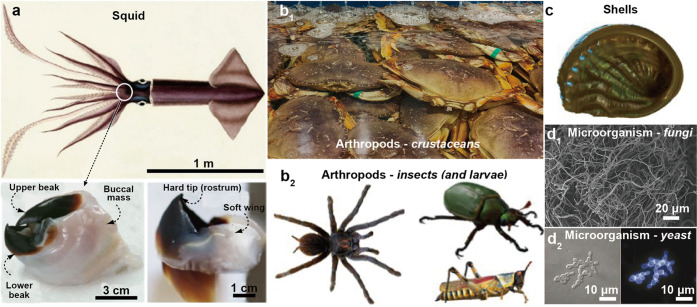
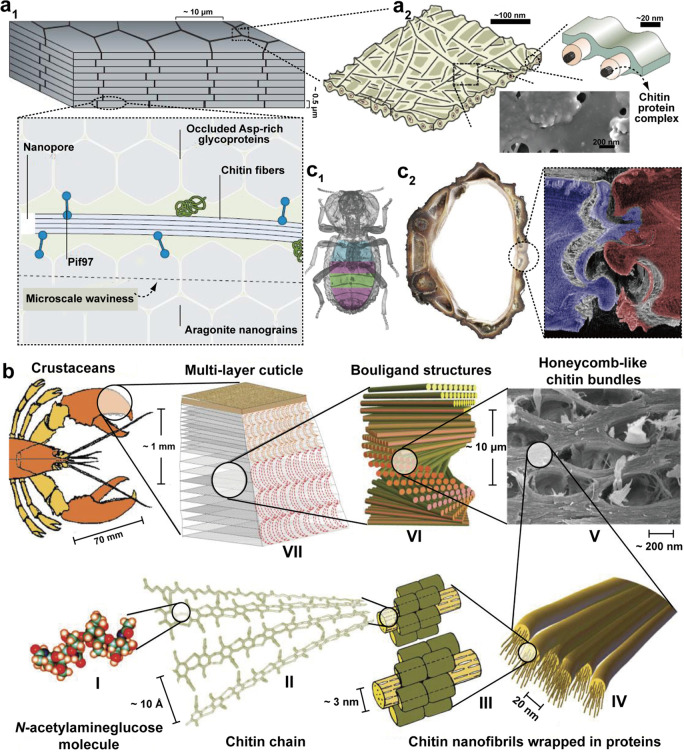
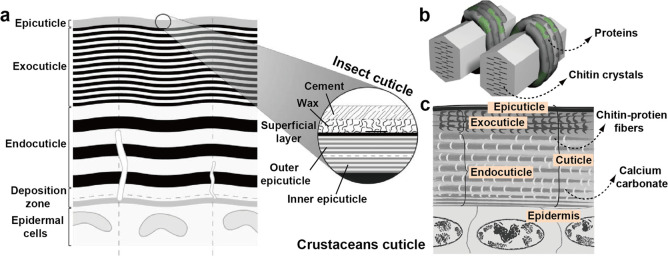
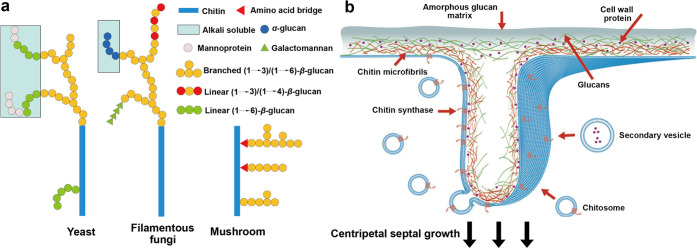
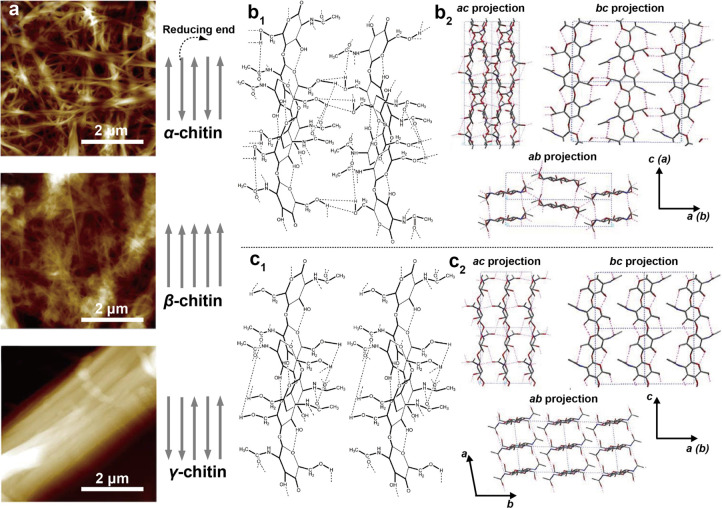
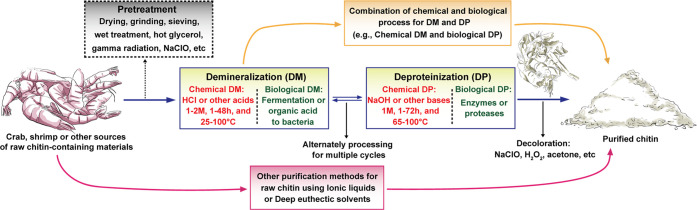
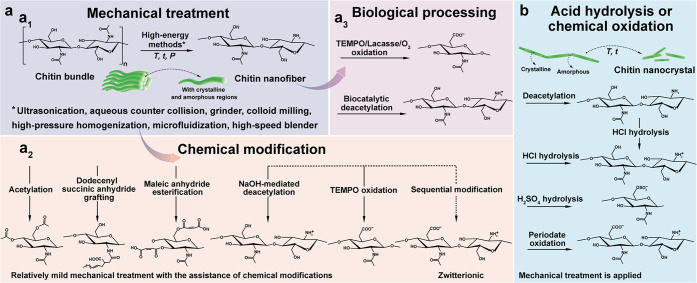
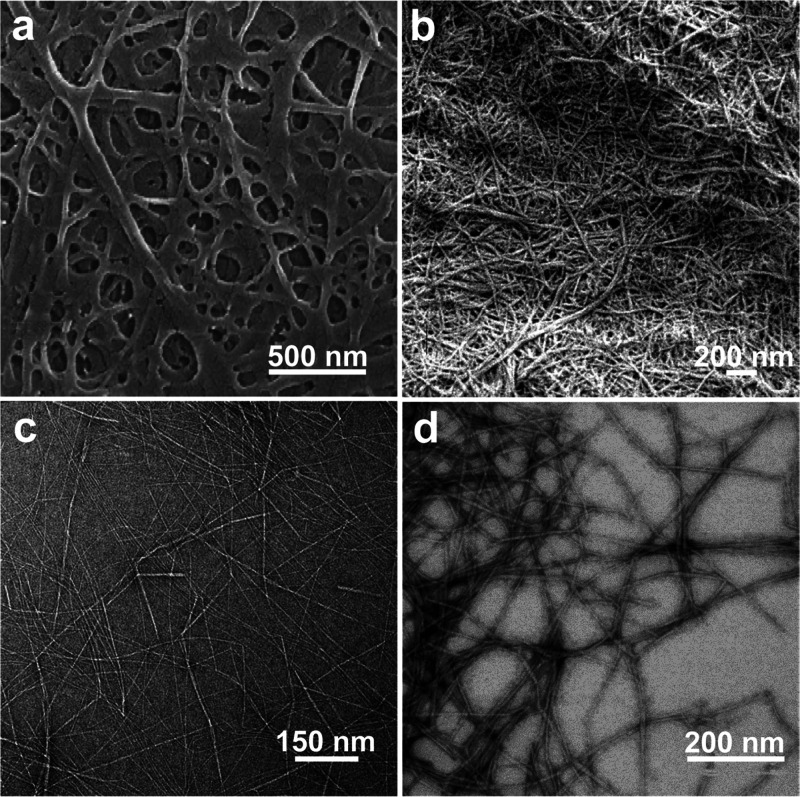
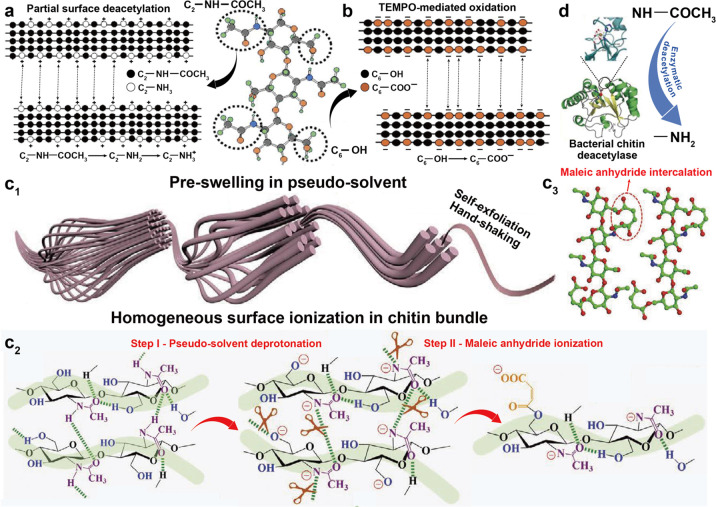
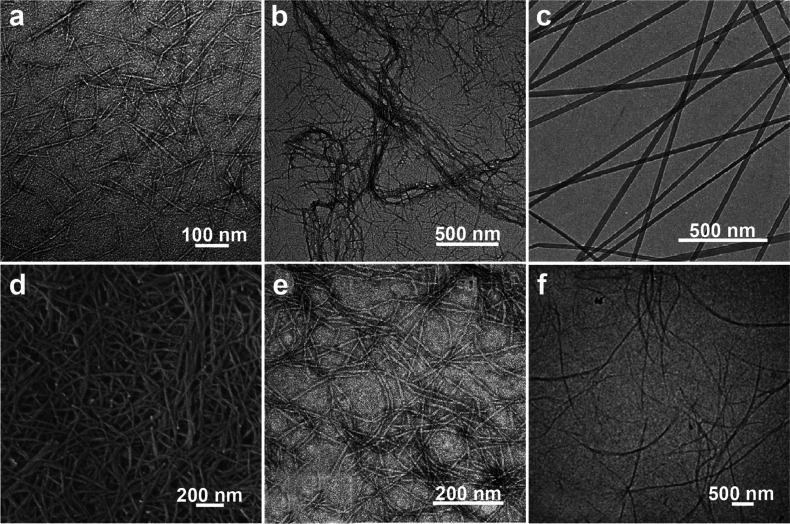
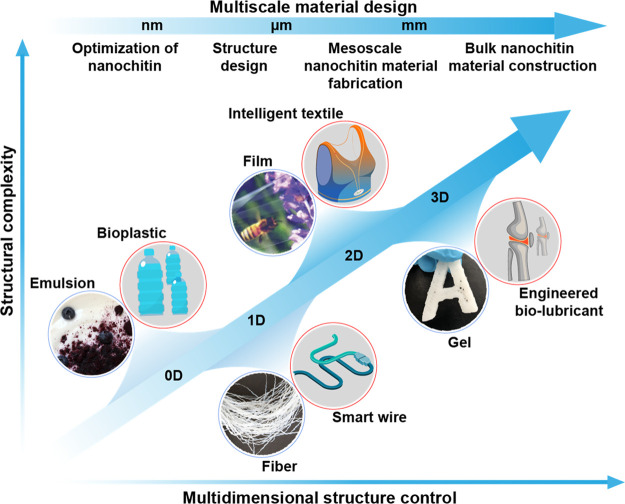
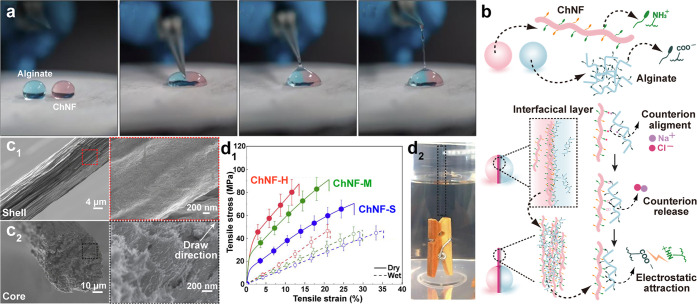
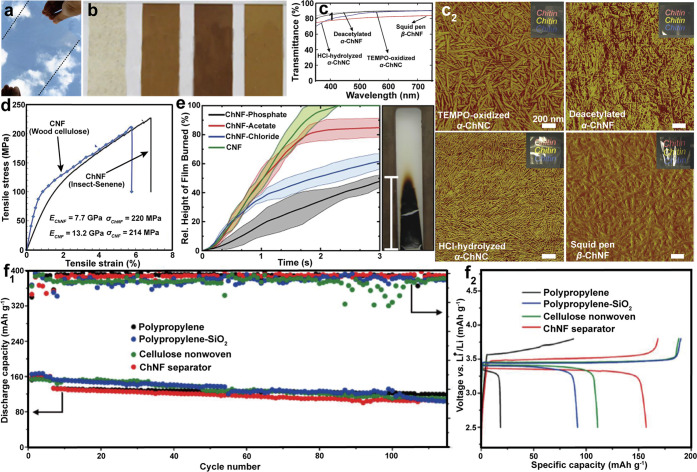
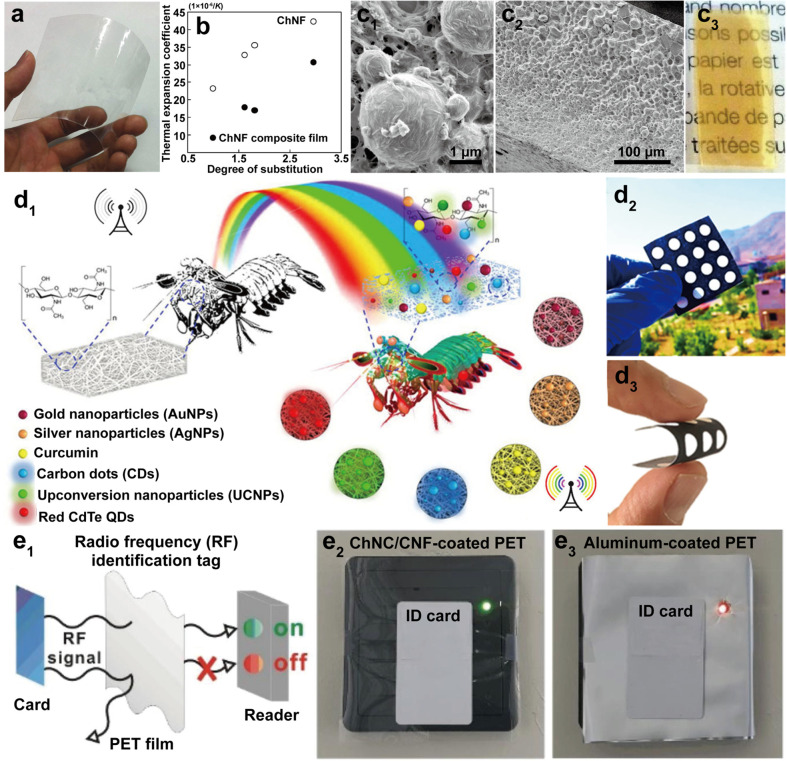
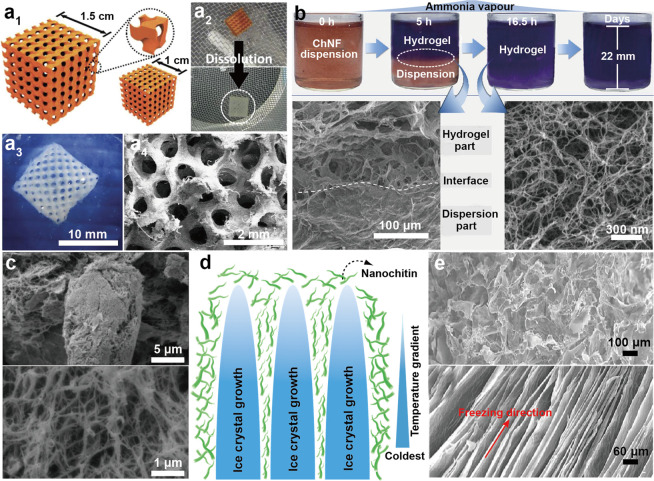
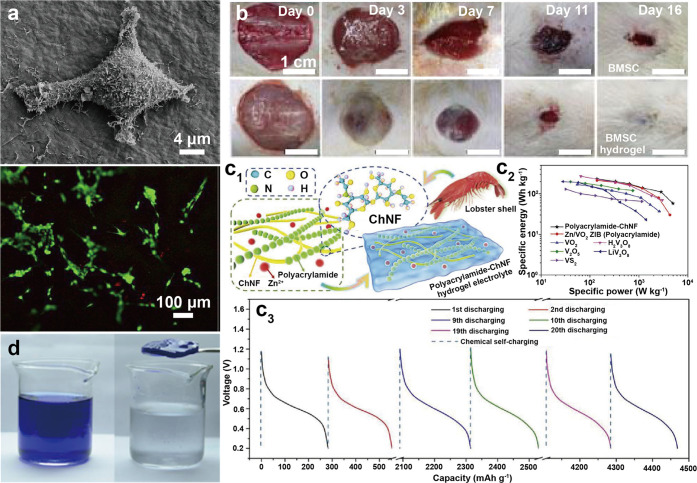
Chitin, a fascinating biopolymer found in living organisms, fulfills current demands of availability, sustainability, biocompatibility, biodegradability, functionality, and renewability. A feature of chitin is its ability to structure into hierarchical assemblies, spanning the nano- and macroscales, imparting toughness and resistance (chemical, biological, among others) to multicomponent materials as well as adding adaptability, tunability, and versatility. Retaining the inherent structural characteristics of chitin and its colloidal features in dispersed media has been central to its use, considering it as a building block for the construction of emerging materials. Top-down chitin designs have been reported and differentiate from the traditional molecular-level, bottom-up synthesis and assembly for material development. Such topics are the focus of this Review, which also covers the origins and biological characteristics of chitin and their influence on the morphological and physical-chemical properties. We discuss recent achievements in the isolation, deconstruction, and fractionation of chitin nanostructures of varying axial aspects (nanofibrils and nanorods) along with methods for their modification and assembly into functional materials. We highlight the role of nanochitin in its native architecture and as a component of materials subjected to multiscale interactions, leading to highly dynamic and functional structures. We introduce the most recent advances in the applications of nanochitin-derived materials and industrialization efforts, following green manufacturing principles. Finally, we offer a critical perspective about the adoption of nanochitin in the context of advanced, sustainable materials.
甲壳素是一种存在于生物体中的迷人生物聚合物,它满足了当前可用性、可持续性、生物相容性、可生物降解性、功能性和可再生性的需求。甲壳素的一个特点是它能够形成分层组装,跨越纳米和宏观尺度,赋予多组分材料韧性和抵抗力(化学、生物等),并增加适应性、可调节性和多功能性。在分散介质中保留甲壳素的固有结构特征及其胶体特性一直是其使用的核心,因为它可以作为构建新兴材料的构建块。已经报道了自上而下的甲壳素设计,与传统的基于分子水平的自下而上的合成和组装用于材料开发有所不同。本综述的重点就是这些内容,还涵盖了甲壳素的起源和生物学特性及其对形态和物理化学性质的影响。我们讨论了最近在不同轴向方面(纳米纤维和纳米棒)的甲壳素纳米结构的分离、解构和分级方面的成就,以及对其进行修饰和组装成功能材料的方法。我们强调了纳米甲壳素在其天然结构中的作用以及作为多尺度相互作用下的材料的组成部分,从而形成高度动态和功能化的结构。我们介绍了基于纳米甲壳素的材料的最新应用进展和工业化努力,遵循绿色制造原则。最后,我们在先进的可持续材料的背景下,对纳米甲壳素的应用提出了批判性的看法。