Laske Joerg, Maschke Jan, Bauer Andrea, Beissert Stefan, Aschoff Roland
Department of Dermatology, University Hospital - Dresden, Dresden, Germany.
Dermatological Practice, Cologne, Germany.
J Cutan Aesthet Surg. 2022 Jan-Mar;15(1):24-32. doi: 10.4103/JCAS.JCAS_202_20.
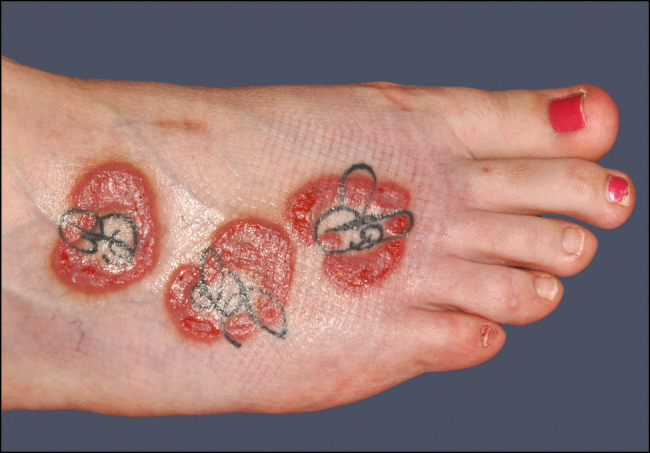
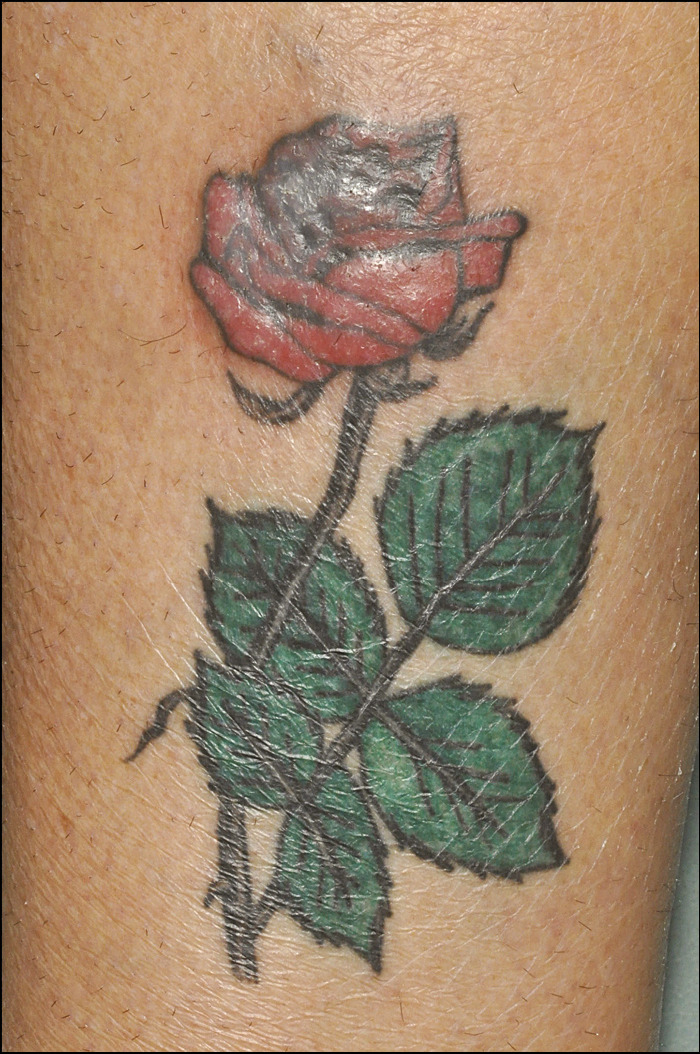
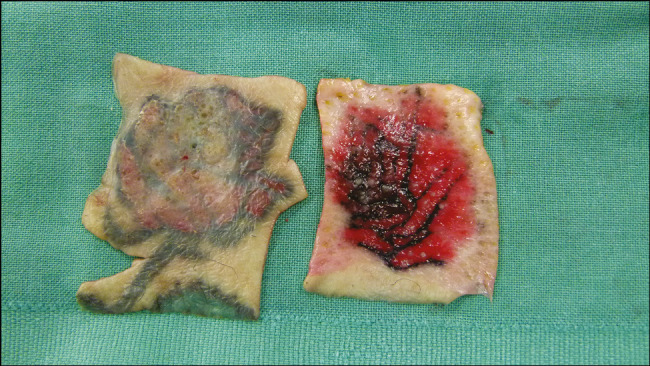
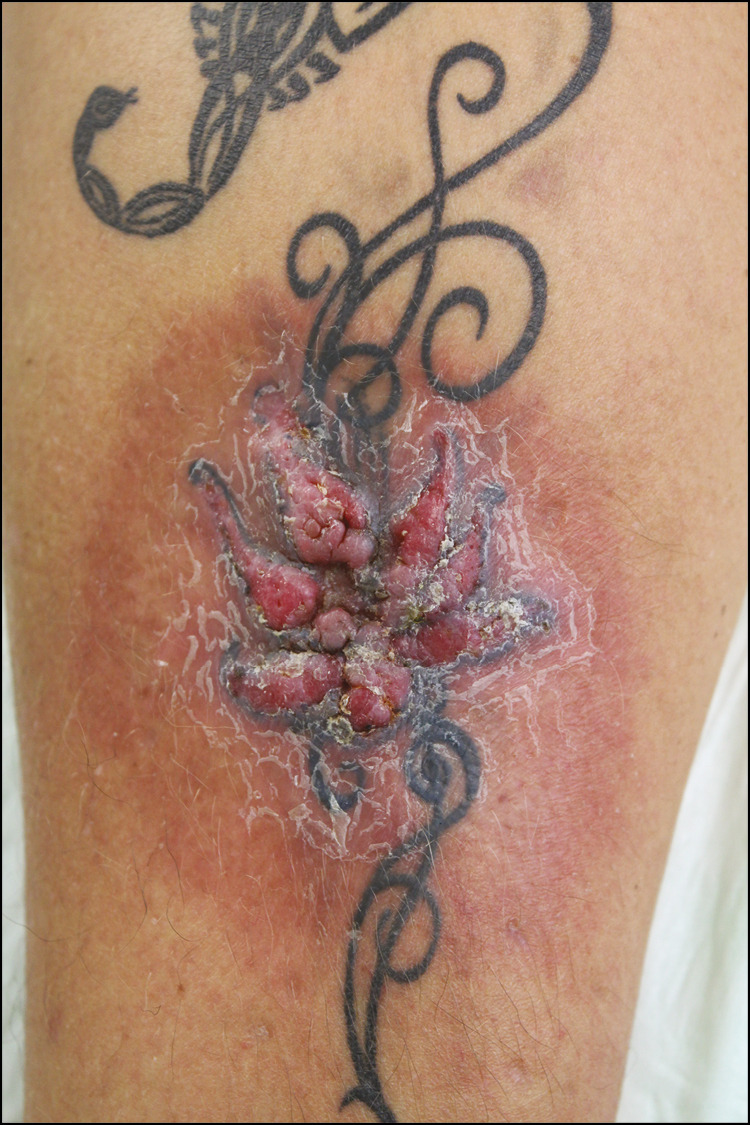
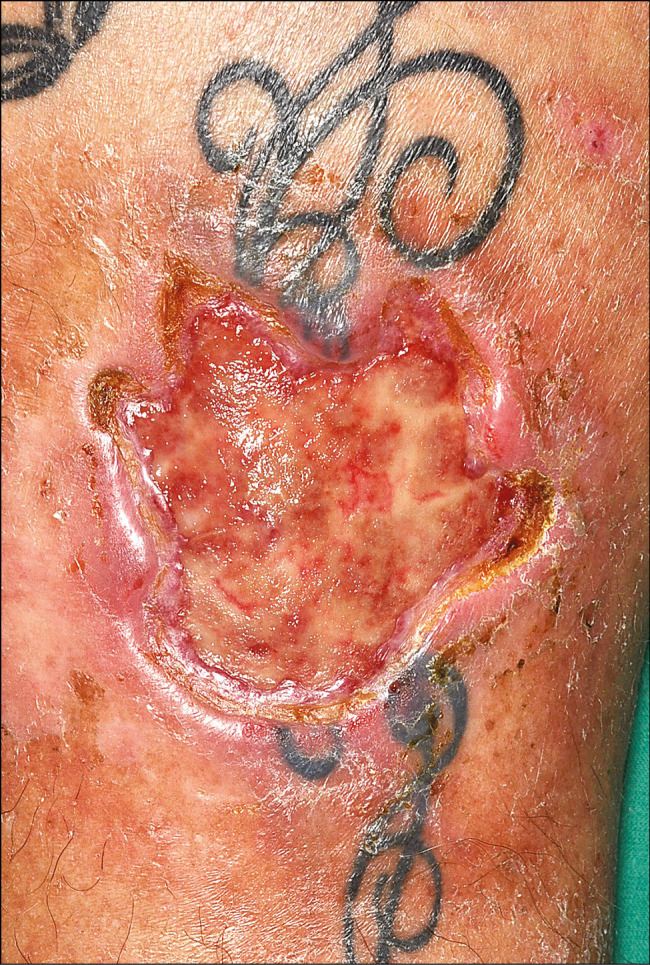
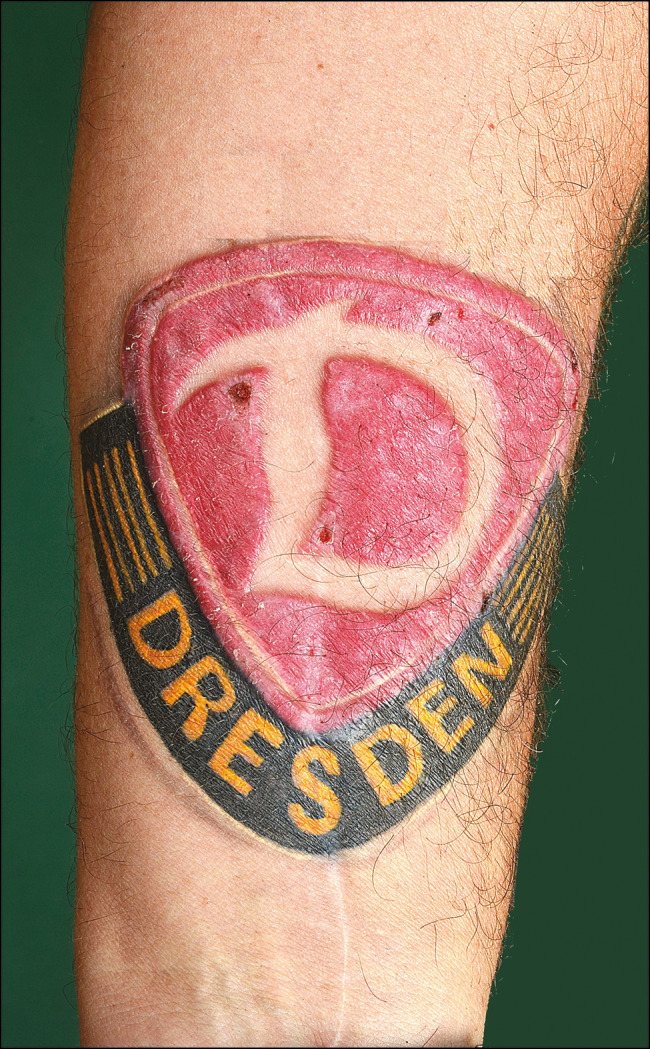
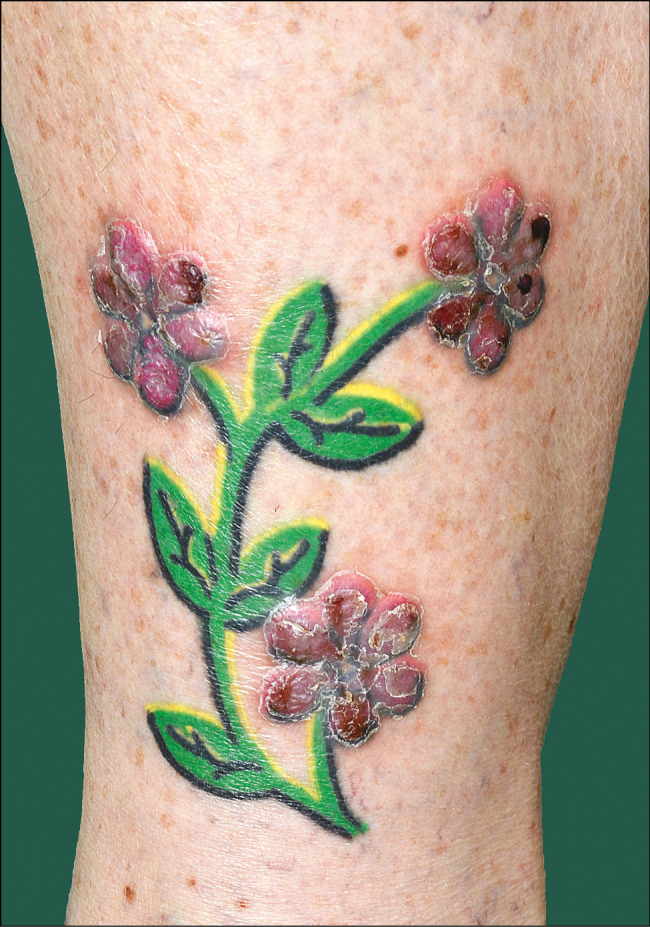
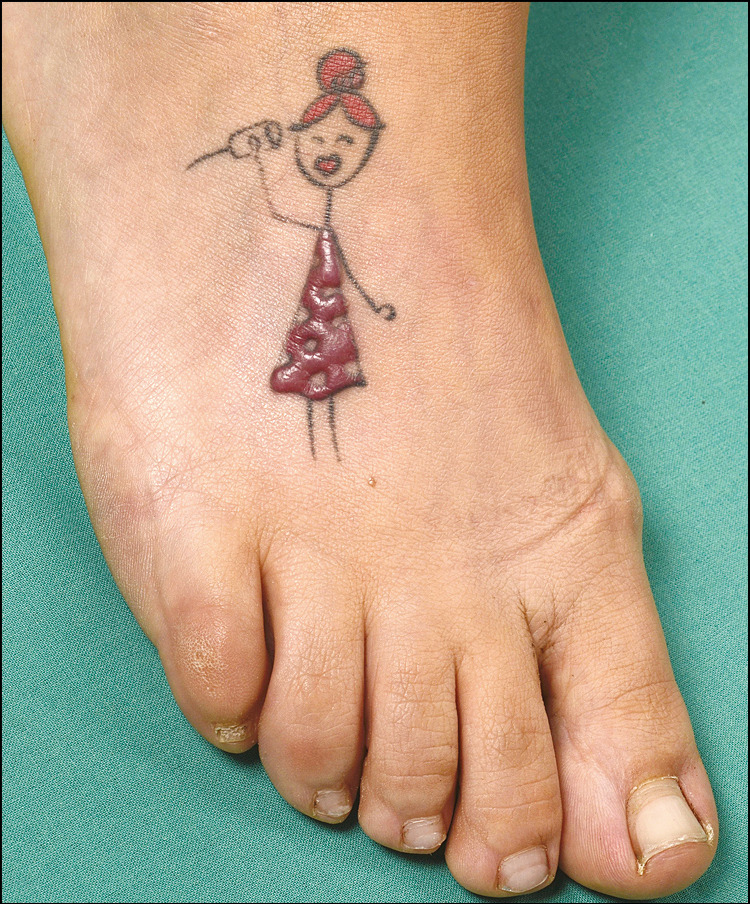
The treatment of allergic reactions to red tattoo dye is challenging in most cases, as local therapy often does not offer long-term improvement and laser therapy is considered relatively contraindicated by many authors owing to the risk of generalized side effects. Therefore, surgical removal of these tattoos is favored; shave excision is the method of choice, particularly for the removal of the entire dye.
The aim of this article was to retrospectively analyze the best post-operative outcome after surgical removal of allergic tattoo reactions using different excision techniques.
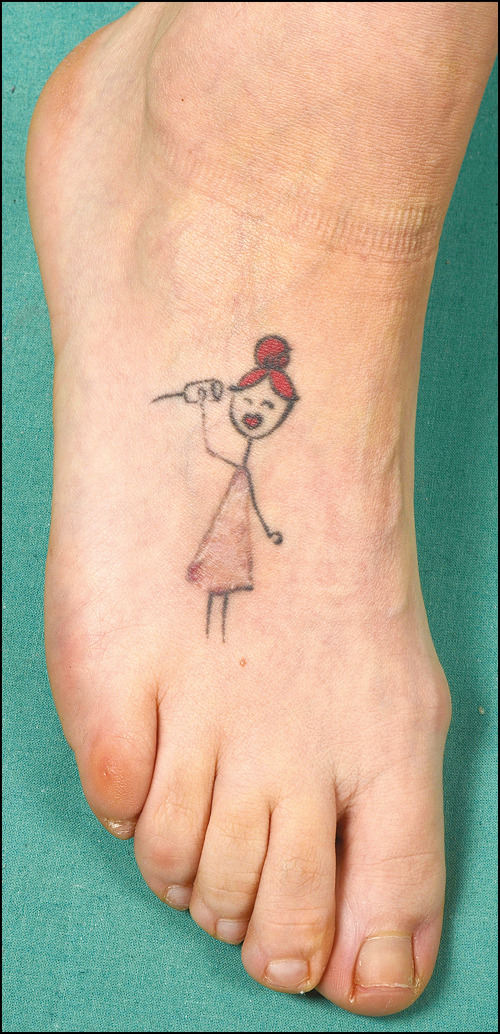
We compared the different surgical procedures performed on seven patients with single and multiple allergic tattoo reactions treated between 2013 and 2018.
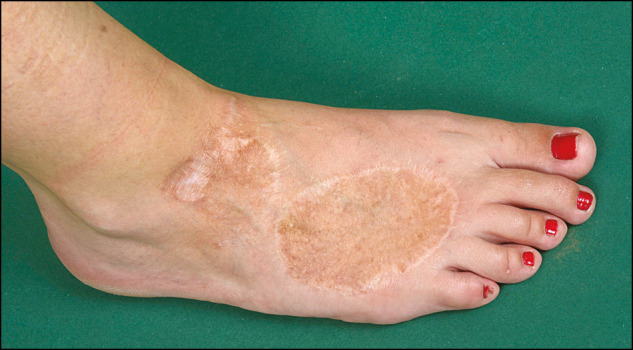
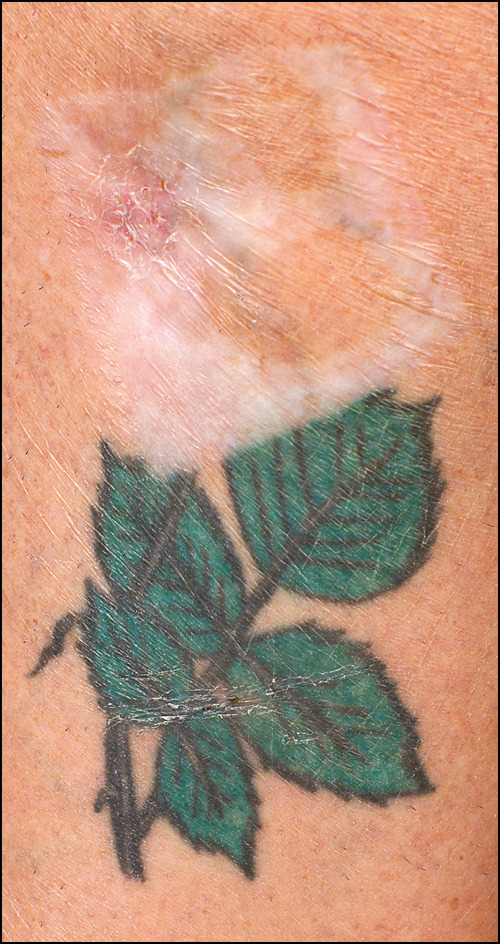
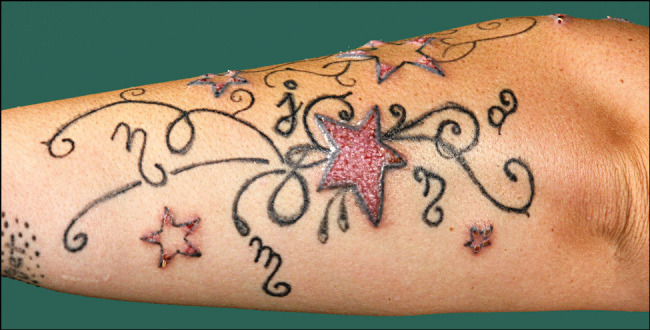
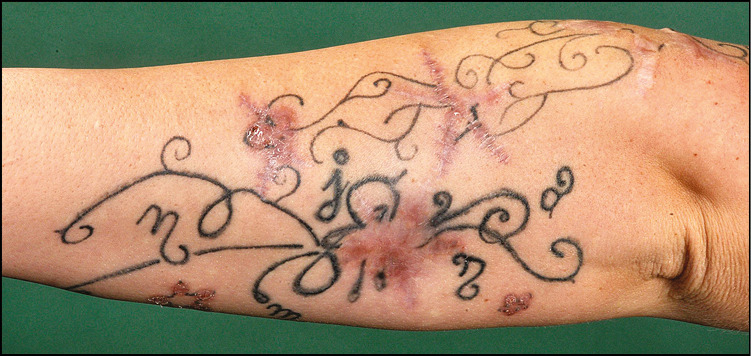
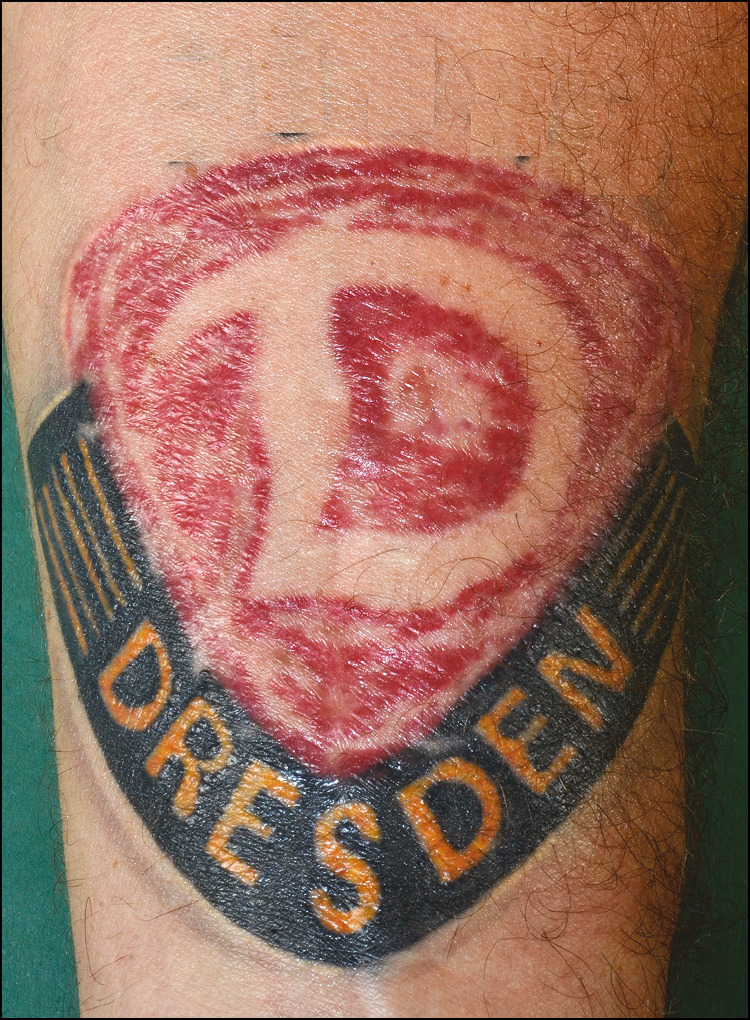
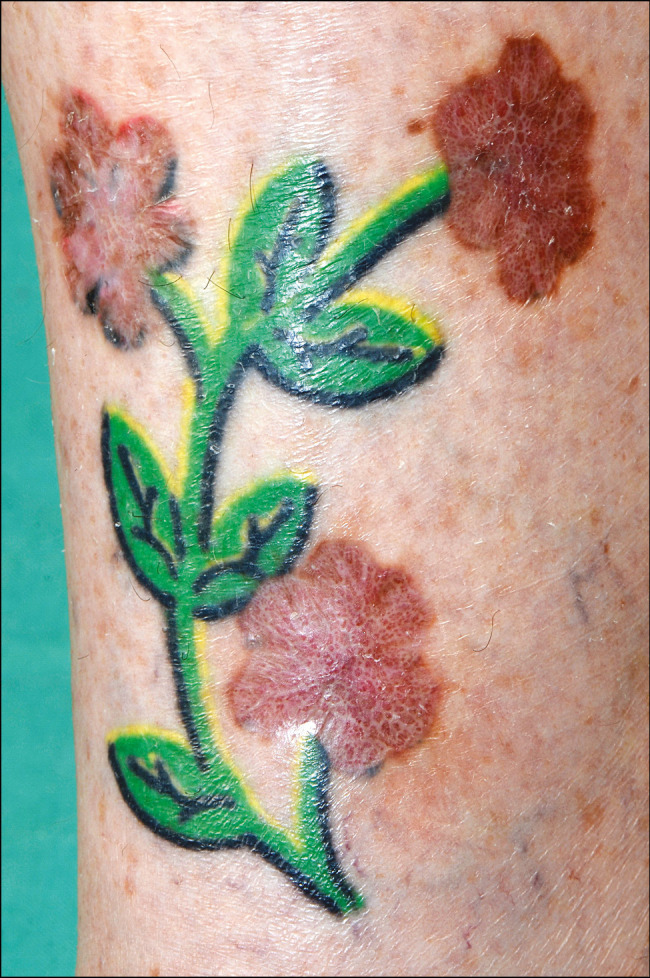
The best aesthetic results were achieved by superficial ablation of the inflammatory reaction, partially leaving tattoo remains in the skin.
Based on our experience with this small number of patients, a superficial removal of the tattoo without complete removal of the dye is, in most cases, sufficient to achieve healing. The remaining dye residues seem to be better tolerated by the immune system afterwards. Furthermore, the tattoo is often preserved in large parts.
在大多数情况下,红色纹身染料过敏反应的治疗具有挑战性,因为局部治疗通常无法带来长期改善,而且由于存在全身副作用的风险,许多作者认为激光治疗相对禁忌。因此,手术切除这些纹身更受青睐;削切术是首选方法,特别是对于去除整个染料。
本文的目的是回顾性分析使用不同切除技术手术切除过敏性纹身反应后的最佳术后效果。
我们比较了2013年至2018年间对7例单发和多发过敏性纹身反应患者实施的不同手术程序。
通过对炎症反应进行浅表消融,部分保留皮肤中的纹身,可获得最佳美学效果。
基于我们对这少数患者的经验,在大多数情况下,不完全去除染料而对纹身进行浅表切除足以实现愈合。剩余的染料残留似乎在之后能被免疫系统更好地耐受。此外,纹身通常大部分得以保留。