Chongqing Key Laboratory of Big Data for Bio Intelligence, School of Bioinformatics, Chongqing University of Posts and Telecommunications, Chongqing, 400065, China.
MOE Key Laboratory for Biodiversity Science and Ecological Engineering and Beijing Key Laboratory of Gene Resource and Molecular Development, College of Life Sciences, Beijing Normal University, Beijing, 100875, China.
Biol Direct. 2022 Jun 5;17(1):13. doi: 10.1186/s13062-022-00328-8.
The evolution of spliceosomal introns has been widely studied among various eukaryotic groups. Researchers nearly reached the consensuses on the pattern and the mechanisms of intron losses and gains across eukaryotes. However, according to previous studies that analyzed a few genes or genomes, Nematoda seems to be an eccentric group.
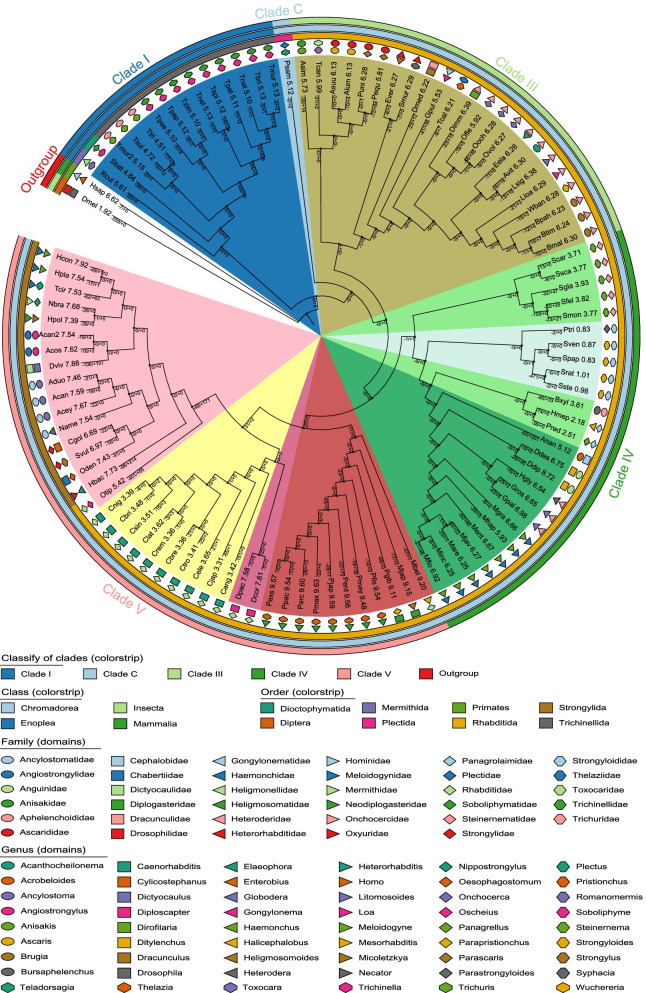
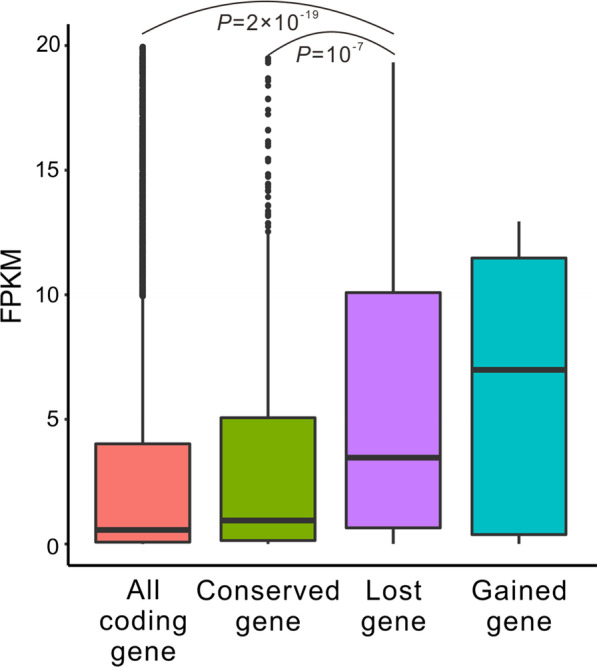
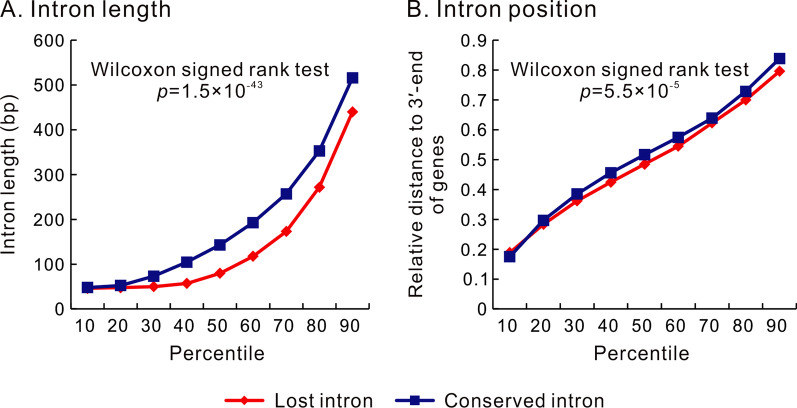
Taking advantage of the recent accumulation of sequenced genomes, we extensively analyzed the intron losses and gains using 104 nematode genomes across all the five Clades of the phylum. Nematodes have a wide range of intron density, from less than one to more than nine per kbp coding sequence. The rates of intron losses and gains exhibit significant heterogeneity both across different nematode lineages and across different evolutionary stages of the same lineage. The frequency of intron losses far exceeds that of intron gains. Five pieces of evidence supporting the model of cDNA-mediated intron loss have been observed in ten Caenorhabditis species, the dominance of the precise intron losses, frequent loss of adjacent introns, high-level expression of the intron-lost genes, preferential losses of short introns, and the preferential losses of introns close to 3'-ends of genes. Like studies in most eukaryotic groups, we cannot find the source sequences for the limited number of intron gains detected in the Caenorhabditis genomes.
These results indicate that nematodes are a typical eukaryotic group rather than an outlier in intron evolution.
剪接体内含子的进化在各种真核生物群体中得到了广泛研究。研究人员几乎就整个真核生物中内含子的缺失和获得模式和机制达成了共识。然而,根据之前分析少数基因或基因组的研究,线虫似乎是一个异常的群体。
利用最近积累的测序基因组,我们利用门内所有五个纲的 104 个线虫基因组,广泛分析了内含子的缺失和获得。线虫的内含子密度范围很广,从不到一个到每千碱基对编码序列超过九个。内含子缺失和获得的速率在不同的线虫谱系和同一谱系的不同进化阶段都表现出显著的异质性。内含子缺失的频率远远超过内含子获得的频率。在十个秀丽隐杆线虫物种中观察到了支持 cDNA 介导的内含子缺失模型的五份证据,即精确内含子缺失的优势、相邻内含子的频繁缺失、内含子缺失基因的高水平表达、短内含子的优先缺失以及靠近基因 3'端的内含子的优先缺失。与大多数真核生物群体的研究一样,我们无法找到在秀丽隐杆线虫基因组中检测到的有限数量内含子获得的来源序列。
这些结果表明线虫是一个典型的真核生物群体,而不是内含子进化中的异类。