Godina Christopher, Indira Chandran Vineesh, Barbachowska Magdalena, Tryggvadottir Helga, Nodin Björn, Visse Edward, Borgquist Signe, Jirström Karin, Isaksson Karolin, Bosch Ana, Belting Mattias, Jernström Helena
Division of Oncology, Department of Clinical Sciences in Lund, Lund University and Skåne University Hospital, Barngatan 4, Lund SE-221 85, Sweden.
Division of Oncology, Department of Clinical Sciences in Lund, Lund University and Skåne University Hospital, Barngatan 4, Lund SE-221 85, Sweden; Department of Hematology, Oncology and Radiation Physics, Skåne University Hospital, Sweden.
Transl Oncol. 2022 Aug;22:101464. doi: 10.1016/j.tranon.2022.101464. Epub 2022 Jun 1.
Caveolin-1 (CAV1) is associated with cholesterol-rich membrane raft domains and is a master regulator of cell signaling and membrane transport. Here, we investigated CAV1's role in cellular compartments of breast cancer in relation to signaling pathways, clinicopathological features, and clinical outcomes.
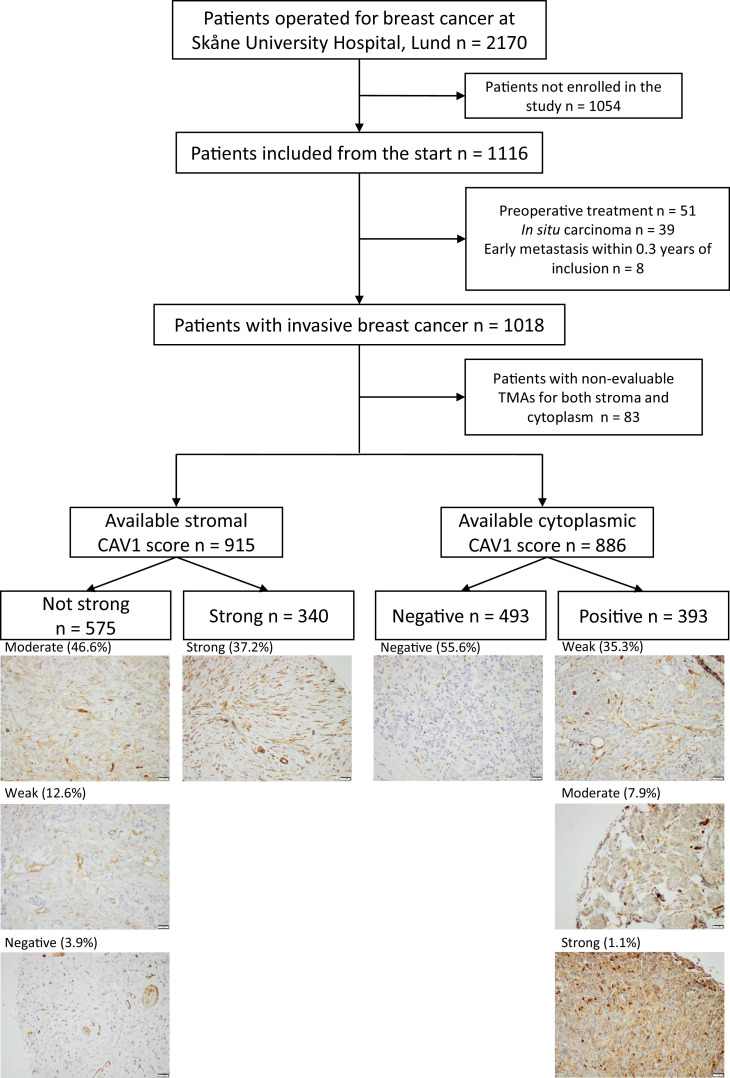
CAV1 levels were evaluated with immunohistochemistry in cytoplasm of invasive tumor cells and stromal cells in tumor tissue microarrays from a cohort of 1018 breast cancer patients (inclusion 2002-2012, Sweden). Cytoplasmic and stromal CAV1 were categorized as positive/negative and strong/not strong, respectively. CAV1 expression in relation to clinical outcomes was assessed with Cox regression. Investigations into CAV1 functional pathways was conducted in the STRING, GOBO, and TCGA databases.
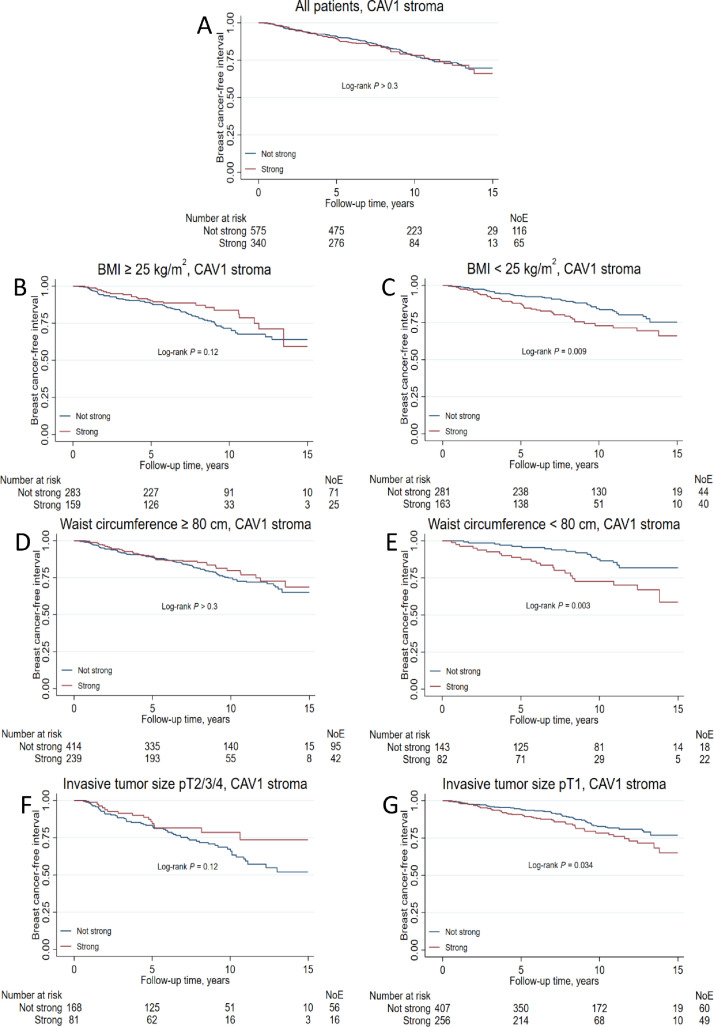
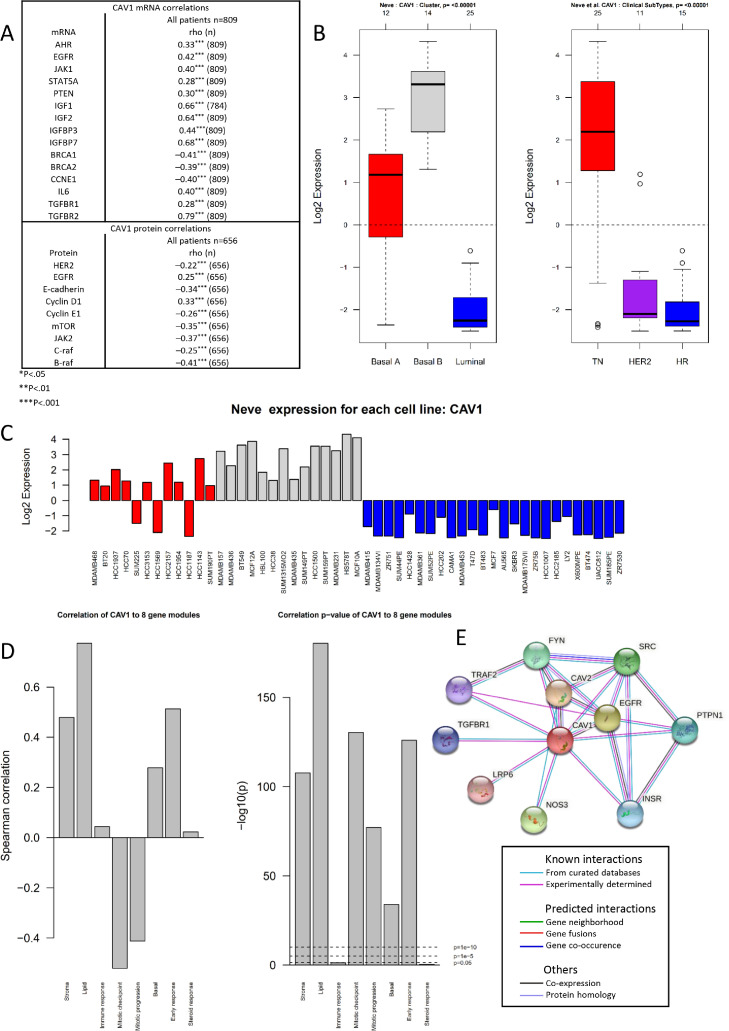
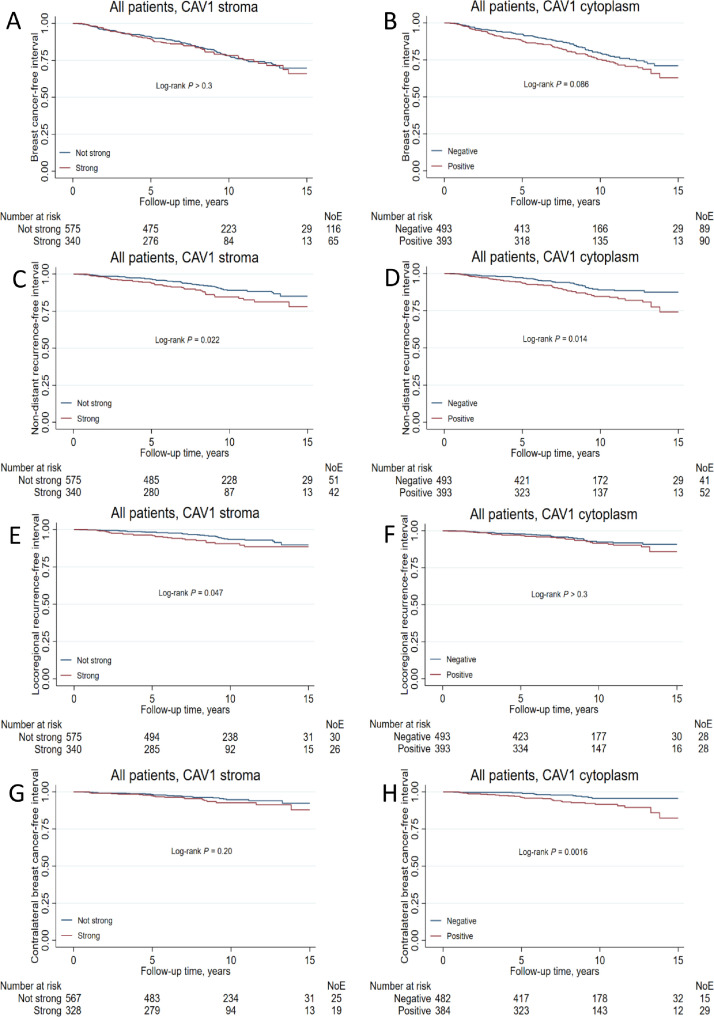
CAV1 expression was associated with non-luminal subtypes, cell cycle control, inflammation, epithelial-mesenchymal transition, and the IGF/Insulin system. Generally, CAV1 was not associated with recurrence risk. Stromal CAV1's impact on recurrence risk was modified by BMI ≥25 kg/m (P = 0.002), waist ≥80 cm (P = 0.005), and invasive tumor size (pT2/3/4) (P = 0.028). In low-risk patients only, strong stromal CAV1 significantly increased recurrence risk (HRs ≥1.61). In all patients, positive cytoplasmic CAV1 conferred >2-fold risk for contralateral disease HR 2.63 (95% CI 1.36-5.10). Strong stromal CAV1 conferred nearly 2-fold risk for locoregional recurrence HR 1.88 (95% CI 1.09-3.24).
CAV1's prognostic impact depended on its localization, anthropometric, and tumor factors. Stromal CAV1 predicted high recurrence risk in a group of supposedly 'low-risk' patients. Cytoplasmic CAV1 predicted metachronous contralateral disease. If confirmed, CAV1 could be used as treatment target and for risk-stratification.
小窝蛋白-1(CAV1)与富含胆固醇的膜筏结构域相关,是细胞信号传导和膜运输的主要调节因子。在此,我们研究了CAV1在乳腺癌细胞区室中的作用,及其与信号通路、临床病理特征和临床结局的关系。
采用免疫组织化学方法评估了1018例乳腺癌患者(纳入时间为2002 - 2012年,瑞典)肿瘤组织芯片中浸润性肿瘤细胞和基质细胞胞质内的CAV1水平。胞质和基质CAV1分别分为阳性/阴性和强/不强。采用Cox回归评估CAV1表达与临床结局的关系。在STRING、GOBO和TCGA数据库中对CAV1功能通路进行了研究。
CAV1表达与非腔面亚型、细胞周期调控、炎症、上皮-间质转化以及IGF/胰岛素系统相关。一般而言,CAV1与复发风险无关。基质CAV1对复发风险的影响因体重指数(BMI)≥25 kg/m²(P = 0.002)、腰围≥80 cm(P = 0.005)和浸润性肿瘤大小(pT2/3/4)(P = 0.028)而改变。仅在低风险患者中,强基质CAV1显著增加复发风险(风险比≥1.61)。在所有患者中,胞质CAV1阳性使对侧疾病风险增加2倍以上,风险比为2.63(95%可信区间1.36 - 5.10)。强基质CAV1使局部区域复发风险增加近2倍,风险比为1.88(95%可信区间1.09 - 3.24)。
CAV1的预后影响取决于其定位、人体测量学和肿瘤因素。基质CAV1在一组假定的“低风险”患者中预测高复发风险。胞质CAV1预测异时性对侧疾病。如果得到证实,CAV1可作为治疗靶点并用于风险分层。