Translational Medical Device Laboratory, National University of Ireland Galway, Galway, Ireland.
BJS Open. 2022 May 2;6(3). doi: 10.1093/bjsopen/zrac075.
Postoperative surgical adhesions constitute a major health burden internationally. A wide range of materials have been evaluated, but despite constructive efforts and the obvious necessity, there remains no specific barrier widely utilized to prevent postoperative adhesion formation. The aim of this study was to highlight and characterize materials used for prevention of postoperative surgical adhesions in both animal and human studies.
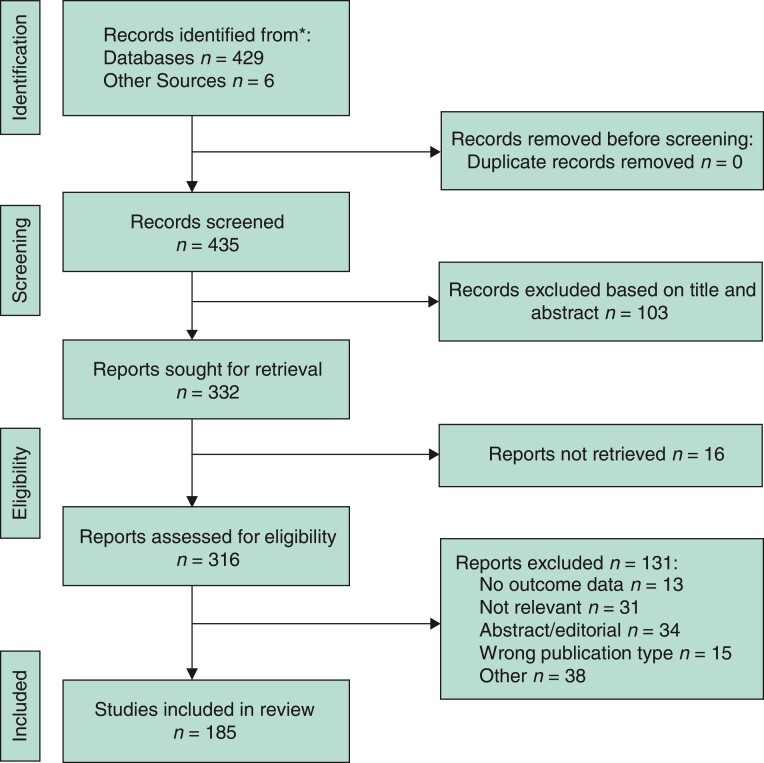
A systematic review was performed of all original research articles presenting data related to the prevention of postoperative adhesions using a barrier agent. All available observational studies and randomized trials using animal models or human participants were included, with no restrictions related to type of surgery. PubMed and Embase databases were searched using key terms from inception to August 2019. Standardized data collection forms were used to extract details for each study and assess desirable characteristics of each barrier and success in animal and/or human studies.
A total of 185 articles were identified for inclusion in the review, with a total of 67 unique adhesion barrier agents (37 natural and 30 synthetic materials). Desirable barrier characteristics of an ideal barrier were identified on review of the literature. Ten barriers achieved the primary outcome of reducing the incidence of postoperative adhesions in animal studies followed with positive outputs in human participants. A further 48 materials had successful results from animal studies, but with no human study performed to date.
Multiple barriers showed promise in animal studies, with several progressing to success, and fulfilment of desirable qualities, in human trials. No barrier is currently utilized commonly worldwide, but potential barriers have been identified to reduce the burden of postoperative adhesions and associated sequelae.
术后手术粘连在国际上构成了一个主要的健康负担。已经评估了广泛的材料,但尽管做出了建设性的努力,而且显然有必要,但仍然没有广泛用于预防术后粘连形成的特定屏障。本研究的目的是强调和描述在动物和人体研究中用于预防术后手术粘连的材料。
对所有使用屏障剂预防术后粘连的原始研究文章进行了系统评价。所有可获得的观察性研究和随机试验,包括使用动物模型或人体参与者的研究,均不受手术类型的限制。从开始到 2019 年 8 月,使用关键词在 PubMed 和 Embase 数据库中进行了搜索。使用标准化的数据收集表格提取每个研究的详细信息,并评估每个屏障的理想特征以及在动物和/或人体研究中的成功。
共确定了 185 篇文章纳入综述,共有 67 种独特的粘连屏障剂(37 种天然材料和 30 种合成材料)。在对文献的回顾中确定了理想屏障的理想屏障特征。在动物研究中,有 10 种屏障达到了降低术后粘连发生率的主要结果,随后在人体参与者中取得了积极的结果。另有 48 种材料在动物研究中取得了成功,但迄今为止尚未在人体研究中进行。
多种屏障在动物研究中显示出前景,其中几种在人体试验中取得了成功,并符合理想的特性。目前没有一种屏障在全球范围内广泛使用,但已经确定了潜在的屏障来减轻术后粘连和相关后遗症的负担。