Aryana I Gusti Putu Suka, Setiati Siti, Paulus Ivana Beatrice, Daniella Dian
Division of Geriatrics, Department of Internal Medicine, Faculty of Medicine, Universitas Udayana, Denpasar, Bali, Indonesia.
Division of Geriatrics, Department of Internal Medicine, Faculty of Medicine, Universitas Indonesia, Jakarta, Indonesia.
J Nutr Metab. 2022 Jun 1;2022:6119593. doi: 10.1155/2022/6119593. eCollection 2022.
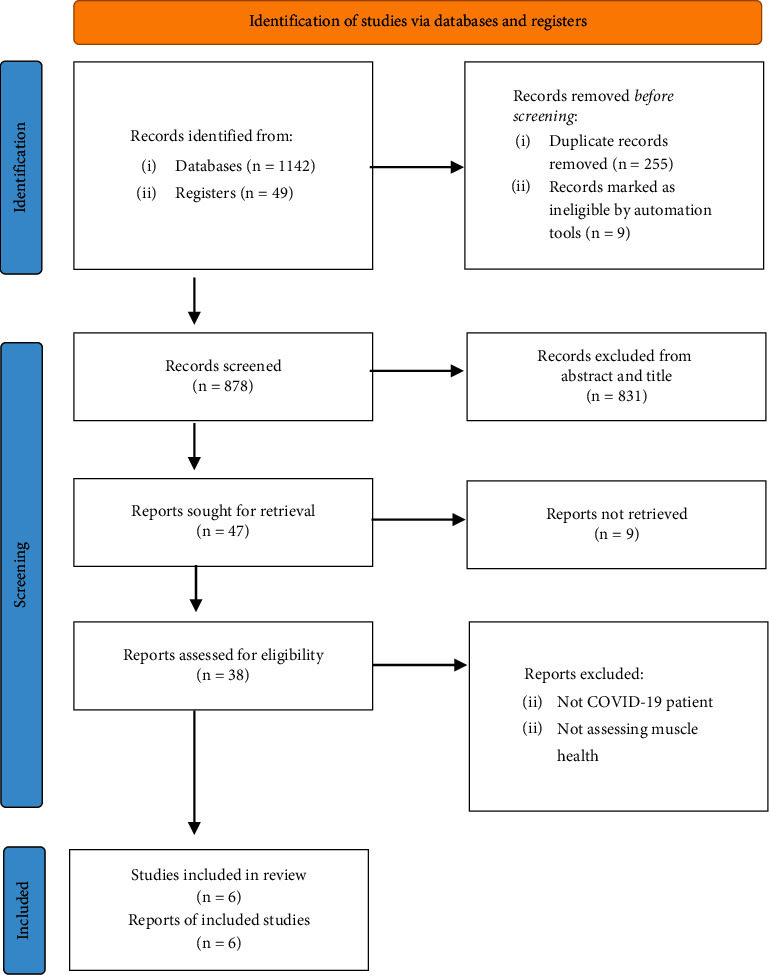
Physical activity is beneficial to modulate immune system function and has inverse relationship to ARDS linked with SARS-CoV-2. Physical activity consists of daily activity and physical training. Studies regarding effect of physical training on patients with COVID-19 are controversial. This systematic review aims to investigate physical training on muscle health and QOL in patients with COVID-19. The literature review was carried out using keywords: (Exercise) AND (COVID) AND (Muscle) AND (Observational Study) in several databases of PubMed and Cochrane Central Register of Controlled Trials (CENTRAL). All references were reviewed using critical appraisal Newcastle Ottawa Scale (NOS) and Centre for Evidence-Based Medicine (CEBM) checklist. The studies were subsequently screened for reporting exercise, muscle, and COVID-19. The descriptions of the extracted data are guided by Preferred Reporting Items for Systematic Reviews (PRISMA) statement with GRADE approach. This study is registered in PROSPERO: ID CRD42021295188. Six studies pooled and entered review synthesis. Studies were reviewed using critical appraisal by NOS and CEBM. Two clinical trial studies and four observational designs were selected. Our result showed physical training improved patients' outcomes in the acute phase, critical phase, and post-COVID-19 phase. Multiple types of physical trainings were suggested by those studies, and most of them showed beneficial effects to patients with COVID-19 in different phases. The level of evidence by GRADE was downgraded, and further investigations are needed to establish guidelines and strong recommendation for a specific stage of COVID-19.
体育活动有助于调节免疫系统功能,与新型冠状病毒肺炎相关的急性呼吸窘迫综合征呈负相关。体育活动包括日常活动和体育锻炼。关于体育锻炼对新型冠状病毒肺炎患者影响的研究存在争议。本系统评价旨在调查体育锻炼对新型冠状病毒肺炎患者肌肉健康和生活质量的影响。通过在PubMed和Cochrane对照试验中心注册库(CENTRAL)的多个数据库中使用关键词:(运动)与(新型冠状病毒)与(肌肉)与(观察性研究)进行文献综述。所有参考文献均使用纽卡斯尔渥太华量表(NOS)和循证医学中心(CEBM)清单进行批判性评价。随后对研究进行筛选,以报告运动、肌肉和新型冠状病毒肺炎相关内容。提取数据的描述以系统评价的首选报告项目(PRISMA)声明和GRADE方法为指导。本研究已在国际前瞻性系统评价注册库(PROSPERO)注册:ID CRD42021295188。六项研究进行汇总并纳入综述分析。研究使用NOS和CEBM进行批判性评价。选择了两项临床试验研究和四项观察性设计。我们的结果表明,体育锻炼在急性期、重症期和新型冠状病毒肺炎康复期改善了患者的预后。这些研究提出了多种类型的体育锻炼,其中大多数对不同阶段的新型冠状病毒肺炎患者显示出有益效果。GRADE证据等级被下调,需要进一步研究以制定针对新型冠状病毒肺炎特定阶段的指南和强有力的建议。