Hou Lynn
Department of Linguistics, University of California, Santa Barbara, Santa Barbara, CA, United States.
Front Psychol. 2022 May 17;13:808493. doi: 10.3389/fpsyg.2022.808493. eCollection 2022.
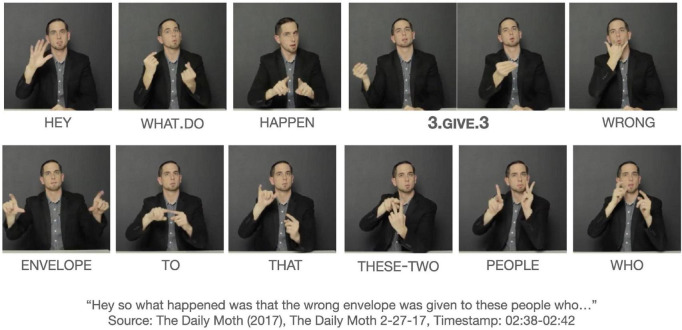
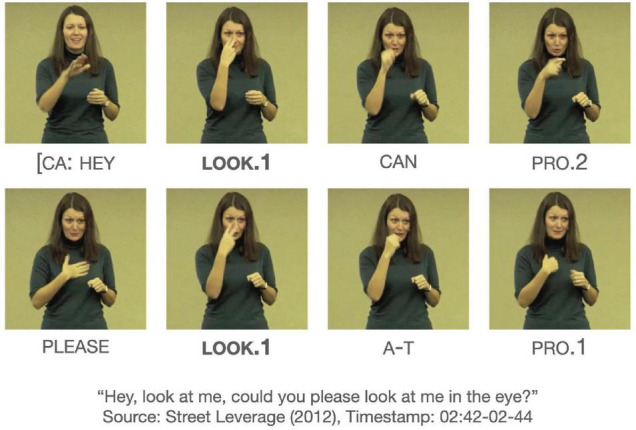
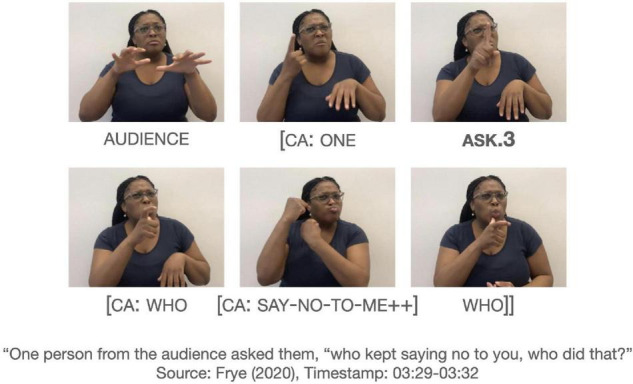
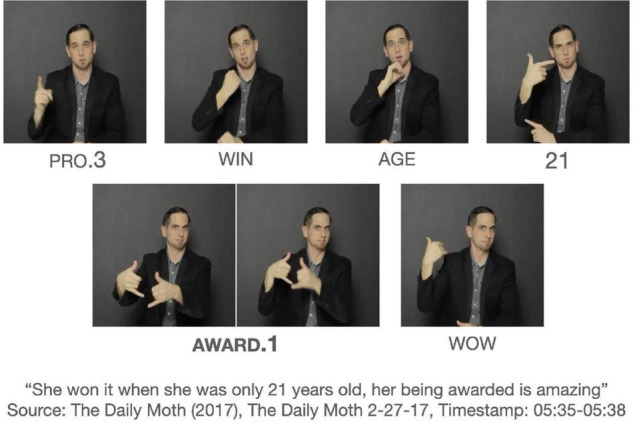
Verb agreement in signed languages has received substantial attention for a long time. Despite the numerous analyses about the linguistic status of verb agreement, there is little discussion about the argument structure associated with "directional verbs," also known as agreeing/agreement or indicating verbs. This paper proposes a usage-based approach for analyzing argument structure constructions of directional verbs in American Sign Language (ASL). The proposal offers low-level constructions for reported speech, non-dedicated passive and reflexive, and stance verb constructions, which capture the patterns, abstracted from recurring usage events, that are part of users' linguistic knowledge. The approach has potential to push the field of sign linguistics in new directions of understanding the interplay of language use and structure.
长期以来,手语中的动词一致问题受到了广泛关注。尽管对动词一致的语言地位进行了大量分析,但对于与“定向动词”(也称为一致/协定或指示动词)相关的论元结构却鲜有讨论。本文提出了一种基于用法的方法来分析美国手语(ASL)中定向动词的论元结构构式。该提议提供了用于间接引语、非专门被动和反身以及姿态动词构式的低层次构式,这些构式捕捉了从反复出现的使用事件中抽象出来的模式,而这些模式是使用者语言知识的一部分。这种方法有可能推动手语语言学领域朝着理解语言使用与结构相互作用的新方向发展。