AlMasoudi Razan M, Bahaj Reem K, Kokandi Amal A
Medicine and Surgery, Ibn-Sina National College, Jeddah, SAU.
Medical Laboratory Technology, Faculty of Applied Medical Sciences, King Abdulaziz University, Jeddah, SAU.
Cureus. 2022 Apr 30;14(4):e24628. doi: 10.7759/cureus.24628. eCollection 2022 Apr.
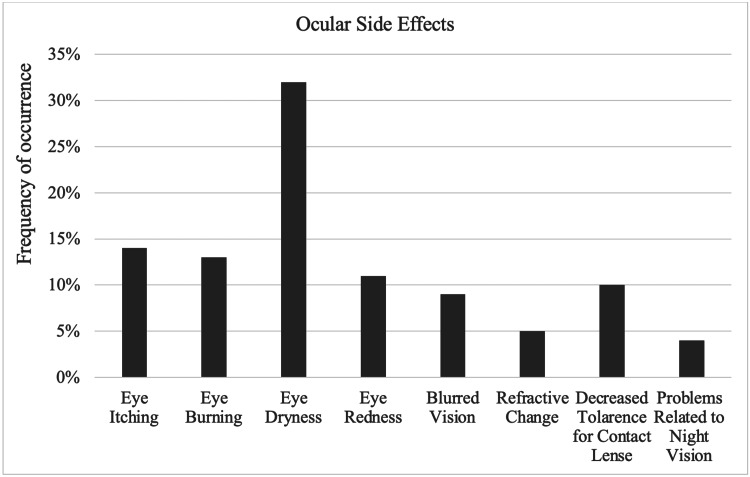
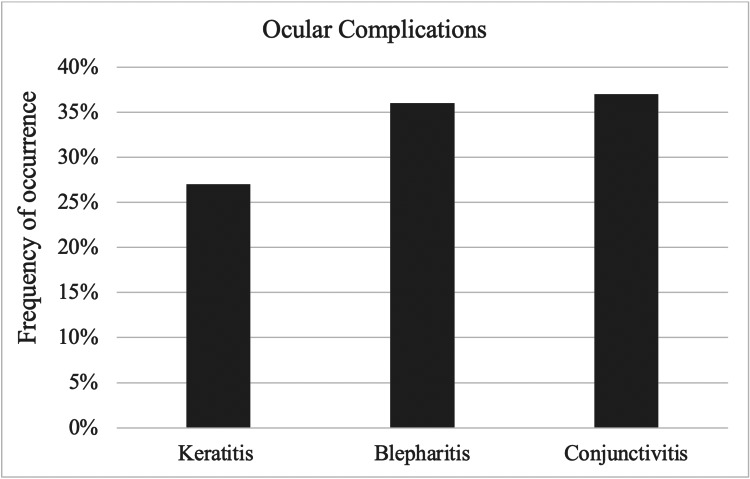
Introduction Isotretinoin is one of the most commonly prescribed drugs among dermatologists because it's used in the treatment of Acne vulgaris. Despite having an adequate safety profile, isotretinoin-related adverse events are common, with ocular manifestations being one of them. Although being generally mild, ophthalmologic manifestations associated with isotretinoin may cause significant ocular morbidity. Objectives The objective is to evaluate the awareness of the ocular side effects of isotretinoin treatment in patients with acne and to understand the treating physicians' practice of prescribing isotretinoin from the patient's point of view. Method A descriptive cross-sectional study was conducted on a Saudi Arabian population from June to September 2021. We used a self-administered questionnaire to collect data on drug dose, treatment duration, ocular adverse effects, patients' awareness, and patients' perception of treating physicians' practice. Results Of 1,157 responders, 452 (39.1%) consisted of participants who met the inclusion criteria, therefore they were enrolled in the study. Out of our responders, 308 (68.1%) were women. Approximately, 91.6% of participants had a dermatologist's prescription for isotretinoin. Eye dryness was the most commonly reported ocular adverse effect (83.4%). Blepharitis and conjunctivitis were the most commonly diagnosed complications after starting isotretinoin (5.4% for each). Approximately, 71.2% participants were not advised to see an ophthalmologist for ophthalmological screening. Physicians asked only 78 (17.3%) respondents about a recent refractive surgery before starting isotretinoin or if they intended to undergo a refractive surgery in the next six months. Approximately, 57.5% participants were unaware of possible contact lens intolerance. Lubricant eye drops were prescribed to 305 (67.5%) respondents during isotretinoin treatment. Approximately, 36.7% participants were advised to consult their treating physicians if they had any serious ocular signs or symptoms. Approximately, 67.9% participants reported their awareness of the ocular side effects of isotretinoin therapy. However, 236 (52.2%) participants responded that they were not provided with sufficient information on the ocular side effects of isotretinoin therapy.
引言
异维A酸是皮肤科医生最常开具的药物之一,因为它用于治疗寻常痤疮。尽管异维A酸具有足够的安全性,但与异维A酸相关的不良事件很常见,眼部表现就是其中之一。虽然通常较为轻微,但与异维A酸相关的眼科表现可能会导致严重的眼部疾病。
目的
目的是评估痤疮患者对异维A酸治疗眼部副作用的认识,并从患者角度了解治疗医生开具异维A酸的做法。
方法
2021年6月至9月对沙特阿拉伯人群进行了一项描述性横断面研究。我们使用自行填写的问卷收集有关药物剂量、治疗持续时间、眼部不良反应、患者认识以及患者对治疗医生做法的看法的数据。
结果
在1157名应答者中,452名(39.1%)符合纳入标准,因此被纳入研究。在我们的应答者中,308名(68.1%)为女性。大约91.6%的参与者有皮肤科医生开具的异维A酸处方。眼干是最常报告的眼部不良反应(83.4%)。睑缘炎和结膜炎是开始使用异维A酸后最常诊断出的并发症(各为5.4%)。大约71.2%的参与者未被建议去看眼科医生进行眼科筛查。医生在开始使用异维A酸之前仅询问了78名(17.3%)应答者近期是否进行过屈光手术或是否打算在接下来的六个月内进行屈光手术。大约57.5%的参与者不知道可能存在隐形眼镜不耐受情况。在异维A酸治疗期间,305名(67.5%)应答者被开具了润滑眼药水。大约36.7%的参与者被告知如果出现任何严重的眼部体征或症状应咨询治疗医生。大约67.9%的参与者报告他们了解异维A酸治疗的眼部副作用。然而,236名(52.2%)参与者回答他们未获得关于异维A酸治疗眼部副作用的充分信息。