Mathew Deepa, Luo Qianyi, Bhatwadekar Ashay D
Department of Ophthalmology Indiana University Indianapolis Indiana USA.
FASEB Bioadv. 2022 Feb 7;4(6):364-378. doi: 10.1096/fba.2021-00125. eCollection 2022 Jun.
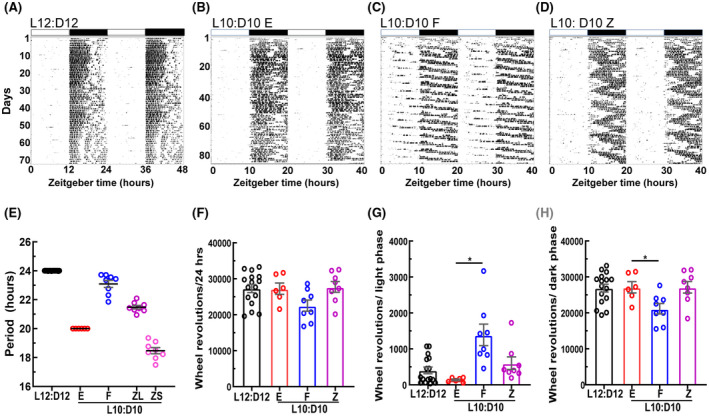
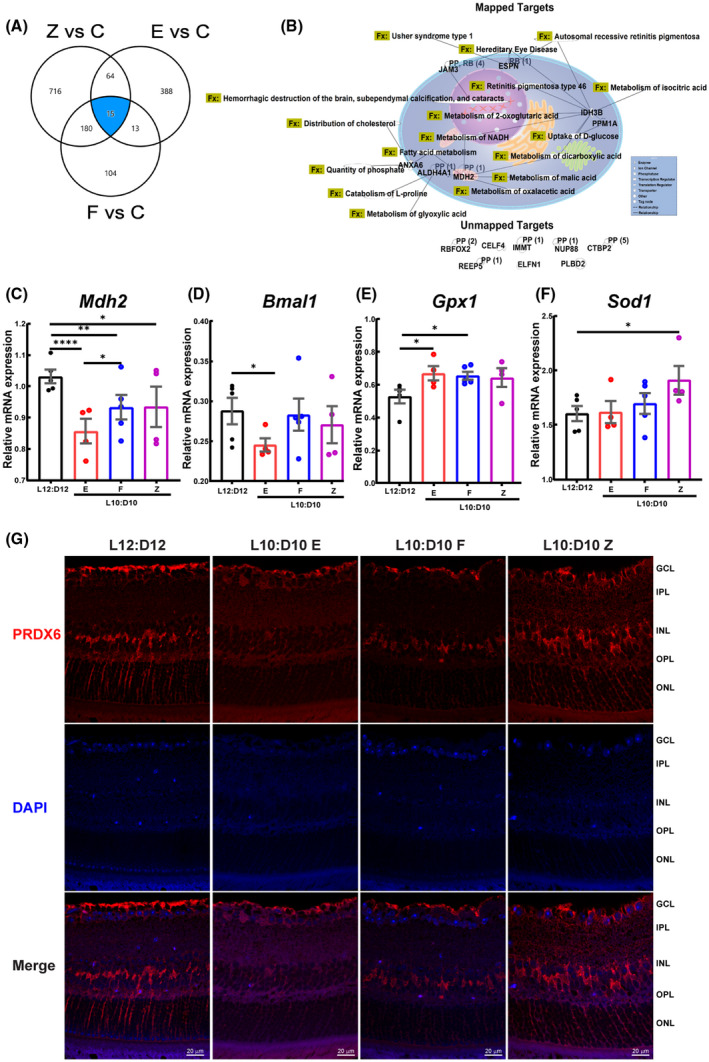
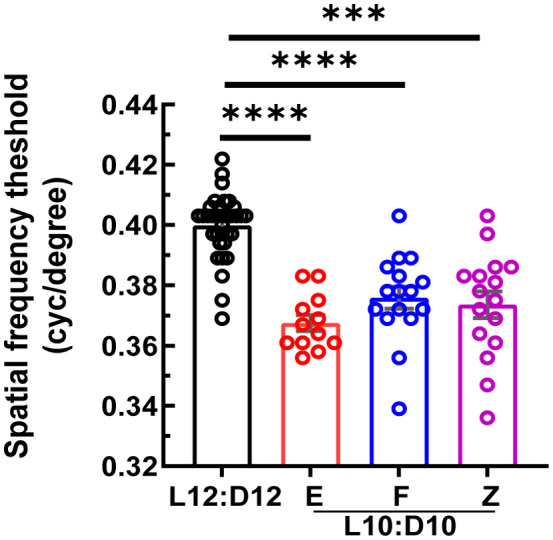
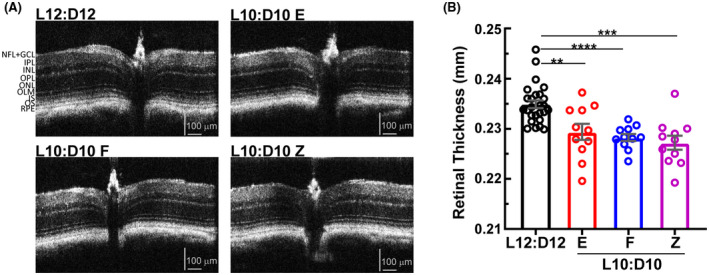
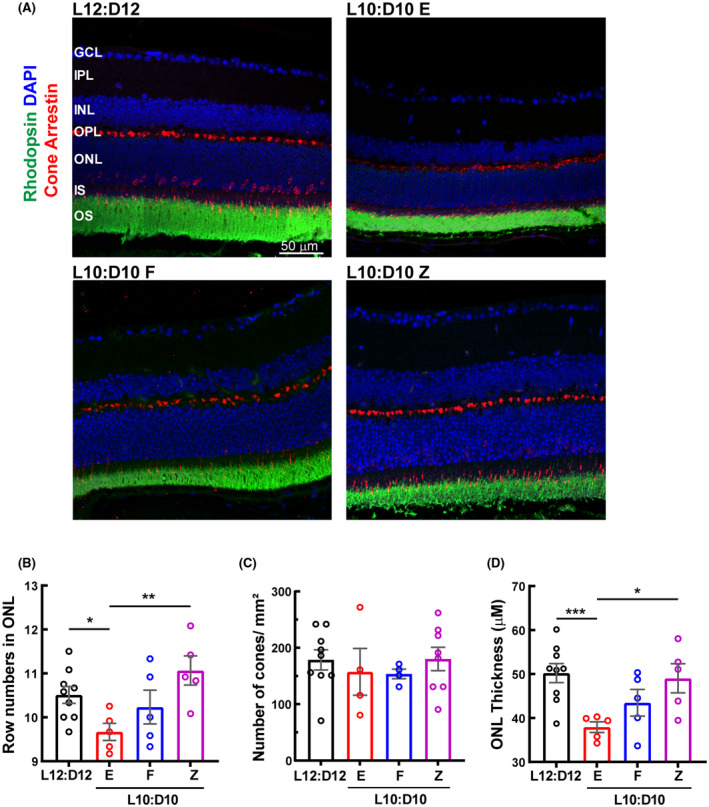
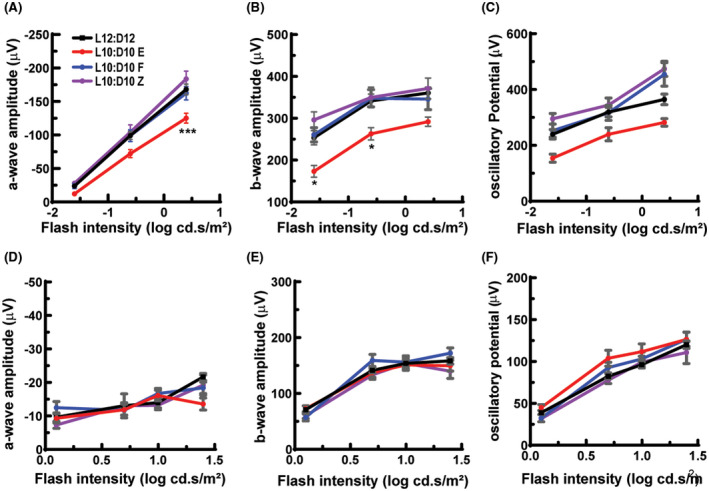
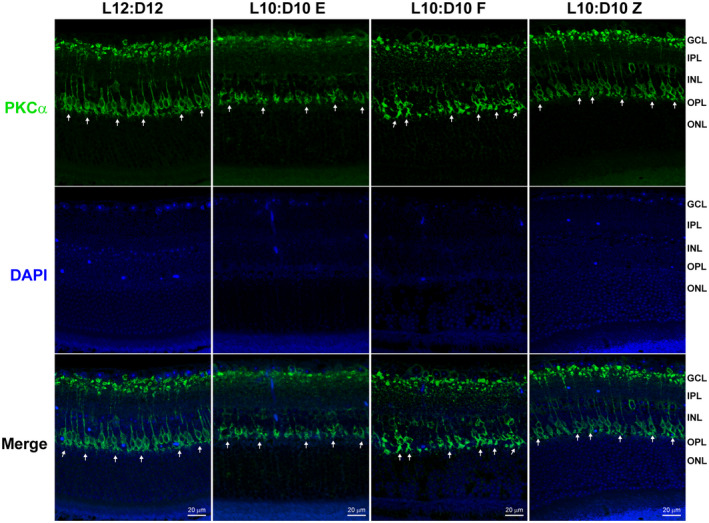
Artificial light has been increasingly in use for the past 70 years. The aberrant light exposure and round-the-clock nature of work lead to the disruption of biological clock. Circadian rhythm disruption (CRD) contributes to multiple metabolic and neurodegenerative diseases. However, its effect on vision is not understood. Moreover, the mammalian retina possesses an autonomous clock that could be reset with light exposure. We evaluated the impact of CRD on retinal morphology, physiology, and vision after housing mice in a disruption inducing shorter light/dark cycle (L10:D10). Interestingly, the mice under L10:D10 exhibited three different entrainment behaviors; "entrained," "free-running," and "zigzagging." These behavior groups under CRD exhibited reduced visual acuity, retinal thinning, and a decrease in the number of photoreceptors. Intriguingly, the electroretinogram response was decreased only in the mice exhibiting "entrained" behavior. The retinal proteome showed distinct changes with each entrainment behavior, and there was a dysfunctional oxidative stress-antioxidant mechanism. These results demonstrate that CRD alters entrainment behavior and leads to visual dysfunction in mice. Our studies uniquely show the effect of entrainment behavior on retinal physiology. Our data have broader implications in understanding and mitigating the impact of CRD on vision and its potential role in the etiology of retinal diseases.
在过去70年里,人造光的使用日益增加。异常的光照暴露和全天候的工作性质导致生物钟紊乱。昼夜节律紊乱(CRD)会引发多种代谢和神经退行性疾病。然而,其对视力的影响尚不清楚。此外,哺乳动物的视网膜拥有一个自主时钟,可通过光照进行重置。我们将小鼠饲养在诱导昼夜周期缩短(L10:D10)的环境中,以评估CRD对视网膜形态、生理和视力的影响。有趣的是,处于L10:D10环境下的小鼠表现出三种不同的同步行为;“同步”、“自由运行”和“曲折”。CRD下的这些行为组表现出视力下降、视网膜变薄和光感受器数量减少。有趣的是,视网膜电图反应仅在表现出“同步”行为的小鼠中降低。视网膜蛋白质组随着每种同步行为呈现出明显变化,并且存在氧化应激 - 抗氧化机制功能失调。这些结果表明,CRD会改变同步行为并导致小鼠视觉功能障碍。我们的研究独特地展示了同步行为对视网膜生理的影响。我们的数据对于理解和减轻CRD对视力的影响及其在视网膜疾病病因学中的潜在作用具有更广泛的意义。