Department of Microbiology, Immunology and Laboratory Medicine, Pomeranian Medical University, Powstańców Wlkp. 72, 70-111 Szczecin, Poland.
Department of Nephrology, Transplantology and Internal Medicine, Pomeranian Medical University, Powstańców Wlkp. 72, 70-111 Szczecin, Poland.
J Immunol Res. 2022 May 28;2022:6572338. doi: 10.1155/2022/6572338. eCollection 2022.
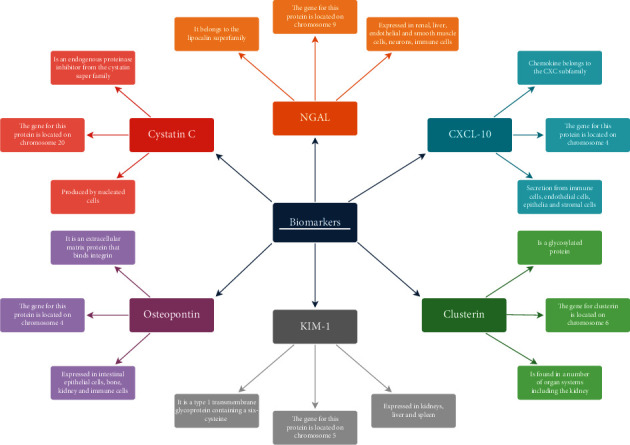
Clinical transplantology is a constantly evolving field of medicine. Kidney transplantation has become standard clinical practice, and it has a significant impact on reducing mortality and improving the quality of life of patients. Allogenic transplantation induces an immune response, which may lead to the rejection of the transplanted organ. The gold standard for evaluating rejection of the transplanted kidney by the recipient's organism is a biopsy of this organ. However, due to the high invasiveness of this procedure, alternative diagnostic methods are being sought. Therefore, the biomarkers may play an essential predictive role in transplant rejection. A review of the most promising biomarkers for early diagnosis and prognosis prediction of allogenic kidney transplant rejection summarizes novel data on neutrophil gelatinase-associated lipocalin (NGAL), kidney injury molecule-1 (KIM-1), C-X-C motif chemokine 10 (CXCL-10), cystatin C (CysC), osteopontin (OPN), and clusterin (CLU) and analyses the dynamics of changes of the biomarkers mentioned above in kidney diseases and the mechanism of rejection of the transplanted kidney.
临床移植学是医学领域中一个不断发展的分支。肾移植已成为标准的临床实践,它对降低死亡率和提高患者生活质量有重大影响。同种异体移植会引起免疫反应,从而导致移植器官被排斥。评估受者机体对移植肾脏排斥的金标准是对该器官进行活检。然而,由于该操作具有高度侵入性,因此正在寻找替代的诊断方法。因此,生物标志物可能在移植排斥的预测中发挥重要作用。本文综述了用于早期诊断和预测同种异体肾移植排斥的最有前途的生物标志物,总结了中性粒细胞明胶酶相关脂质运载蛋白 (NGAL)、肾损伤分子-1 (KIM-1)、C-X-C 基元趋化因子 10 (CXCL-10)、胱抑素 C (CysC)、骨桥蛋白 (OPN) 和簇蛋白 (CLU) 的最新数据,并分析了上述生物标志物在肾脏疾病中的变化动态和移植肾排斥的机制。