National Institution of Drug Clinical Trial, Xiangya Hospital, Central South University, Changsha, China.
China National Clinical Research Center for Geriatric Disorders, Xiangya Hospital, Central South University, Changsha, China.
Front Immunol. 2022 May 20;13:859730. doi: 10.3389/fimmu.2022.859730. eCollection 2022.
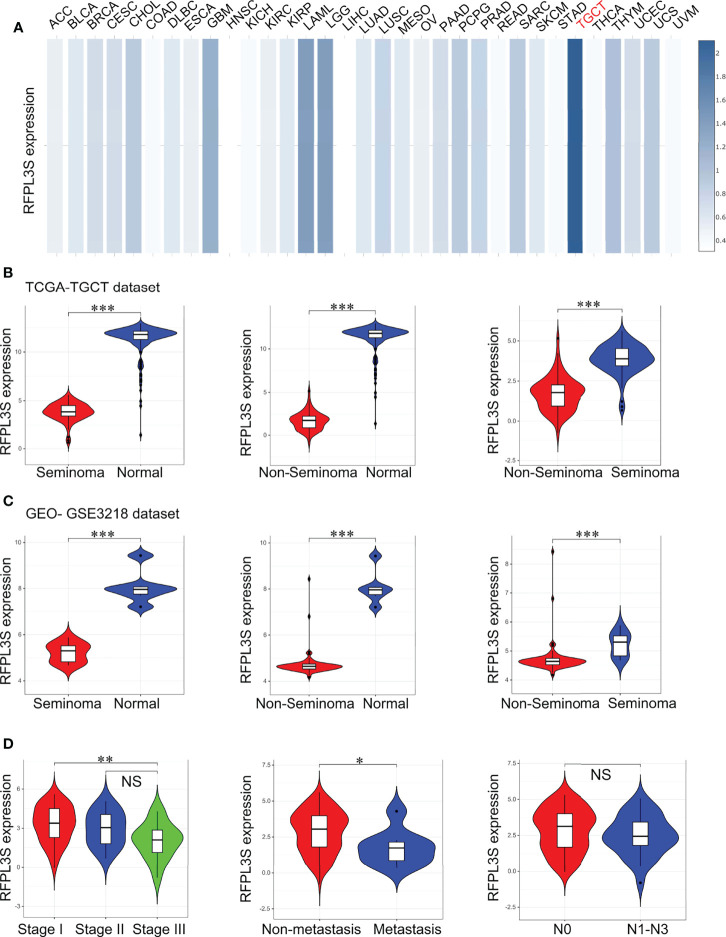
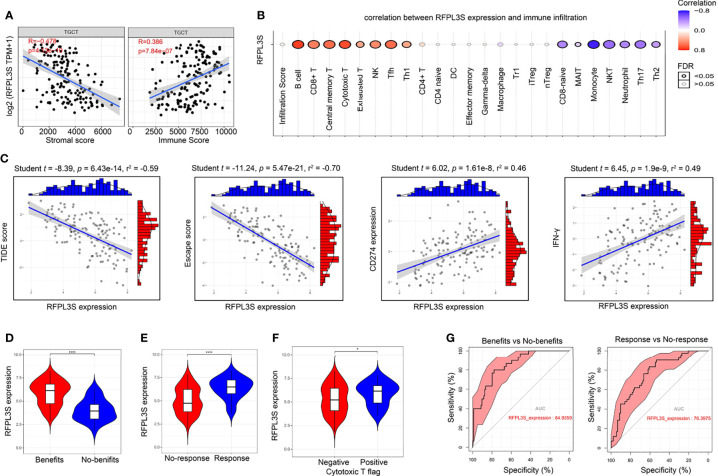
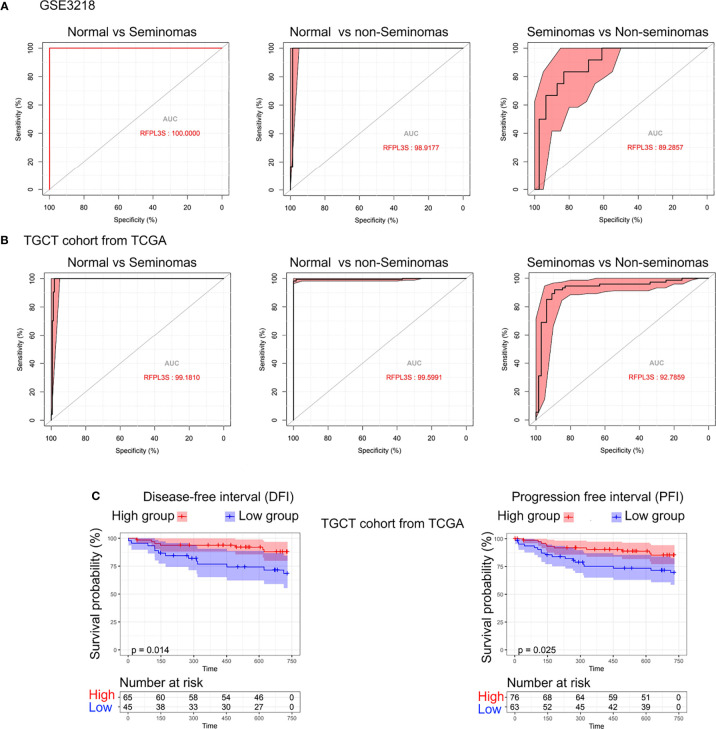
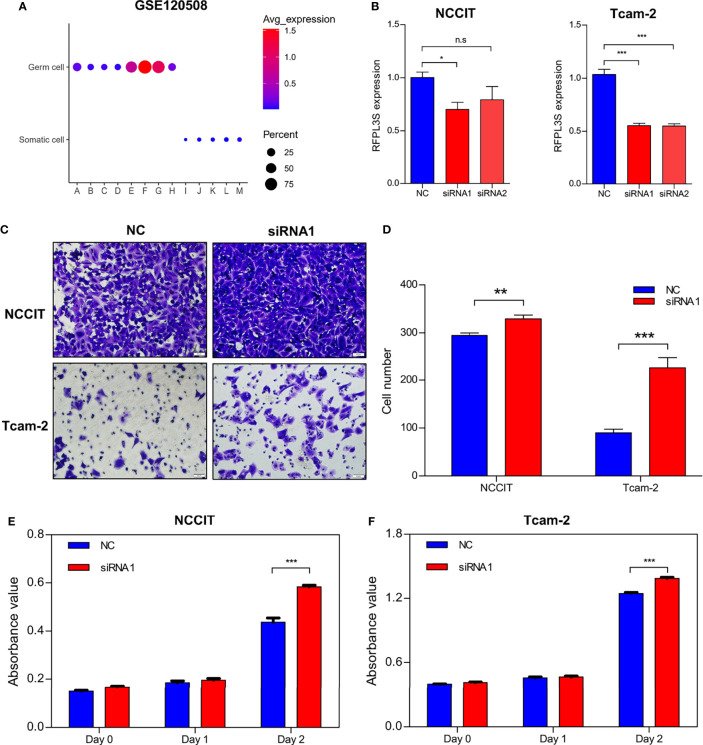
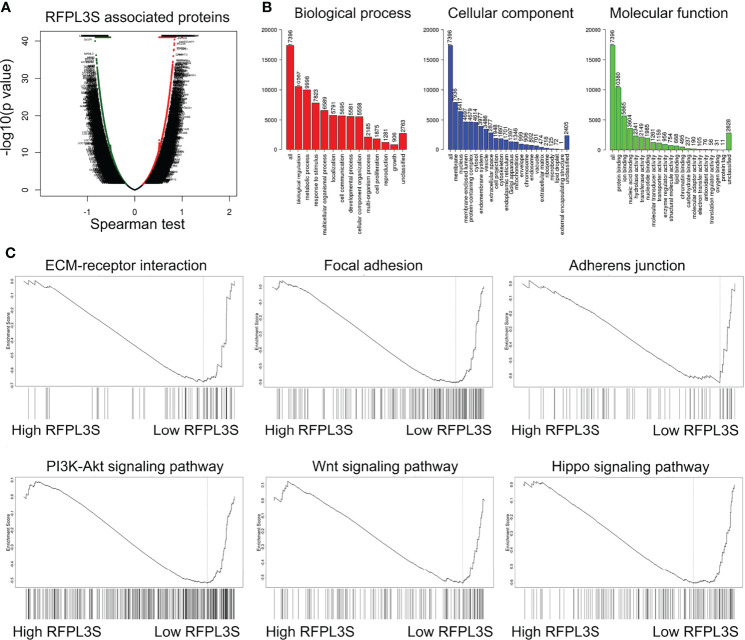
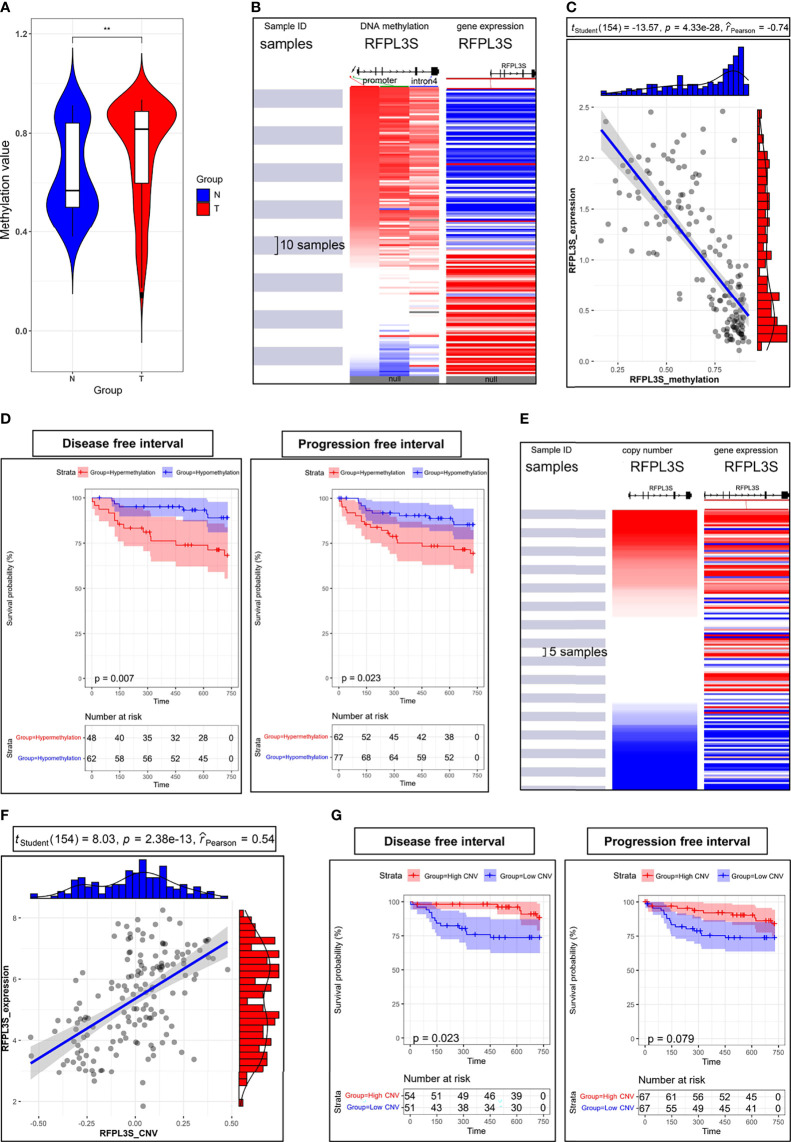
The incidence of testicular germ cell tumor (TGCT) is currently on the rise worldwide, of which 15%-30% of patients have occur recurrence and metastasis. However, clinical methods for diagnosing TGCT and judging its prognosis remained inadequate. In this study, we aimed to explore the possibility of testis-specific long-chain non-coding RNA (lncRNA) Ret finger protein-like 3S (RFPL3S) as a biomarker for TGCT diagnosis, prognosis, and treatment response by reviewing the TGCT gene expression data in Gene Expression Omnibus (GEO) and The Cancer Genome Atlas (TCGA) databases. The cohort data and DNA methylation data of TGCT in TCGA were downloaded from TGCA, UCSC XENA, and GEO. The bioinformatic tools were used, including GEPIA2, Kaplan-Meier Plotter, LinkedOmics, UCSC XENA, Sangerbox Tools, GSCA, and Tumor Immune Dysfunction and Exclusion. Compared with normal testicular tissues, the RFPL3S expression was significantly reduced in TGCT, and was significantly negatively correlated with the patient's Tumor, Node, Metastasis stage. Hypermethylation and low copy number of RFPL3S were present in TGCT, and low RFPL3S was associated with short disease-free and progression-free intervals. Silencing RFPL3S significantly enhanced the invasion ability and proliferation ability of TGCT cells as evaluated by Transwell and CCK-8 experiments. Additionally, RFPL3S expression was positively correlated with the infiltration of immune-activating cells such as B cells, CD8+ T cells, cytotoxic T cells, and natural killer cells, and negatively correlated with the infiltration of immunosuppressive cells such as Th17 and Th2. Higher RFPL3S expression was present in patients with immunotherapy benefits. In conclusion, we determined that the testis-specific lncRNA RFPL3S functioned as a tumor suppressor in TGCT and could be used as a prognostic predictor of TGCT, as well as a marker to predict the effect of TGCT immunotherapy.
睾丸生殖细胞肿瘤 (TGCT) 的发病率目前在全球呈上升趋势,其中 15%-30%的患者发生复发和转移。然而,目前临床上用于诊断 TGCT 和判断其预后的方法仍然不足。在这项研究中,我们通过查阅基因表达数据库(GEO)和癌症基因组图谱(TCGA)中 TGCT 的基因表达数据,旨在探讨睾丸特异性长链非编码 RNA (lncRNA) Ret finger protein-like 3S (RFPL3S) 是否可作为 TGCT 诊断、预后和治疗反应的生物标志物。从 TCGA、UCSC XENA 和 GEO 下载 TGCT 的队列数据和 DNA 甲基化数据。使用 GEPIA2、Kaplan-Meier Plotter、LinkedOmics、UCSC XENA、Sangerbox Tools、GSCA 和 Tumor Immune Dysfunction and Exclusion 等生物信息学工具。与正常睾丸组织相比,RFPL3S 在 TGCT 中的表达显著降低,且与患者的肿瘤、淋巴结、转移分期显著负相关。在 TGCT 中存在 RFPL3S 的高甲基化和低拷贝数,且低 RFPL3S 与无病生存期和无进展生存期较短有关。通过 Transwell 和 CCK-8 实验评估,沉默 RFPL3S 显著增强了 TGCT 细胞的侵袭能力和增殖能力。此外,RFPL3S 的表达与 B 细胞、CD8+T 细胞、细胞毒性 T 细胞和自然杀伤细胞等免疫激活细胞的浸润呈正相关,与 Th17 和 Th2 等免疫抑制细胞的浸润呈负相关。免疫治疗获益患者的 RFPL3S 表达较高。总之,我们确定睾丸特异性 lncRNA RFPL3S 在 TGCT 中发挥肿瘤抑制作用,可作为 TGCT 的预后预测指标,以及预测 TGCT 免疫治疗效果的标志物。