Australian Institute for Microbiology and Infection, School of Life Sciences, Faculty of Science, University of Technology Sydney, Ultimo, New South Wales, Australia.
Asia-Pacific Centre for Animal Health, Department of Veterinary Biosciences, Melbourne Veterinary School, Faculty of Veterinary and Agricultural Sciences, University of Melbournegrid.1008.9, Parkville and Werribee, Victoria, Australia.
Microbiol Spectr. 2022 Jun 29;10(3):e0129122. doi: 10.1128/spectrum.01291-22. Epub 2022 Jun 8.
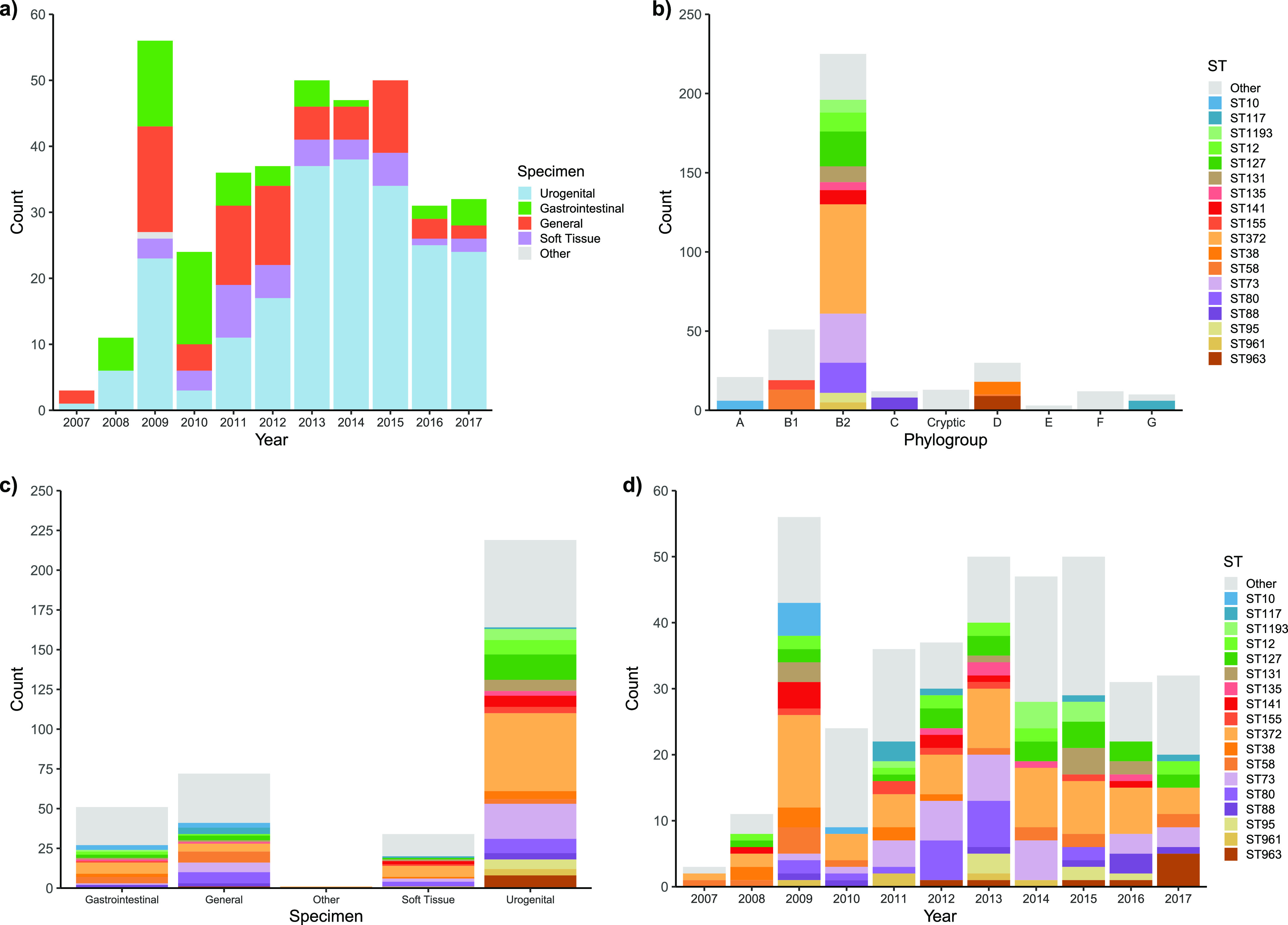
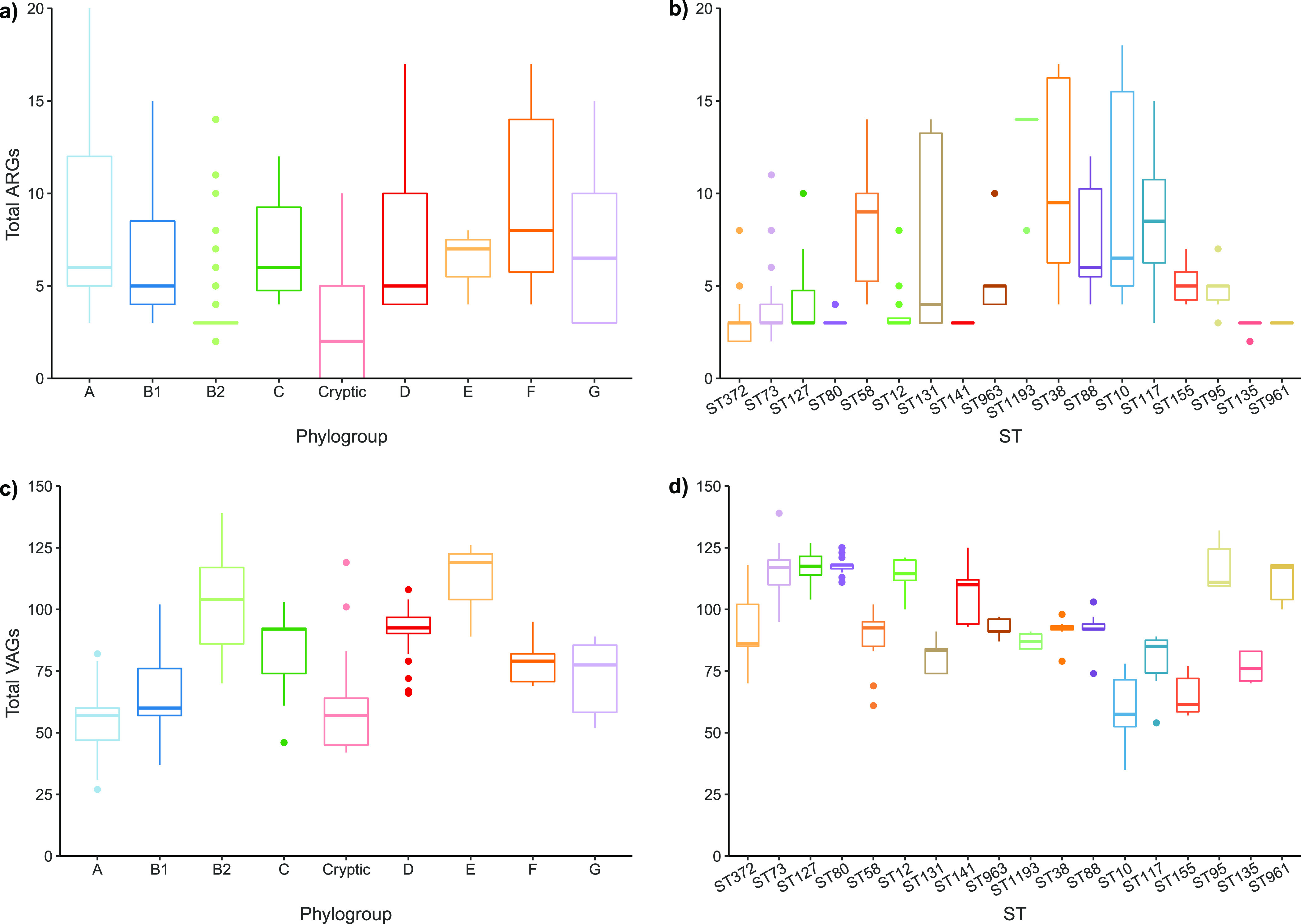
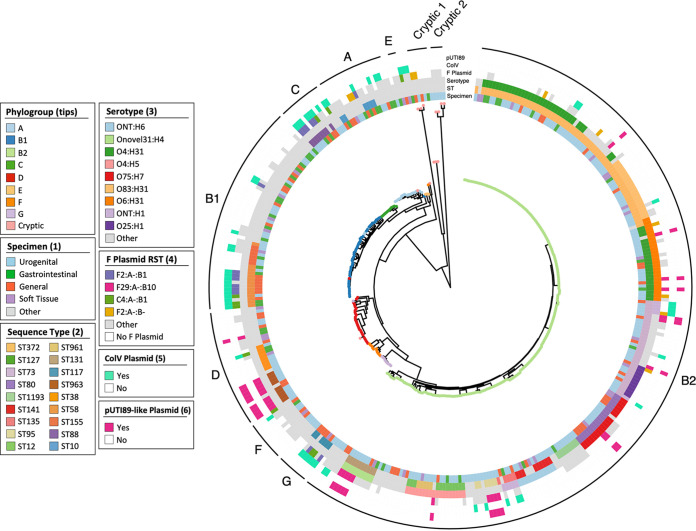
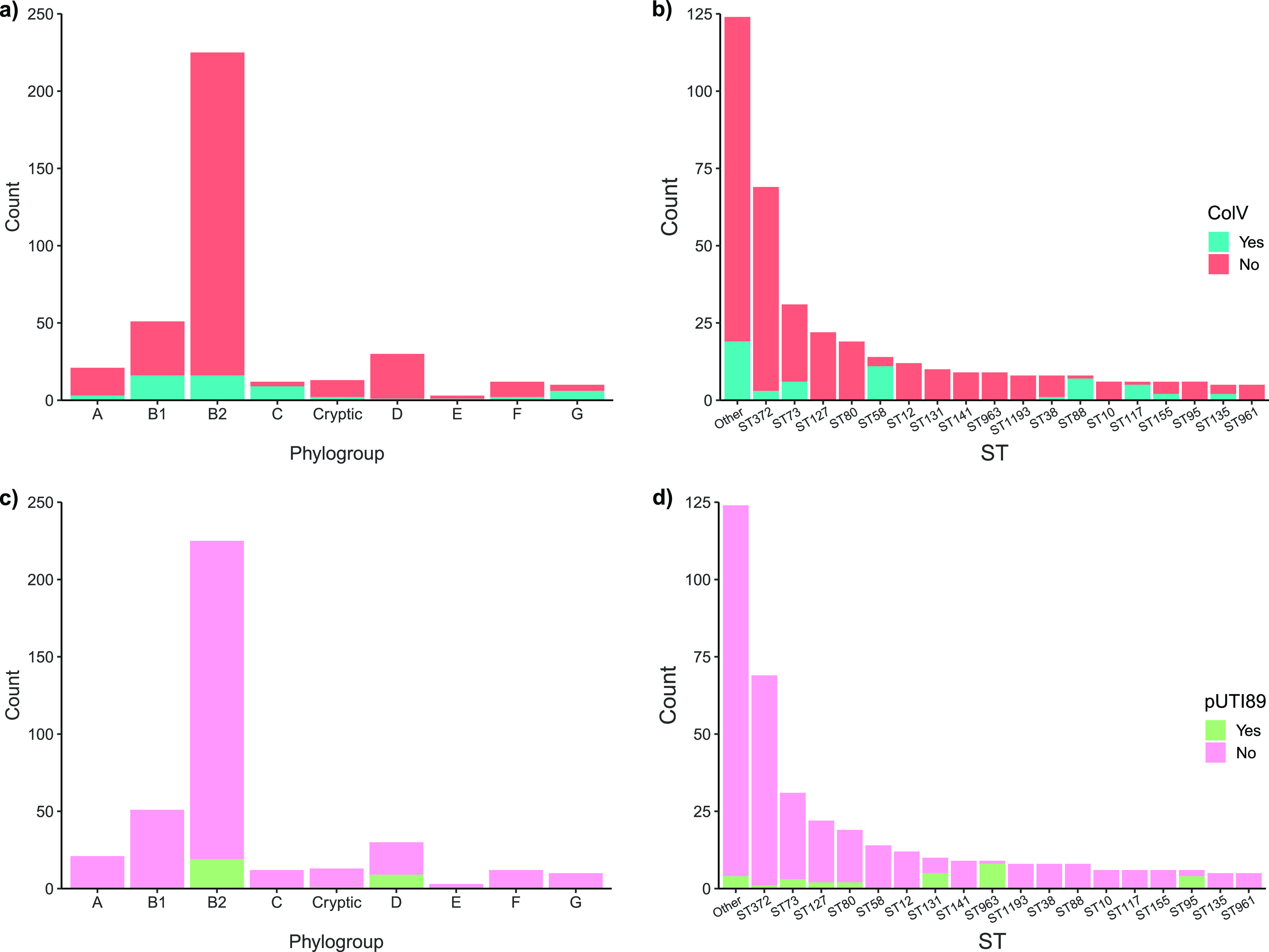
Companion animals and humans are known to share extraintestinal pathogenic Escherichia coli (ExPEC), but the extent of E. coli sequence types (STs) that cause extraintestinal diseases in dogs is not well understood. Here, we generated whole-genome sequences of 377 ExPEC collected by the University of Melbourne Veterinary Hospital from dogs over an 11-year period from 2007 to 2017. Isolates were predominantly from urogenital tract infections (219, 58.1%), but isolates from gastrointestinal specimens (51, 13.5%), general infections (72, 19.1%), and soft tissue infections (34, 9%) were also represented. A diverse collection of 53 STs were identified, with 18 of these including at least five sequences. The five most prevalent STs were ST372 (69, 18.3%), ST73 (31, 8.2%), ST127 (22, 5.8%), ST80 (19, 5.0%), and ST58 (14, 3.7%). Apart from ST372, all of these are prominent human ExPEC STs. Other common ExPEC STs identified included ST12, ST131, ST95, ST141, ST963, ST1193, ST88, and ST38. Virulence gene profiles, antimicrobial resistance carriage, and trends in plasmid carriage for specific STs were generally reflective of those seen in humans. Many of the prominent STs were observed repetitively over an 11-year time span, indicating their persistence in the dogs in the community, which is most likely driven by household sharing of E. coli between humans and their pets. The case of ST372 as a dominant canine lineage observed sporadically in humans is flagged for further investigation. Pathogenic E. coli that causes extraintestinal infections (ExPEC) in humans and canines represents a significant burden in hospital and veterinary settings. Despite the obvious interrelationship between dogs and humans favoring both zoonotic and anthropozoonotic infections, whole-genome sequencing projects examining large numbers of canine-origin ExPEC are lacking. In support of anthropozoonosis, we found that most STs from canine infections are dominant human ExPEC STs (e.g., ST73, ST127, ST131) with similar genomic traits, such as plasmid carriage and virulence gene burden. In contrast, we identified ST372 as the dominant canine ST and a sporadic cause of infection in humans, supporting zoonotic transfer. Furthermore, we highlight that, as is the case in humans, STs in canine disease are consistent over time, implicating the gastrointestinal tract as the major community reservoir, which is likely augmented by exposure to human E. coli via shared diet and proximity.
伴侣动物和人类已知会共享肠外致病性大肠杆菌 (ExPEC),但引起犬类肠外疾病的大肠杆菌序列型 (ST) 的程度尚不清楚。在这里,我们生成了 377 株 ExPEC 的全基因组序列,这些菌株是由墨尔本大学兽医医院从 2007 年至 2017 年的 11 年间的犬中采集的。分离株主要来自尿路感染(219 株,58.1%),但也有来自胃肠道标本(51 株,13.5%)、全身感染(72 株,19.1%)和软组织感染(34 株,9%)的分离株。鉴定出了 53 个多样性的 ST,其中 18 个包括至少 5 个序列。最常见的五个 ST 是 ST372(69 株,18.3%)、ST73(31 株,8.2%)、ST127(22 株,5.8%)、ST80(19 株,5.0%)和 ST58(14 株,3.7%)。除了 ST372 之外,这些 ST 都是突出的人类 ExPEC ST。鉴定出的其他常见 ExPEC ST 包括 ST12、ST131、ST95、ST141、ST963、ST1193、ST88 和 ST38。特定 ST 的毒力基因谱、抗生素耐药性携带情况和质粒携带趋势通常反映了人类的情况。许多突出的 ST 在 11 年的时间跨度内反复出现,表明它们在社区中的犬中持续存在,这很可能是由于人类与其宠物之间的大肠杆菌在家庭中共享所致。ST372 作为一个在人类中偶尔出现的优势犬种,需要进一步调查。引起人类和犬类肠外感染的致病性大肠杆菌 (ExPEC) 在医院和兽医环境中构成了重大负担。尽管犬类和人类之间的明显相互关系有利于人畜共患病和人兽共患病感染,但缺乏检查大量犬源 ExPEC 的全基因组测序项目。支持人兽共患病,我们发现大多数来自犬类感染的 ST 是主要的人类 ExPEC ST(例如,ST73、ST127、ST131),具有相似的基因组特征,如质粒携带和毒力基因负担。相比之下,我们确定 ST372 是主要的犬科 ST,也是人类感染的偶发原因,支持人畜共患病转移。此外,我们强调,与人类一样,犬科疾病中的 ST 在时间上是一致的,这表明胃肠道是主要的社区储库,通过共享饮食和接近度接触人类大肠杆菌可能会增加这种储库。