Althoff Felix, Wegner Linus, Ehlers Katrin, Buschmann Henrik, Zachgo Sabine
Department of Botany, Osnabrück University, Osnabrück, Germany.
Department of Botany, Justus-Liebig University, Gießen, Germany.
Front Plant Sci. 2022 May 23;13:909327. doi: 10.3389/fpls.2022.909327. eCollection 2022.
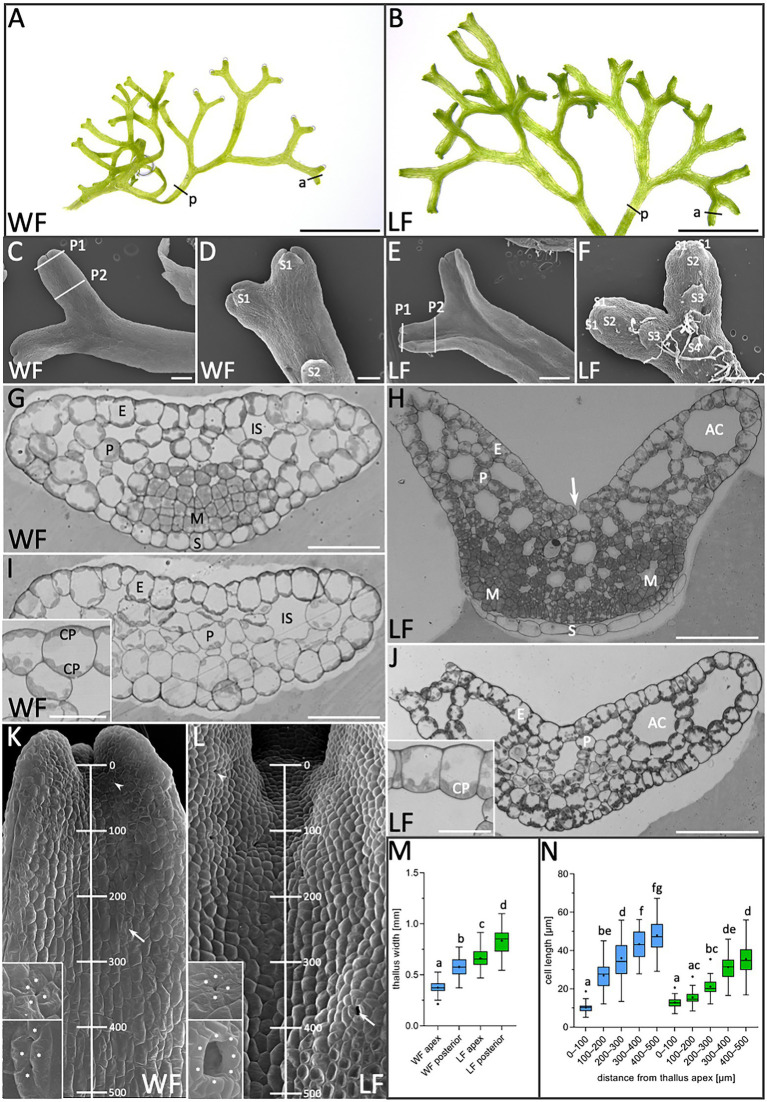
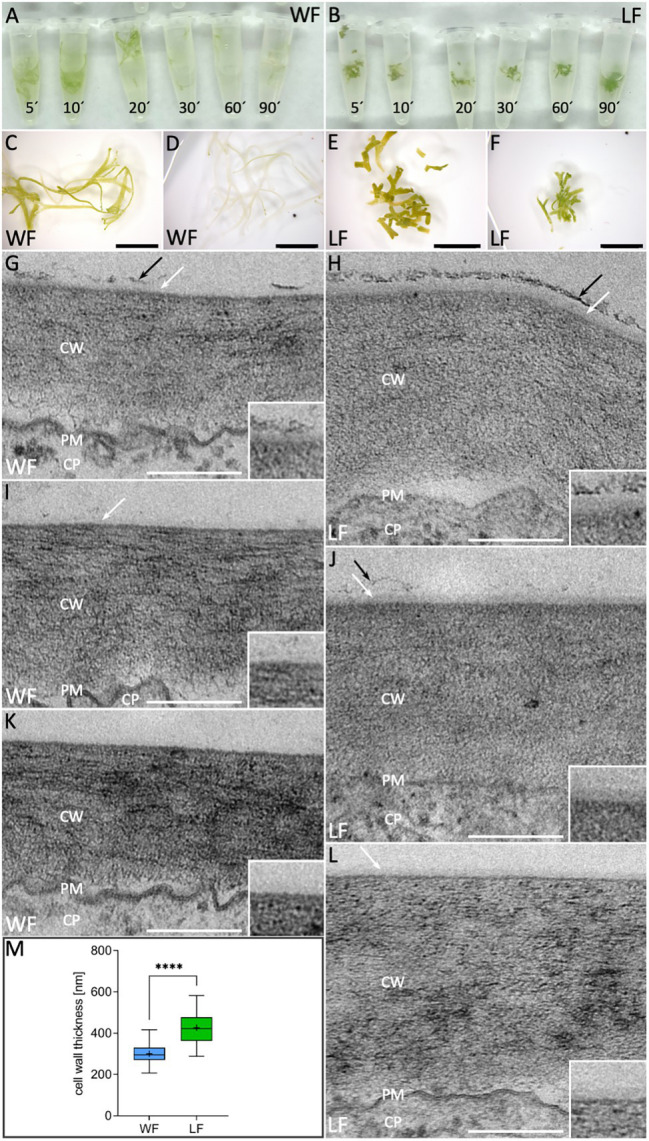
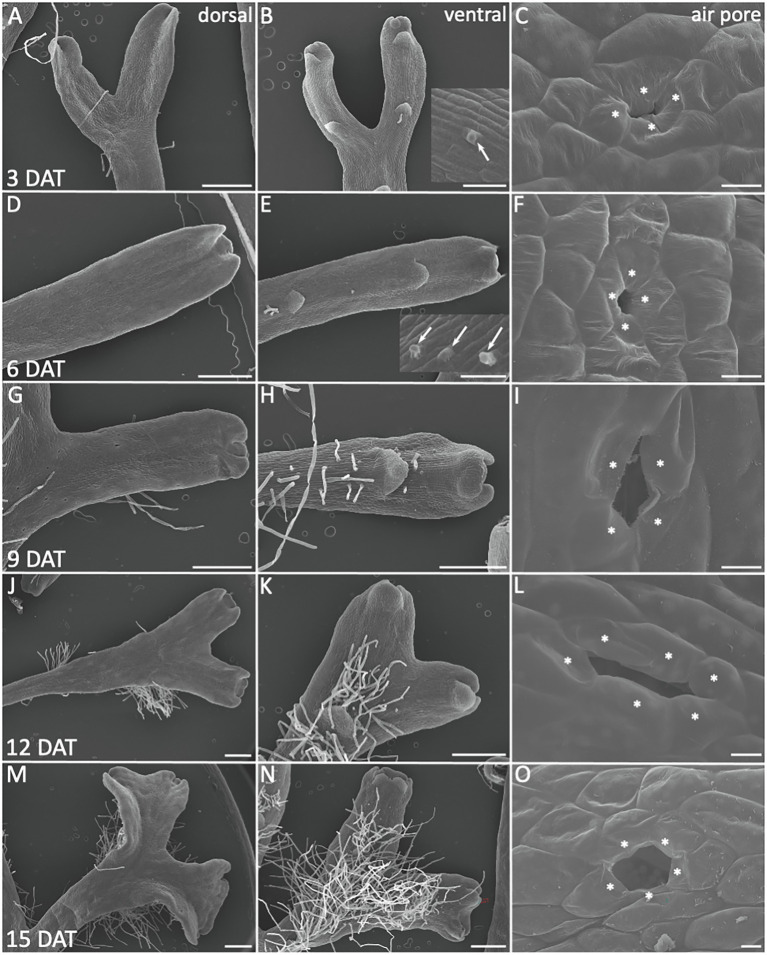
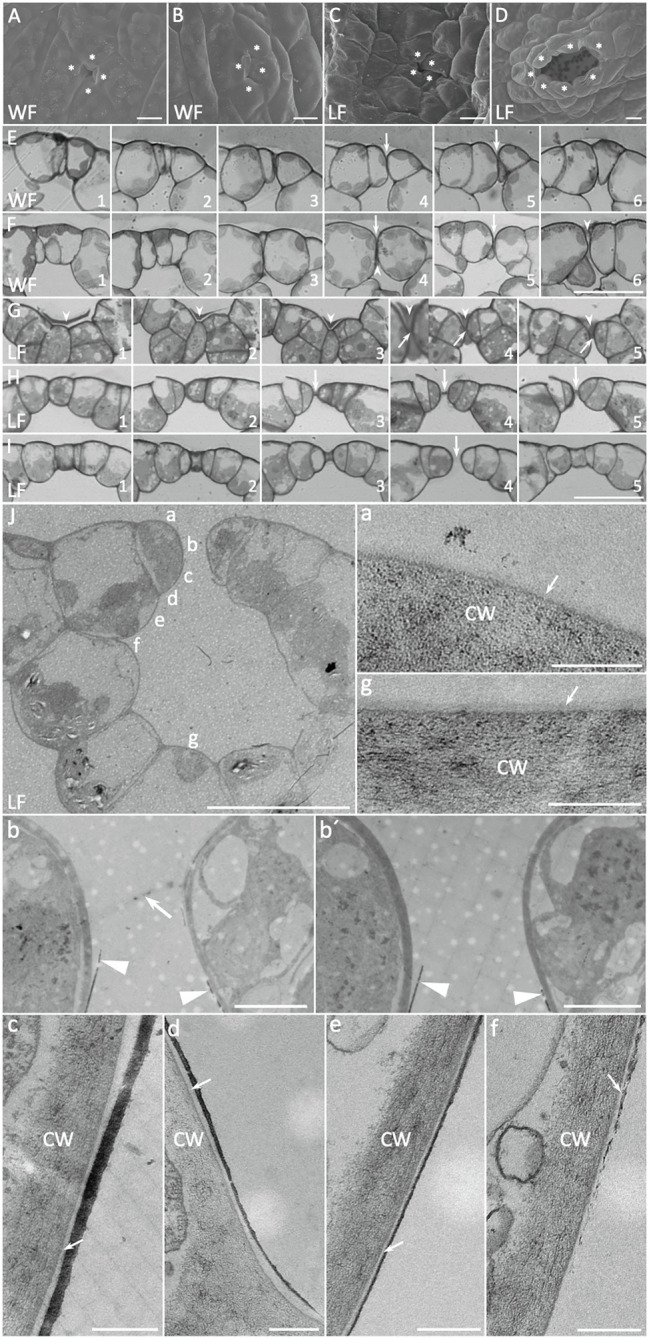
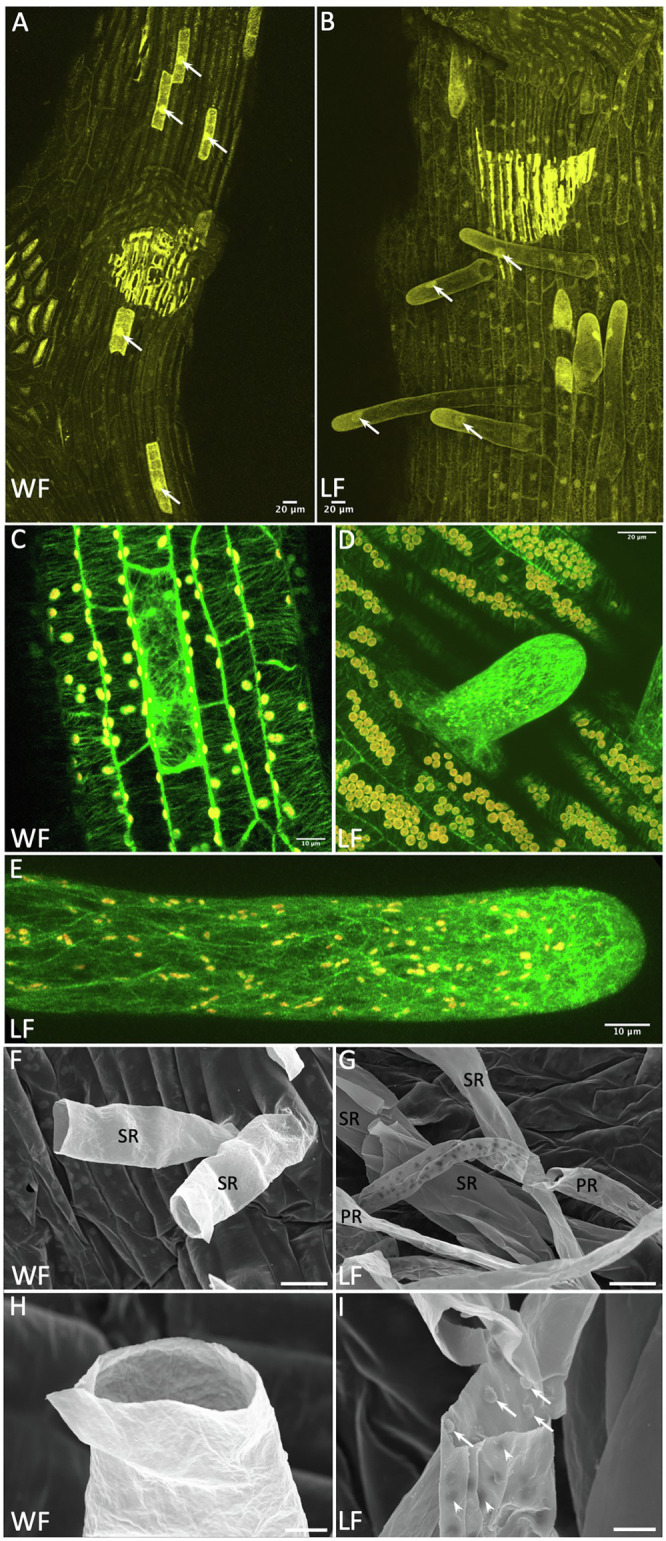
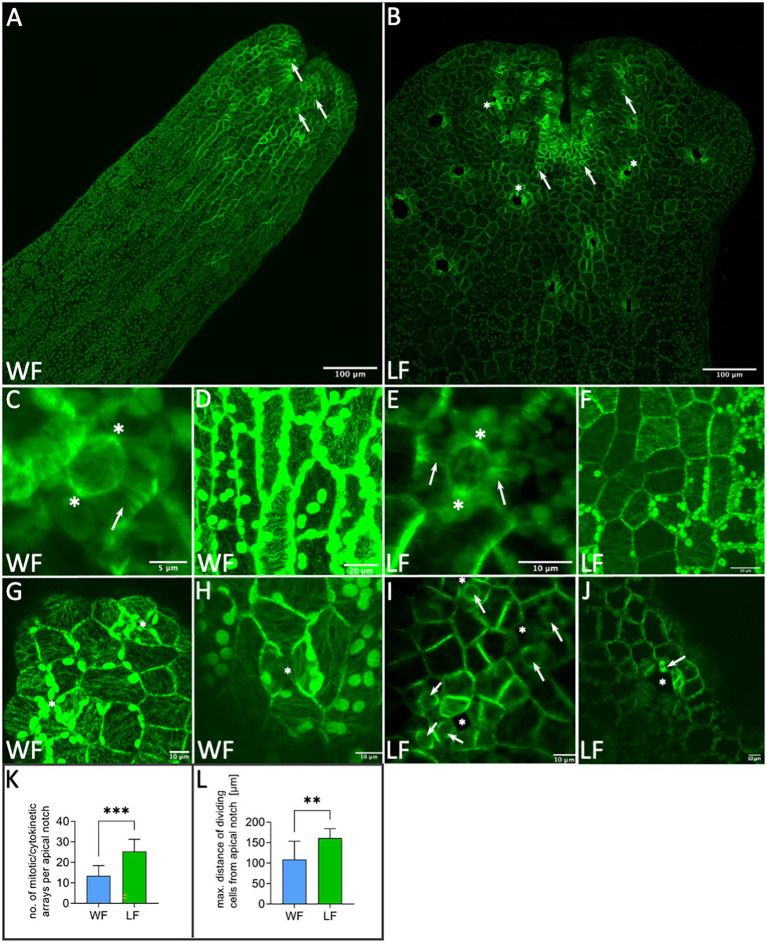
The colonization of land by ancestors of embryophyte plants was one of the most significant evolutionary events in the history of life on earth. The lack of a buffering aquatic environment necessitated adaptations for coping with novel abiotic challenges, particularly high light intensities and desiccation as well as the formation of novel anchoring structures. Bryophytes mark the transition from freshwater to terrestrial habitats and form adaptive features such as rhizoids for soil contact and water uptake, devices for gas exchange along with protective and repellent surface layers. The amphibious liverwort can grow as a land form (LF) or water form (WF) and was employed to analyze these critical traits in two different habitats. A combination of light microscopy, scanning electron microscopy (SEM) and transmission electron microscopy (TEM) studies was conducted to characterize and compare WF and LF morphologies. A complete phenotypic adaptation of a WF plant to a terrestrial habitat is accomplished within 15 days after the transition. Stable transgenic lines expressing GFP-TUBULIN and mCherry proteins were generated to study cell division and differentiation processes and revealed a higher cell division activity in enlarged meristematic regions at LF apical notches. Morphological studies demonstrated that the WF initiates air pore formation. However, these pores are arrested at an early four cell stage and do not develop further into open pores that could mediate gas exchange. Similarly, also arrested rhizoid initial cells are formed in the WF, which exhibit a distinctive morphology compared to other ventral epidermal cells. Furthermore, we detected that the LF thallus has a reduced surface permeability compared to the WF, likely mediated by formation of thicker LF cell walls and a distinct cuticle compared to the WF. Our developmental plasticity studies can serve as a basis to further investigate in a single genotype the molecular mechanisms of adaptations essential for plants during the conquest of land.
胚胎植物祖先对陆地的殖民化是地球生命史上最重要的进化事件之一。缺乏缓冲的水生环境使得植物需要适应新的非生物挑战,特别是高光强度和干燥,以及形成新的固定结构。苔藓植物标志着从淡水到陆地栖息地的转变,并形成了适应性特征,如用于接触土壤和吸收水分的假根、气体交换装置以及保护性和排斥性的表层。两栖地钱可以以陆地形态(LF)或水生形态(WF)生长,并被用于分析这两种不同栖息地中的这些关键特征。结合光学显微镜、扫描电子显微镜(SEM)和透射电子显微镜(TEM)研究来表征和比较WF和LF的形态。WF植物在转变后的15天内完成了对陆地栖息地的完全表型适应。生成了表达GFP - 微管蛋白和mCherry蛋白的稳定转基因系,以研究细胞分裂和分化过程,并揭示LF顶端切口处扩大的分生组织区域具有更高的细胞分裂活性。形态学研究表明,WF开始形成气孔。然而,这些气孔在早期的四个细胞阶段就停止了,没有进一步发育成可介导气体交换的开放气孔。同样,WF中也形成了停止发育的假根原始细胞,与其他腹侧表皮细胞相比,它们表现出独特的形态。此外,我们检测到与WF相比,LF叶状体的表面渗透性降低,这可能是由LF较厚的细胞壁和与WF相比独特的角质层形成介导的。我们的发育可塑性研究可以作为进一步在单一基因型中研究植物在征服陆地过程中适应性所必需的分子机制的基础。