Department of Urology, Peking University First Hospital, Beijing, China.
Institute of Urology, Peking University, Beijing, China.
Clin Transl Med. 2022 Jun;12(6):e906. doi: 10.1002/ctm2.906.
Studies on biological functions of N6-methyladenosine (m A) modification in mRNA have sprung up in recent years. Previous studies have reported m A can determine mRNA fate and play a pivotal role in tumour development and progression. The zinc finger protein 677 (ZNF677) belongs to the zinc finger protein family and possesses transcription factor activity by binding sequence-specific DNA.
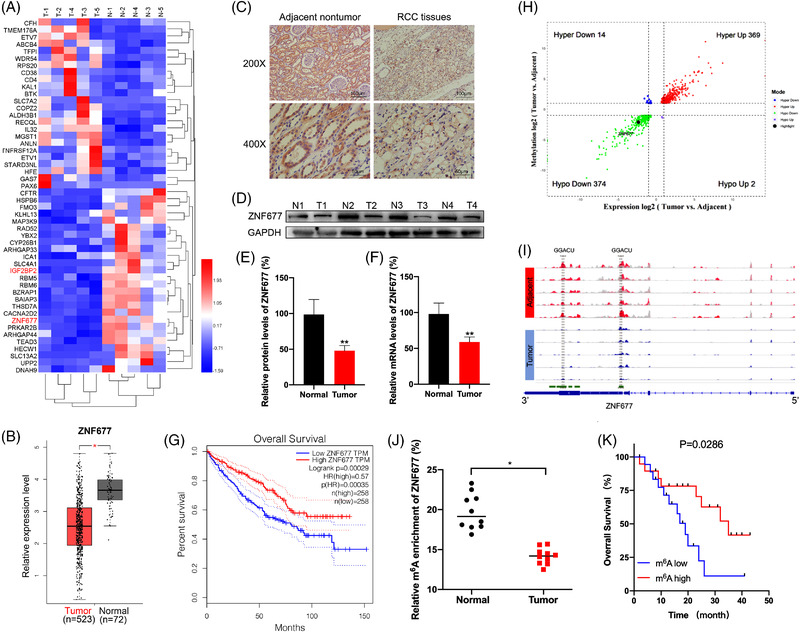
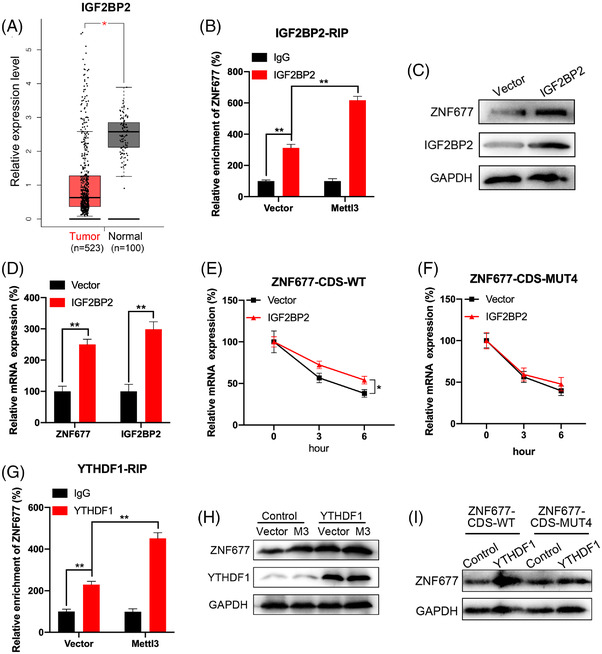
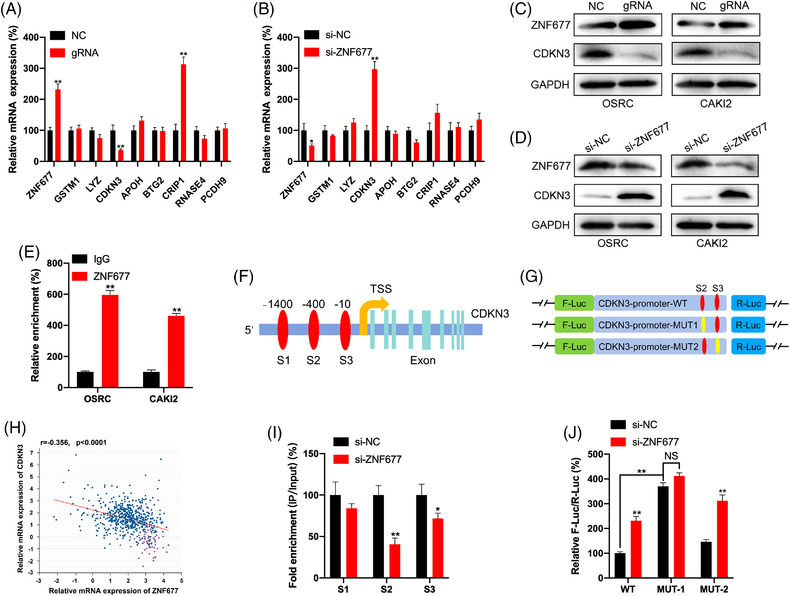
The expression of ZNF677 and its clinicopathological impact were evaluated in renal cell carcinoma (RCC) patients. The m A level of ZNF677 was determined by m A methylated RNA immunoprecipitation-sequencing (MeRIP-seq) and MeRIP-qPCR in RCC tissues and adjacent normal tissues. RNA immunoprecipitation-qPCR (RIP-qPCR) and luciferase assays were performed to identify the targeted effect of IGF2BP2 and YTHDF1 on ZNF677. RCC cells and subcutaneous models uncovered the role of ZNF677 methylated by CRISPR/dCas13b-METTL3 in tumour growth. ZNF677-binding sites in the CDKN3 promoter were investigated by chromatin immunoprecipitation (ChIP) and luciferase assays.
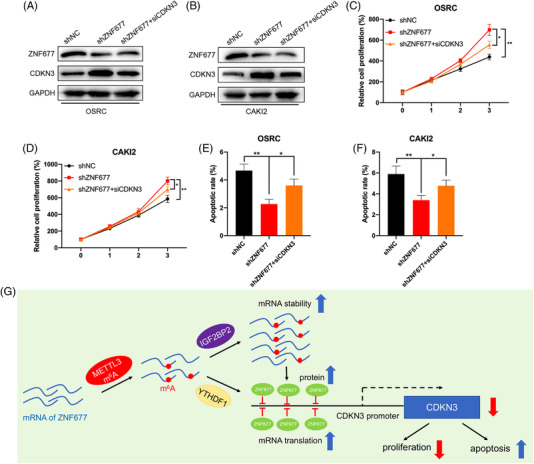
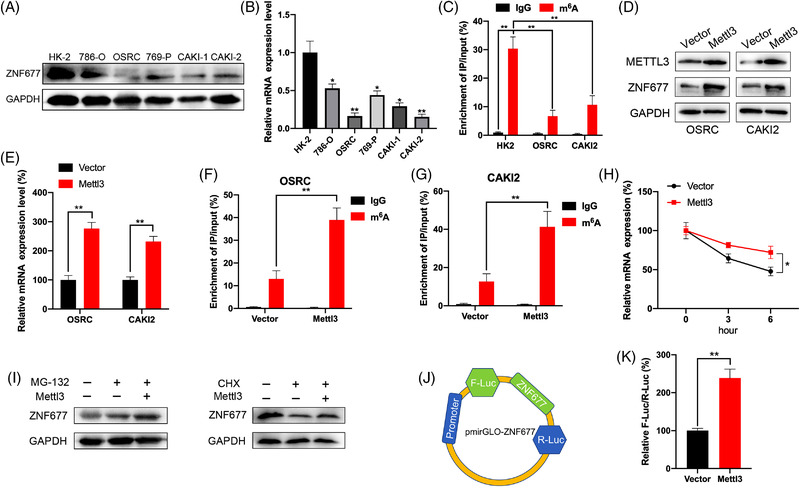
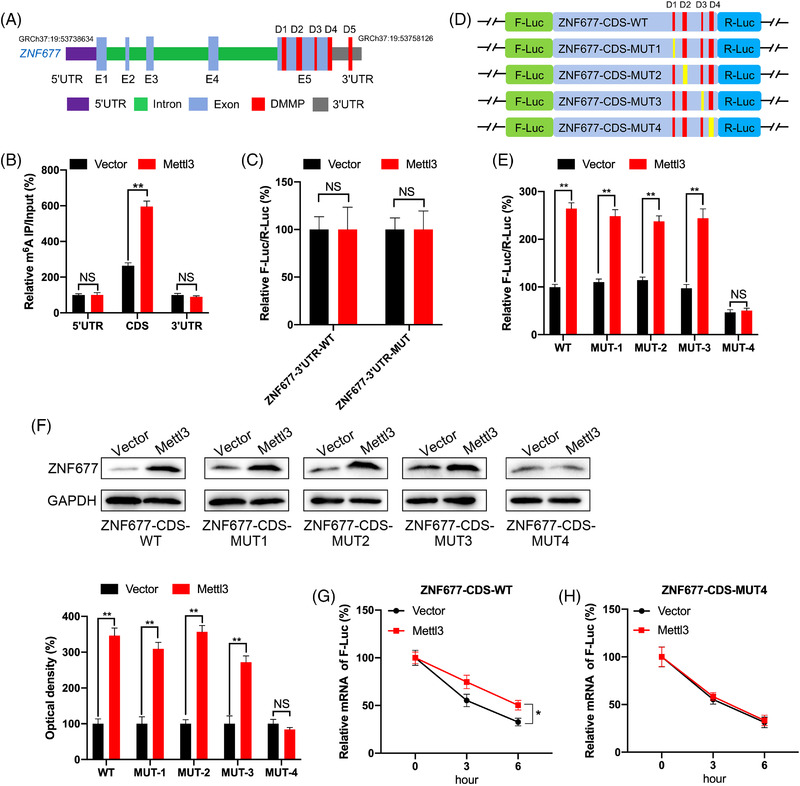
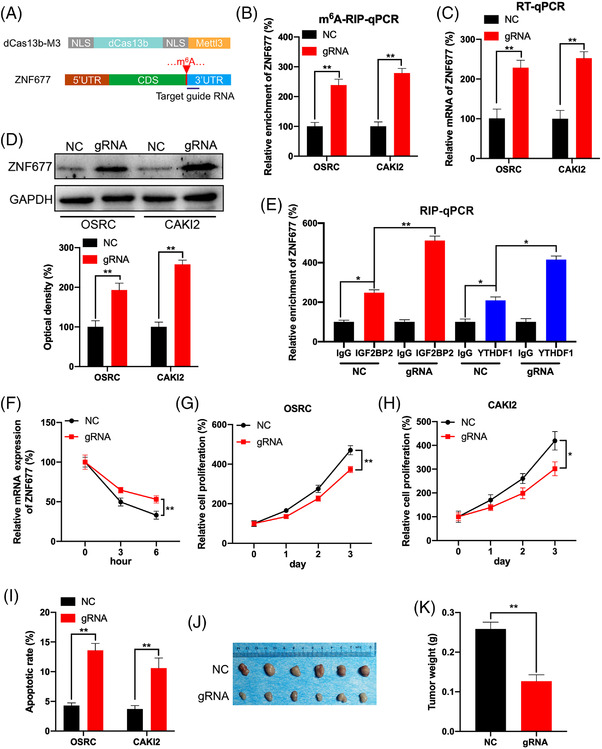
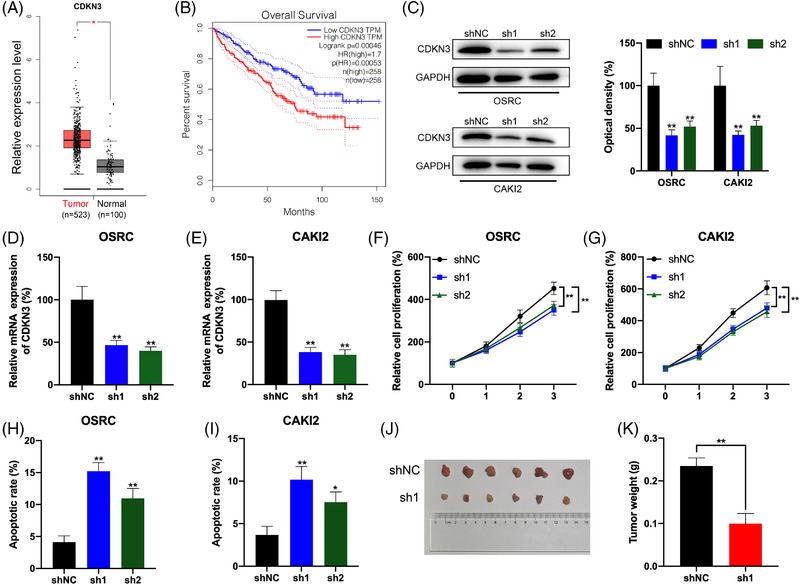
ZNF677 is frequently downregulated in RCC tissues and its low expression is associated with unfavourable prognosis and decreased m A modification level. Further, we find the m A-modified coding sequence (CDS) of ZNF677 positively regulates its translation and mRNA stability via binding with YTHDF1 and IGF2BP2, respectively. Targeted specific methylation of ZNF677 m A by CRISPR/dCas13b-METLL3 system can significantly increase the m A and expression level of ZNF677, and dramatically inhibit cell proliferation and induce cell apoptosis of RCC cells. In addition, ZNF677 exerted its tumour suppressor functions in RCC cells through transcriptional repression of CDKN3 via binding to its promoter. In vitro and clinical data confirm the negative roles of ZNF677/CDKN3 in tumour growth and progression of RCC.
ZNF677 functions as a tumour suppressor and is frequently silenced via m A modification in RCC, which may highlight m A methylation-based approach for RCC diagnosis and therapy.
近年来,关于 mRNA 中 N6-甲基腺苷(m A)修饰的生物学功能研究如雨后春笋般涌现。先前的研究表明,m A 可以决定 mRNA 的命运,并在肿瘤的发生和发展中发挥关键作用。锌指蛋白 677(ZNF677)属于锌指蛋白家族,通过结合序列特异性 DNA 发挥转录因子活性。
评估锌指蛋白 677 在肾细胞癌(RCC)患者中的表达及其临床病理影响。通过 m A 甲基化 RNA 免疫沉淀测序(MeRIP-seq)和 m A 甲基化 RCC 组织和相邻正常组织的 qPCR(MeRIP-qPCR)检测 ZNF677 的 m A 水平。进行 RNA 免疫沉淀 qPCR(RIP-qPCR)和荧光素酶测定,以鉴定 IGF2BP2 和 YTHDF1 对 ZNF677 的靶向作用。RCC 细胞和皮下模型揭示了 CRISPR/dCas13b-METTL3 甲基化 ZNF677 在肿瘤生长中的作用。通过染色质免疫沉淀(ChIP)和荧光素酶测定研究 CDKN3 启动子中 ZNF677 的结合位点。
ZNF677 在 RCC 组织中频繁下调,其低表达与不良预后和 m A 修饰水平降低有关。进一步,我们发现 ZNF677 的 m A 修饰编码序列(CDS)通过分别与 YTHDF1 和 IGF2BP2 结合,正向调节其翻译和 mRNA 稳定性。CRISPR/dCas13b-METLL3 系统靶向特异性甲基化 ZNF677 m A 可显著增加 ZNF677 的 m A 和表达水平,并显著抑制 RCC 细胞的增殖并诱导细胞凋亡。此外,ZNF677 通过与启动子结合,在 RCC 细胞中对 CDKN3 进行转录抑制,从而发挥其肿瘤抑制功能。体外和临床数据证实了 ZNF677/CDKN3 在 RCC 肿瘤生长和进展中的负向作用。
ZNF677 在 RCC 中作为肿瘤抑制因子发挥作用,并通过 m A 修饰频繁失活,这可能突出了基于 m A 甲基化的 RCC 诊断和治疗方法。