Department of Chemical and Biological Engineering, The Hong Kong University of Science and Technology, Clear Water Bay, Kowloon, Hong Kong, China.
Department of Chemistry, The Hong Kong University of Science and Technology, Clear Water Bay, Hong Kong, China.
Nat Commun. 2022 Jun 9;13(1):3197. doi: 10.1038/s41467-022-30933-0.
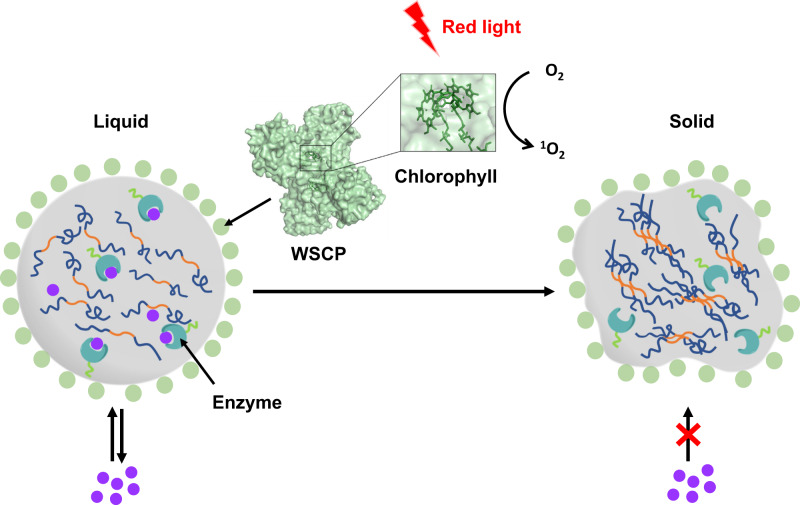
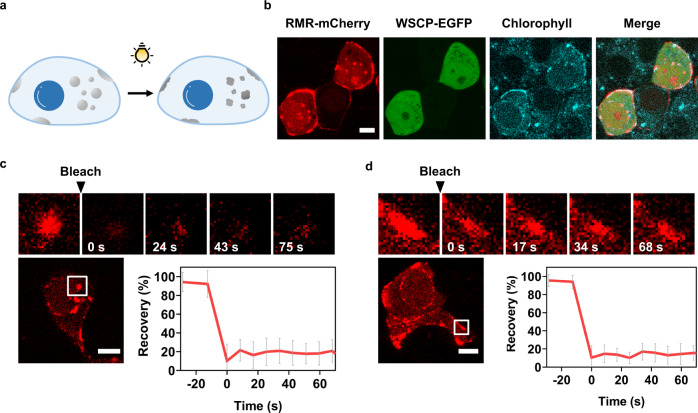
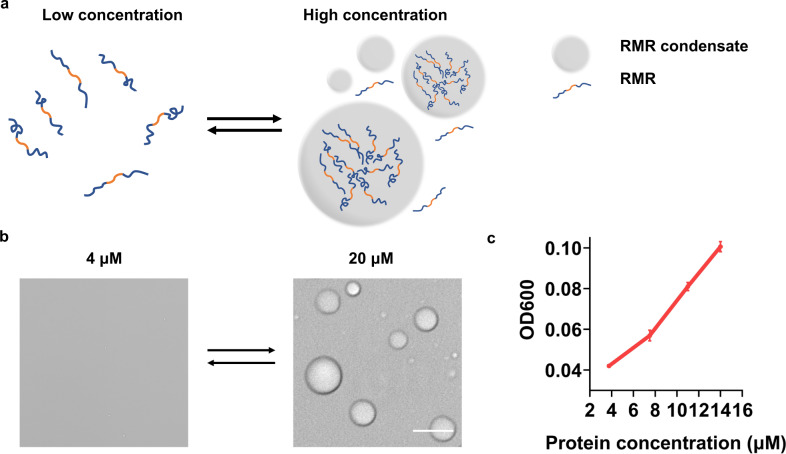
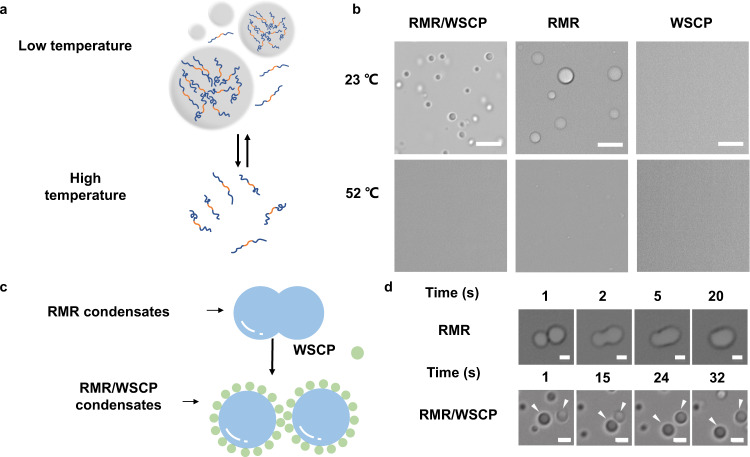
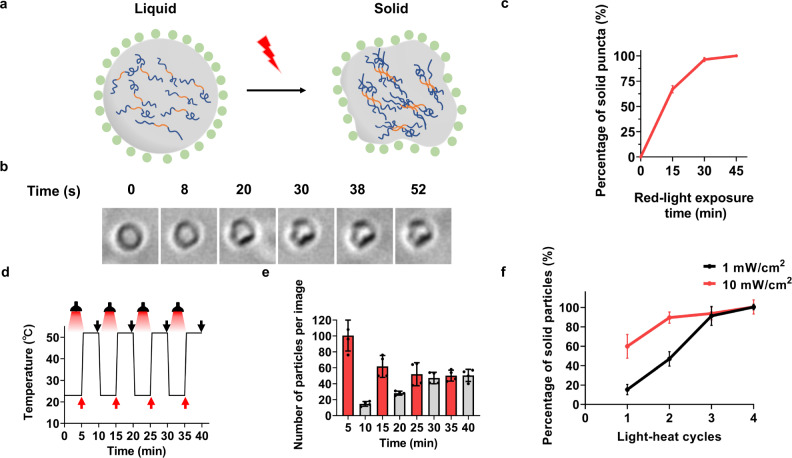
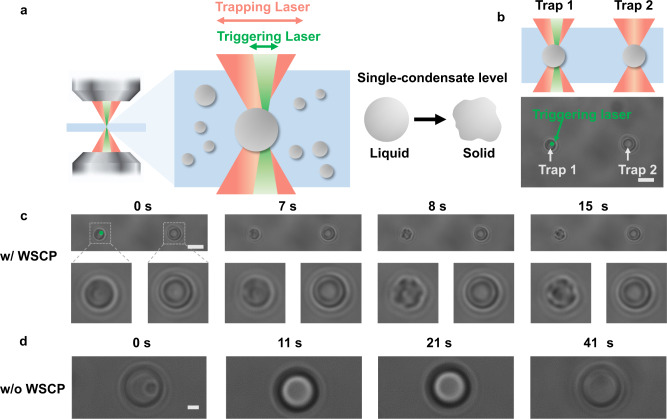
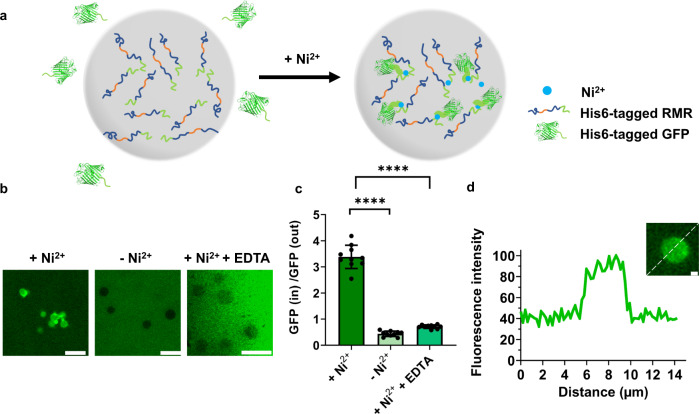
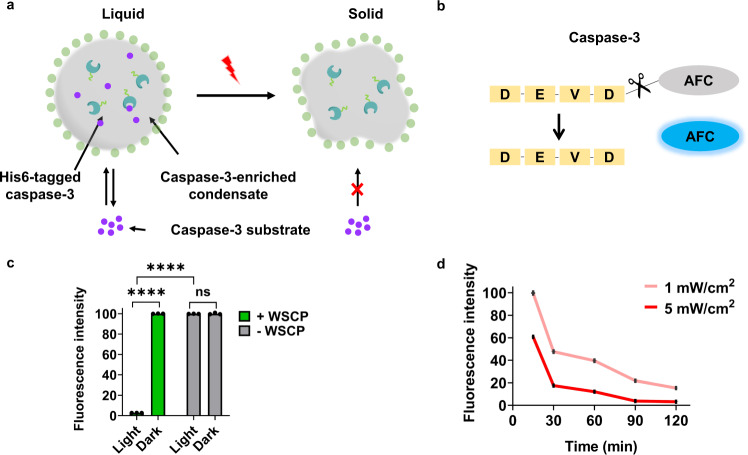
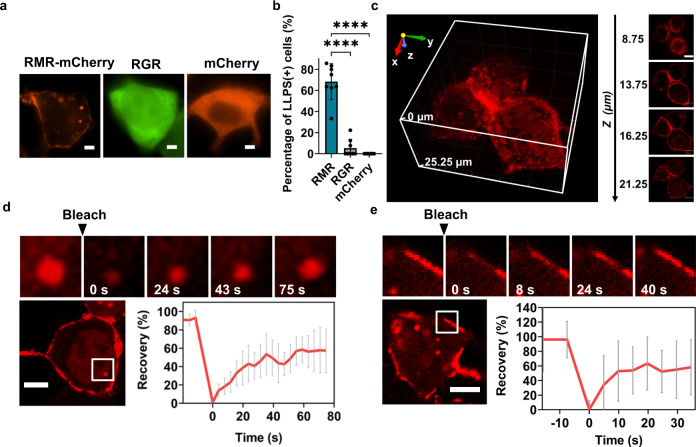
Membraneless organelles (MLOs) formed via protein phase separation have great implications for both physiological and pathological processes. However, the inability to precisely control the bioactivities of MLOs has hindered our understanding of their roles in biology, not to mention their translational applications. Here, by combining intrinsically disordered domains such as RGG and mussel-foot proteins, we create an in cellulo protein phase separation system, of which various biological activities can be introduced via metal-mediated protein immobilization and further controlled by the water-soluble chlorophyll protein (WSCP)-a remarkably stable, red-light-responsive singlet oxygen generator. The WSCP-laden protein condensates undergo a liquid-to-solid phase transition on light exposure, due to oxidative crosslinking, providing a means to control catalysis within synthetic MLOs. Moreover, these photoresponsive condensates, which retain the light-induced phase-transition behavior in living cells, exhibit marked membrane localization, reminiscent of the semi-membrane-bound compartments like postsynaptic densities in nervous systems. Together, this engineered system provides an approach toward controllable synthetic MLOs and, alongside its light-induced phase transition, may well serve to emulate and explore the aging process at the subcellular or even molecular level.
无膜细胞器 (MLOs) 通过蛋白质相分离形成,对生理和病理过程都有重要影响。然而,由于无法精确控制 MLOs 的生物活性,我们对它们在生物学中的作用,更不用说它们的转化应用,了解甚少。在这里,我们通过结合内在无序的结构域,如 RGG 和贻贝蛋白结构域,创建了一个细胞内蛋白质相分离系统,通过金属介导的蛋白质固定化,可以引入各种生物活性,并且可以通过水溶性叶绿素蛋白 (WSCP) 进一步控制,WSCP 是一种非常稳定的、对红光响应的单线态氧发生器。含有 WSCP 的蛋白质凝聚体在暴露于光时会发生液-固相变,这是由于氧化交联所致,为控制合成 MLO 内的催化反应提供了一种方法。此外,这些光响应的凝聚体在活细胞中保留了光诱导的相转变行为,表现出明显的膜定位,类似于神经系统中的突触后密度等半膜结合隔室。总之,这个工程系统为可控合成 MLOs 提供了一种方法,并且随着其光诱导的相转变,它可能很好地用于模拟和探索亚细胞甚至分子水平的衰老过程。