Herz- und Diabeteszentrum NRW, Diabeteszentrum, Ruhr Universität Bochum, 32545 Bad Oeynhausen, Germany.
Int J Mol Sci. 2022 May 31;23(11):6186. doi: 10.3390/ijms23116186.
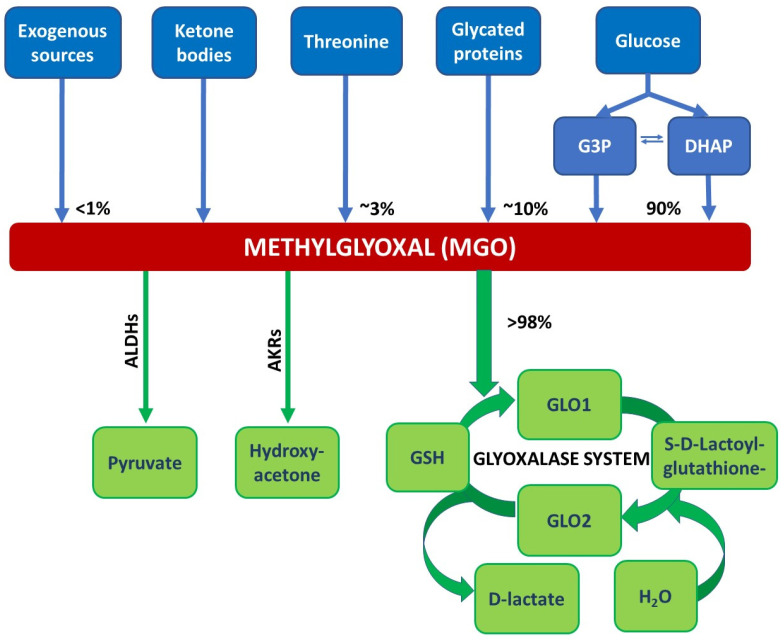
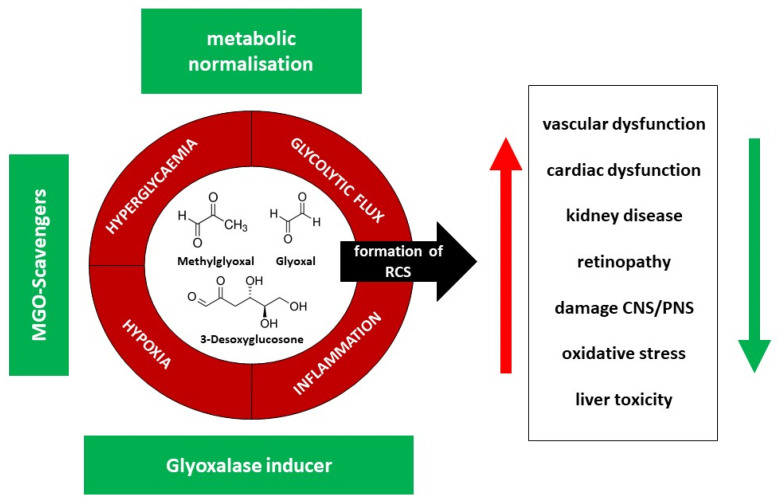
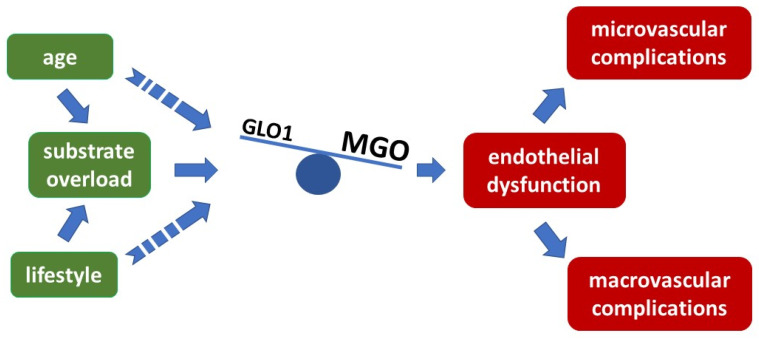
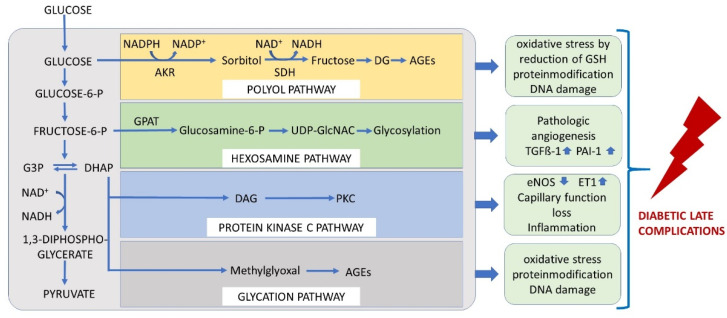
Late vascular complications play a prominent role in the diabetes-induced increase in morbidity and mortality. Diabetes mellitus is recognised as a risk factor driving atherosclerosis and cardiovascular mortality; even after the normalisation of blood glucose concentration, the event risk is amplified-an effect called "glycolytic memory". The hallmark of this glycolytic memory and diabetic pathology are advanced glycation end products (AGEs) and reactive glucose metabolites such as methylglyoxal (MGO), a highly reactive dicarbonyl compound derived mainly from glycolysis. MGO and AGEs have an impact on vascular and organ structure and function, contributing to organ damage. As MGO is not only associated with hyperglycaemia in diabetes but also with other risk factors for diabetic vascular complications such as obesity, dyslipidaemia and hypertension, MGO is identified as a major player in the development of vascular complications in diabetes both on micro- as well as macrovascular level. In diabetes mellitus, the detoxifying system for MGO, the glyoxalase system, is diminished, accounting for the increased MGO concentration and glycotoxic load. This overview will summarise current knowledge on the effect of MGO and AGEs on vascular function.
晚期血管并发症在糖尿病引起的发病率和死亡率增加中起着重要作用。糖尿病被认为是导致动脉粥样硬化和心血管死亡率的危险因素;即使血糖浓度正常化后,事件风险仍会放大——这种效应被称为“糖酵解记忆”。这种糖酵解记忆和糖尿病病理的标志是晚期糖基化终产物(AGEs)和活性葡萄糖代谢物,如甲基乙二醛(MGO),它主要来自糖酵解的一种高度反应性二羰基化合物。MGO 和 AGEs 对血管和器官结构和功能有影响,导致器官损伤。由于 MGO 不仅与糖尿病中的高血糖有关,还与糖尿病血管并发症的其他危险因素有关,如肥胖、血脂异常和高血压,因此 MGO 被认为是糖尿病微血管和大血管并发症发展的主要因素。在糖尿病中,MGO 的解毒系统,即糖氧醛酸酶系统,会减弱,导致 MGO 浓度和糖毒性负荷增加。这篇综述将总结目前关于 MGO 和 AGEs 对血管功能影响的知识。