Experimental Research Center, Capital Institute of Pediatrics, Beijing, China.
Central & Clinical Laboratory of Sanya People's Hospital, Sanya, China.
Front Immunol. 2022 May 24;13:848961. doi: 10.3389/fimmu.2022.848961. eCollection 2022.
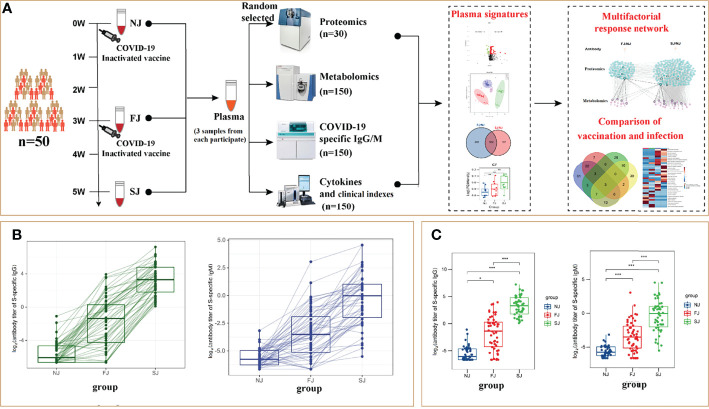
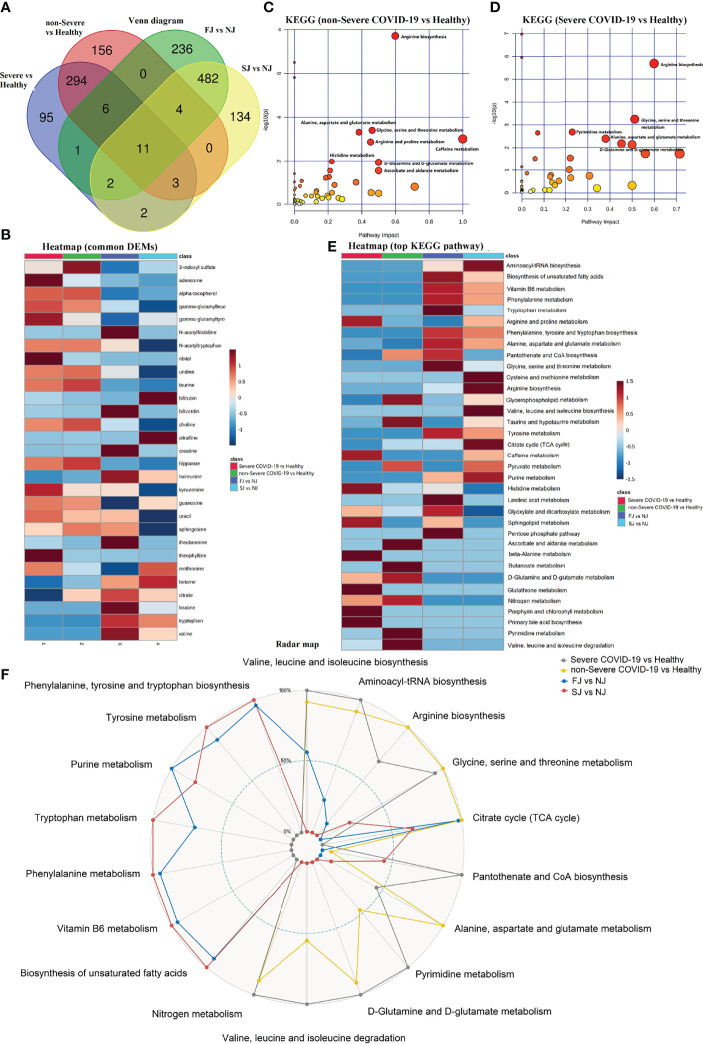
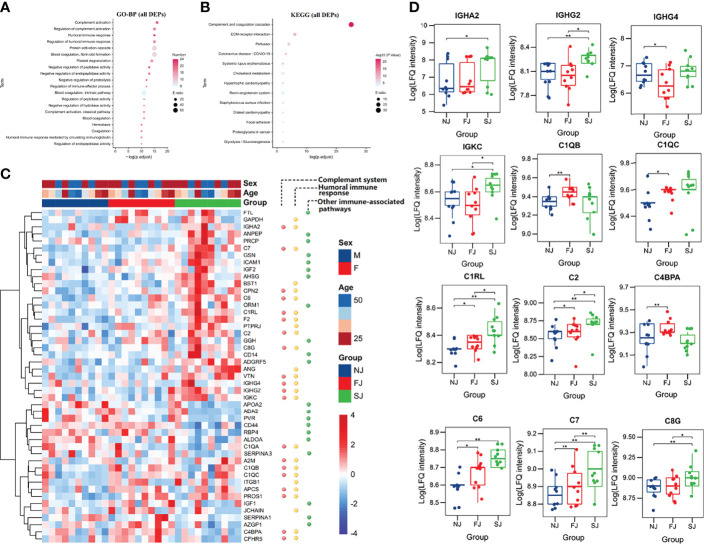
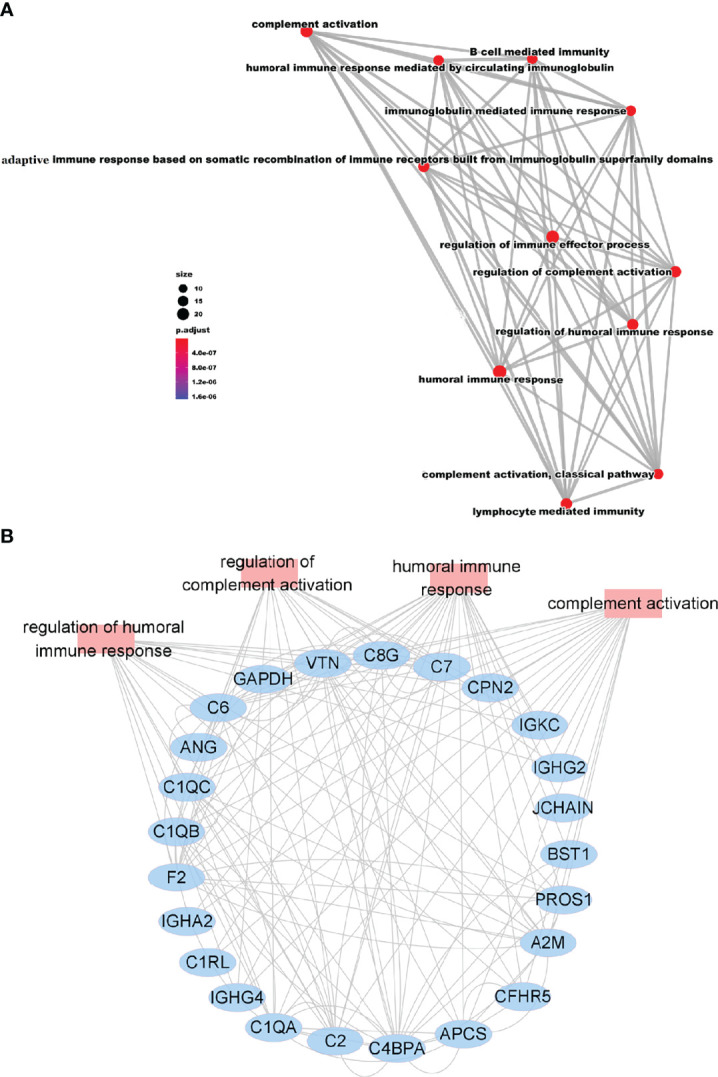
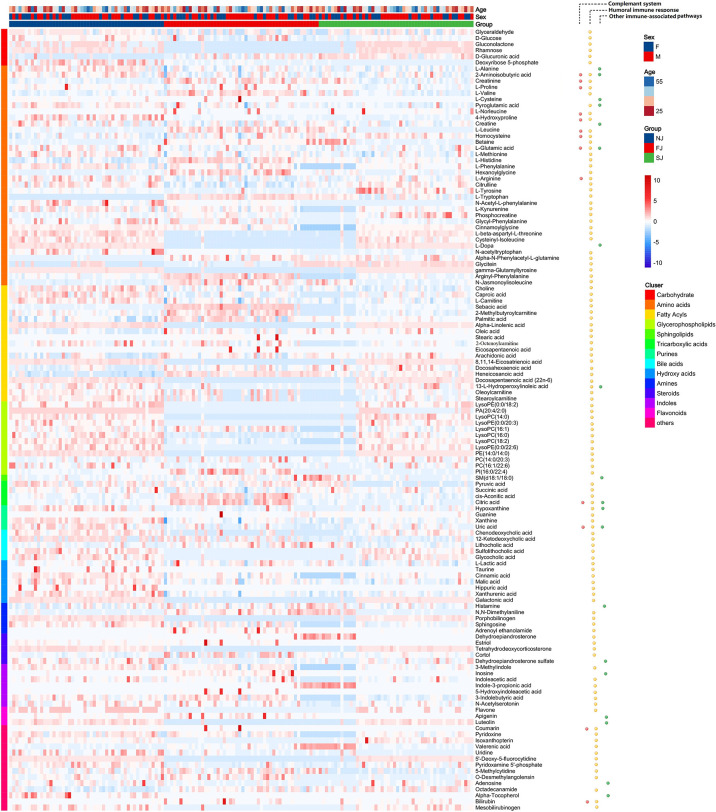
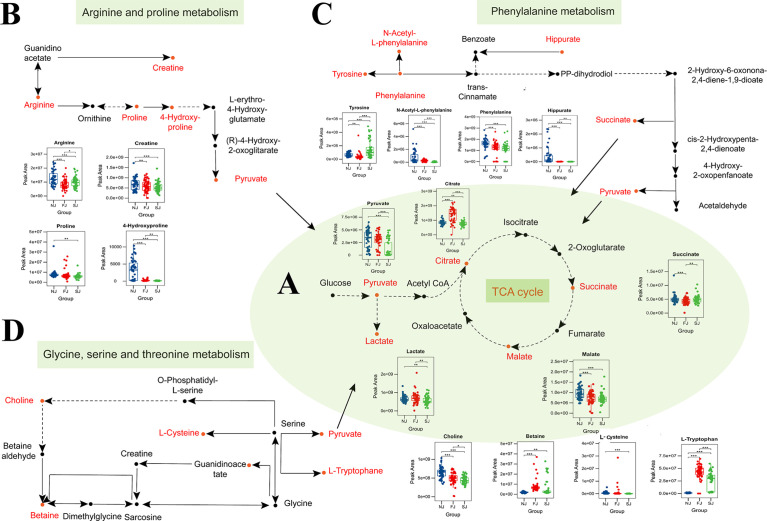
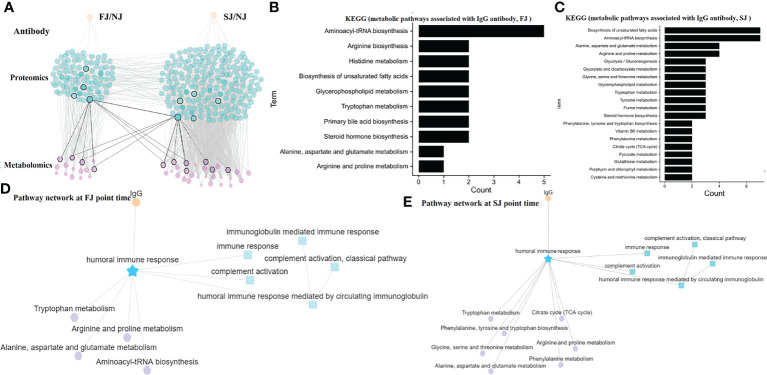
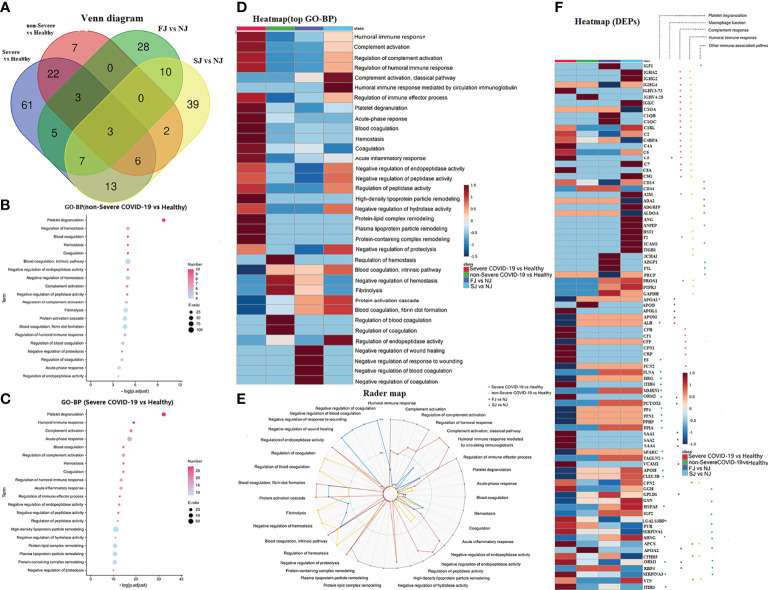
CoronaVac (Sinovac), an inactivated vaccine for SARS-CoV-2, has been widely used for immunization. However, analysis of the underlying molecular mechanisms driving CoronaVac-induced immunity is still limited. Here, we applied a systems biology approach to understand the mechanisms behind the adaptive immune response to CoronaVac in a cohort of 50 volunteers immunized with 2 doses of CoronaVac. Vaccination with CoronaVac led to an integrated immune response that included several effector arms of the adaptive immune system including specific IgM/IgG, humoral response and other immune response, as well as the innate immune system as shown by complement activation. Metabolites associated with immunity were also identified implicating the role of metabolites in the humoral response, complement activation and other immune response. Networks associated with the TCA cycle and amino acids metabolic pathways, such as phenylalanine metabolism, phenylalanine, tyrosine and tryptophan biosynthesis, and glycine, serine and threonine metabolism were tightly coupled with immunity. Critically, we constructed a multifactorial response network (MRN) to analyze the underlying interactions and compared the signatures affected by CoronaVac immunization and SARS-CoV-2 infection to further identify immune signatures and related metabolic pathways altered by CoronaVac immunization. These results help us to understand the host response to vaccination of CoronaVac and highlight the utility of a systems biology approach in defining molecular correlates of protection to vaccination.
科兴(Sinovac)的克尔来福(CoronaVac)是一种针对 SARS-CoV-2 的灭活疫苗,已被广泛用于免疫接种。然而,分析驱动克尔来福免疫的潜在分子机制仍然有限。在这里,我们应用系统生物学方法来了解 50 名志愿者接种两剂克尔来福后的适应性免疫反应的背后机制。接种克尔来福后,会引发综合免疫反应,包括适应性免疫系统的几个效应臂,如特异性 IgM/IgG、体液反应和其他免疫反应,以及补体激活所代表的固有免疫系统。还确定了与免疫相关的代谢物,表明代谢物在体液反应、补体激活和其他免疫反应中发挥作用。与 TCA 循环和氨基酸代谢途径相关的网络,如苯丙氨酸代谢、苯丙氨酸、酪氨酸和色氨酸生物合成以及甘氨酸、丝氨酸和苏氨酸代谢,与免疫紧密相关。至关重要的是,我们构建了一个多因素反应网络 (MRN) 来分析潜在的相互作用,并比较了克尔来福免疫和 SARS-CoV-2 感染影响的特征,以进一步确定由克尔来福免疫改变的免疫特征和相关代谢途径。这些结果有助于我们了解宿主对克尔来福疫苗接种的反应,并强调了系统生物学方法在定义疫苗接种保护的分子相关性方面的效用。