• 文献检索
  • 文档翻译
  • 深度研究
  • 学术资讯
  • Suppr Zotero 插件Zotero 插件
  • 邀请有礼
  • 套餐&价格
  • 历史记录
应用&插件
Suppr Zotero 插件Zotero 插件浏览器插件Mac 客户端Windows 客户端微信小程序
定价
高级版会员购买积分包购买API积分包
服务
文献检索文档翻译深度研究API 文档MCP 服务
关于我们
关于 Suppr公司介绍联系我们用户协议隐私条款
关注我们

Suppr 超能文献

核心技术专利:CN118964589B侵权必究
粤ICP备2023148730 号-1Suppr @ 2026

文献检索

告别复杂PubMed语法,用中文像聊天一样搜索,搜遍4000万医学文献。AI智能推荐,让科研检索更轻松。

立即免费搜索

文件翻译

保留排版,准确专业,支持PDF/Word/PPT等文件格式,支持 12+语言互译。

免费翻译文档

深度研究

AI帮你快速写综述,25分钟生成高质量综述,智能提取关键信息,辅助科研写作。

立即免费体验

机器学习在脓毒症生存预测和分类中的临床应用:凝血和肝素的使用很重要。

Clinical applications of machine learning in the survival prediction and classification of sepsis: coagulation and heparin usage matter.

机构信息

Ningbo Institute for Medicine & Biomedical Engineering Combined Innovation, Ningbo Medical Treatment Centre Lihuili Hospital, Ningbo University, Ningbo, 315040, Zhejiang, China.

School of Mechatronics Engineering, Nanchang University, Nanchang, 330031, Jiangxi, China.

出版信息

J Transl Med. 2022 Jun 11;20(1):265. doi: 10.1186/s12967-022-03469-6.

DOI:10.1186/s12967-022-03469-6
PMID:35690822
原文链接:https://pmc.ncbi.nlm.nih.gov/articles/PMC9187899/
Abstract

BACKGROUND

Sepsis is a life-threatening syndrome eliciting highly heterogeneous host responses. Current prognostic evaluation methods used in clinical practice are characterized by an inadequate effectiveness in predicting sepsis mortality. Rapid identification of patients with high mortality risk is urgently needed. The phenotyping of patients will assistant invaluably in tailoring treatments.

METHODS

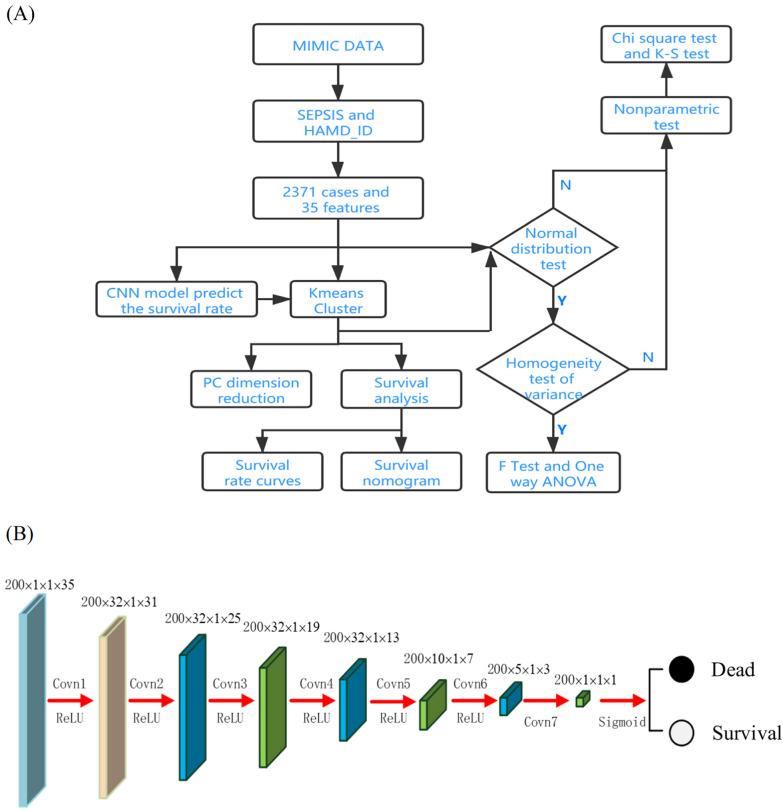
Machine learning and deep learning technology are used to characterize the patients' phenotype and determine the sepsis severity. The database used in this study is MIMIC-III and MIMIC-IV ('Medical information Mart for intensive care') which is a large, public, and freely available database. The K-means clustering is used to classify the sepsis phenotype. Convolutional neural network (CNN) was used to predict the 28-day survival rate based on 35 blood test variables of the sepsis patients, whereas a double coefficient quadratic multivariate fitting function (DCQMFF) is utilized to predict the 28-day survival rate with only 11 features of sepsis patients.

RESULTS

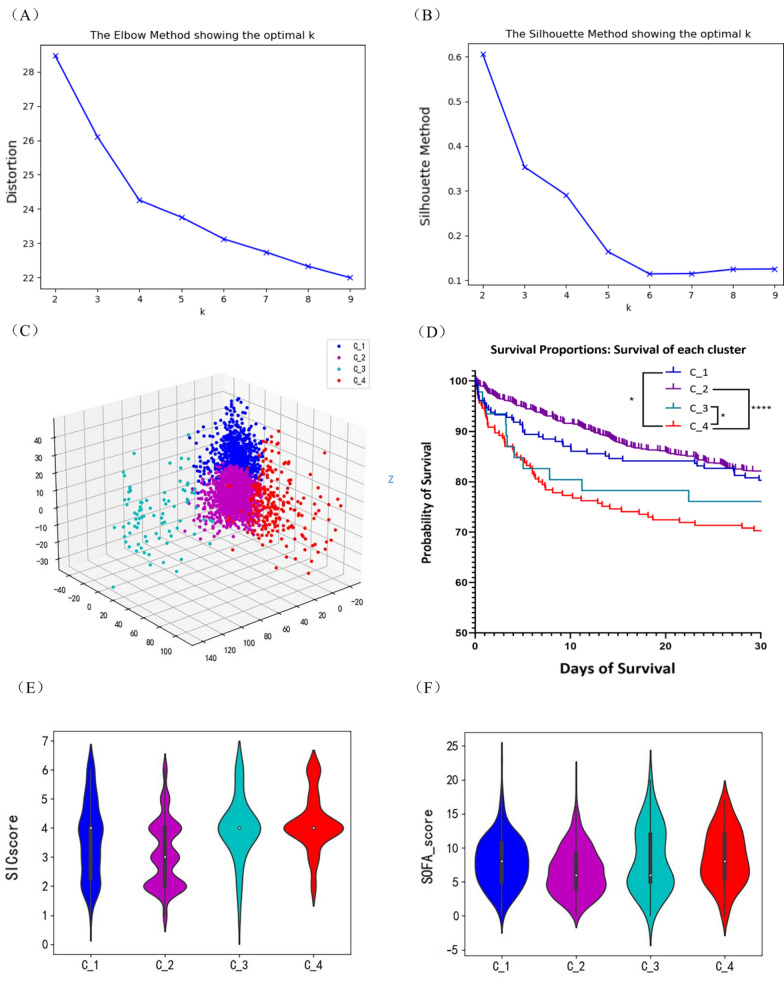
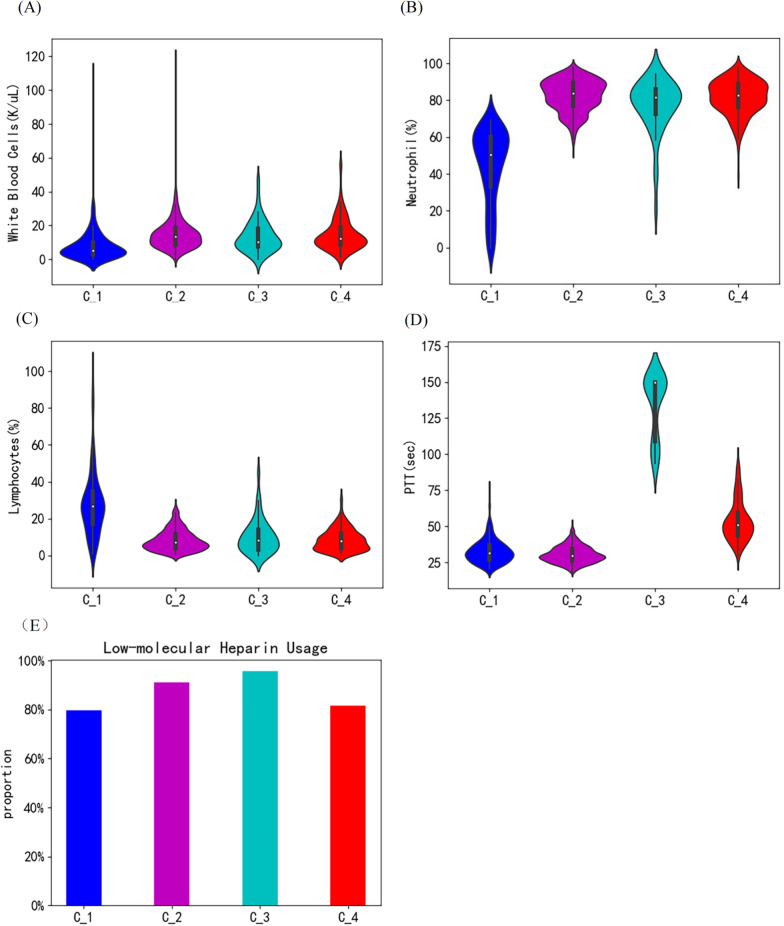
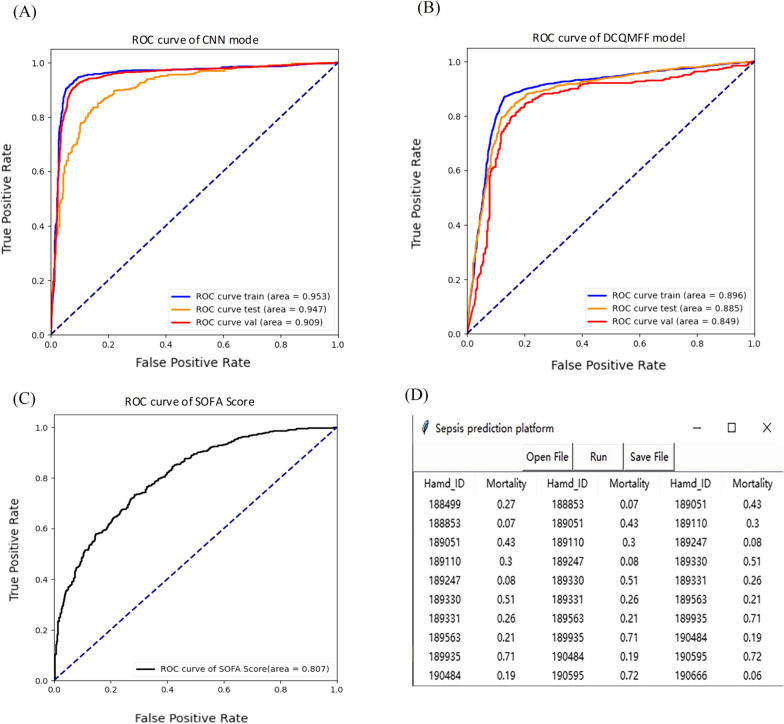
The patients were grouped into four clusters with a clear survival nomogram. The first cluster (C_1) was characterized by low white blood cell count, low neutrophil, and the highest lymphocyte proportion. C_2 obtained the lowest Sequential Organ Failure Assessment (SOFA) score and the highest survival rate. C_3 was characterized by significantly prolonged PTT, high SIC, and a higher proportion of patients using heparin than the patients in other clusters. The early mortality rate of patients in C_3 was high but with a better long-term survival rate than that in C_4. C_4 contained septic coagulation patients with the worst prognosis, characterized by slightly prolonged partial thromboplastin time (PTT), significantly prolonged prothrombin time (PT), and high septic coagulation disease score (SIC). The survival rate prediction accuracy of CNN and DCQMFF models reached 92% and 82%, respectively. The models were tested on an external dataset (MIMIC-IV) and achieved good performance. A DCQMFF-based application platform was established for fast prediction of the 28-day survival rate.

CONCLUSION

CNN and DCQMFF accurately predicted the sepsis patients' survival, while K-means successfully identified the phenotype groups. The distinct phenotypes associated with survival, and significant features correlated with mortality were identified. The findings suggest that sepsis patients with abnormal coagulation had poor outcomes, abnormal coagulation increase mortality during sepsis. The anticoagulation effects of appropriate heparin sodium treatment may improve extensive micro thrombosis-caused organ failure.

摘要

背景

脓毒症是一种危及生命的综合征,可引发高度异质的宿主反应。目前临床实践中使用的预后评估方法在预测脓毒症死亡率方面效果不佳。迫切需要快速识别高死亡率风险的患者。对患者进行表型分析将有助于制定治疗方案。

方法

使用机器学习和深度学习技术对患者的表型进行特征描述,并确定脓毒症的严重程度。本研究使用的数据库是 MIMIC-III 和 MIMIC-IV(“重症监护医学信息集市”),这是一个大型、公共、免费的数据库。使用 K-均值聚类对脓毒症表型进行分类。基于 35 个脓毒症患者的血液检测变量,使用卷积神经网络(CNN)预测 28 天生存率,而使用仅 11 个脓毒症患者特征的双系数二次多元拟合函数(DCQMFF)预测 28 天生存率。

结果

患者被分为四个具有明确生存预测值的聚类。第一聚类(C_1)的特点是白细胞计数低、中性粒细胞低、淋巴细胞比例最高。C_2 获得的序贯器官衰竭评估(SOFA)评分最低,生存率最高。C_3 的特点是凝血酶时间(PTT)明显延长、SIC 高,且使用肝素的患者比例高于其他聚类的患者。C_3 患者的早期死亡率较高,但长期生存率好于 C_4。C_4 包含预后最差的脓毒症凝血患者,其特点是部分凝血活酶时间(PTT)略有延长、凝血酶原时间(PT)明显延长和高脓毒症凝血疾病评分(SIC)。CNN 和 DCQMFF 模型的生存率预测准确率分别达到 92%和 82%。模型在外部数据集(MIMIC-IV)上进行了测试,表现良好。建立了基于 DCQMFF 的应用平台,用于快速预测 28 天生存率。

结论

CNN 和 DCQMFF 准确预测了脓毒症患者的生存率,而 K-均值聚类成功识别了表型组。确定了与生存相关的不同表型和与死亡率相关的显著特征。研究结果表明,脓毒症患者出现异常凝血时预后不良,脓毒症期间异常凝血会增加死亡率。适当的肝素钠抗凝治疗可能改善广泛微血栓引起的器官衰竭。
https://cdn.ncbi.nlm.nih.gov/pmc/blobs/e7b2/9188146/0ccb541cf3ff/12967_2022_3469_Fig5_HTML.jpg
https://cdn.ncbi.nlm.nih.gov/pmc/blobs/e7b2/9188146/b97ec8dd5bf9/12967_2022_3469_Fig1_HTML.jpg
https://cdn.ncbi.nlm.nih.gov/pmc/blobs/e7b2/9188146/b13ef7bddac3/12967_2022_3469_Fig2_HTML.jpg
https://cdn.ncbi.nlm.nih.gov/pmc/blobs/e7b2/9188146/e9ffa1b2492f/12967_2022_3469_Fig3_HTML.jpg
https://cdn.ncbi.nlm.nih.gov/pmc/blobs/e7b2/9188146/dd2de09f6720/12967_2022_3469_Fig4_HTML.jpg
https://cdn.ncbi.nlm.nih.gov/pmc/blobs/e7b2/9188146/0ccb541cf3ff/12967_2022_3469_Fig5_HTML.jpg
https://cdn.ncbi.nlm.nih.gov/pmc/blobs/e7b2/9188146/b97ec8dd5bf9/12967_2022_3469_Fig1_HTML.jpg
https://cdn.ncbi.nlm.nih.gov/pmc/blobs/e7b2/9188146/b13ef7bddac3/12967_2022_3469_Fig2_HTML.jpg
https://cdn.ncbi.nlm.nih.gov/pmc/blobs/e7b2/9188146/e9ffa1b2492f/12967_2022_3469_Fig3_HTML.jpg
https://cdn.ncbi.nlm.nih.gov/pmc/blobs/e7b2/9188146/dd2de09f6720/12967_2022_3469_Fig4_HTML.jpg
https://cdn.ncbi.nlm.nih.gov/pmc/blobs/e7b2/9188146/0ccb541cf3ff/12967_2022_3469_Fig5_HTML.jpg

相似文献

1
Clinical applications of machine learning in the survival prediction and classification of sepsis: coagulation and heparin usage matter.机器学习在脓毒症生存预测和分类中的临床应用:凝血和肝素的使用很重要。
J Transl Med. 2022 Jun 11;20(1):265. doi: 10.1186/s12967-022-03469-6.
2
Interpretable machine learning model for early prediction of 28-day mortality in ICU patients with sepsis-induced coagulopathy: development and validation.用于脓毒症诱导性凝血病 ICU 患者 28 天死亡率早期预测的可解释机器学习模型:开发与验证。
Eur J Med Res. 2024 Jan 3;29(1):14. doi: 10.1186/s40001-023-01593-7.
3
[Study on the value of prothrombin time for predicting the severity and prognosis of septic patients].[凝血酶原时间对脓毒症患者病情严重程度及预后预测价值的研究]
Zhonghua Wei Zhong Bing Ji Jiu Yi Xue. 2022 Jul;34(7):682-688. doi: 10.3760/cma.j.cn121430-20210614-00876.
4
Development of a Nomogram to Predict 28-Day Mortality of Patients With Sepsis-Induced Coagulopathy: An Analysis of the MIMIC-III Database.预测脓毒症诱导的凝血病患者28天死亡率的列线图的开发:MIMIC-III数据库分析
Front Med (Lausanne). 2021 Apr 6;8:661710. doi: 10.3389/fmed.2021.661710. eCollection 2021.
5
A deep learning approach for sepsis monitoring via severity score estimation.一种通过严重程度评分估计进行脓毒症监测的深度学习方法。
Comput Methods Programs Biomed. 2021 Jan;198:105816. doi: 10.1016/j.cmpb.2020.105816. Epub 2020 Oct 28.
6
Evaluate prognostic accuracy of SOFA component score for mortality among adults with sepsis by machine learning method.采用机器学习方法评估 SOFA 评分对脓毒症成人死亡率的预后准确性。
BMC Infect Dis. 2023 Feb 6;23(1):76. doi: 10.1186/s12879-023-08045-x.
7
Machine learning-derived blood culture classification with both predictive and prognostic values in the intensive care unit: A retrospective cohort study.机器学习衍生的血培养分类具有预测和预后价值:一项回顾性队列研究。
Intensive Crit Care Nurs. 2024 Feb;80:103549. doi: 10.1016/j.iccn.2023.103549. Epub 2023 Oct 5.
8
[Predictive value of sepsis-induced coagulopathy score on 30-day mortality in septic patients].[脓毒症诱导的凝血病评分对脓毒症患者30天死亡率的预测价值]
Zhonghua Wei Zhong Bing Ji Jiu Yi Xue. 2022 Dec;34(12):1263-1267. doi: 10.3760/cma.j.cn121430-20220830-00805.
9
Using machine learning for the early prediction of sepsis-associated ARDS in the ICU and identification of clinical phenotypes with differential responses to treatment.利用机器学习对重症监护病房中脓毒症相关急性呼吸窘迫综合征进行早期预测,并识别对治疗有不同反应的临床表型。
Front Physiol. 2022 Dec 12;13:1050849. doi: 10.3389/fphys.2022.1050849. eCollection 2022.
10
Folic acid supplementation and malaria susceptibility and severity among people taking antifolate antimalarial drugs in endemic areas.在流行地区,服用抗叶酸抗疟药物的人群中,叶酸补充剂与疟疾易感性和严重程度的关系。
Cochrane Database Syst Rev. 2022 Feb 1;2(2022):CD014217. doi: 10.1002/14651858.CD014217.

引用本文的文献

1
Development and validation of a multidimensional predictive model for 28-day mortality in ICU patients with bloodstream infections: a cohort study.重症监护病房血流感染患者28天死亡率的多维预测模型的开发与验证:一项队列研究
Front Cell Infect Microbiol. 2025 Jul 7;15:1569748. doi: 10.3389/fcimb.2025.1569748. eCollection 2025.
2
Construction and clinical visualization application of a predictive model for mortality risk in sepsis patients based on an improved machine learning model.基于改进机器学习模型的脓毒症患者死亡风险预测模型构建及临床可视化应用
Front Physiol. 2025 May 21;16:1560659. doi: 10.3389/fphys.2025.1560659. eCollection 2025.
3

本文引用的文献

1
Understanding COVID-19-associated coagulopathy: From PIC to SIC or DIC.理解新型冠状病毒肺炎相关凝血病:从血小板减少性凝血障碍到血栓性微血管病性溶血性贫血或弥散性血管内凝血。
J Intensive Med. 2021 Mar 27;1(1):35-41. doi: 10.1016/j.jointm.2021.03.002. eCollection 2021 Jul.
2
Efficacy and Safety of Therapeutic-Dose Heparin vs Standard Prophylactic or Intermediate-Dose Heparins for Thromboprophylaxis in High-risk Hospitalized Patients With COVID-19: The HEP-COVID Randomized Clinical Trial.COVID-19 住院高危患者中治疗剂量肝素与标准预防剂量或中剂量肝素预防血栓的疗效和安全性:HEP-COVID 随机临床试验。
JAMA Intern Med. 2021 Dec 1;181(12):1612-1620. doi: 10.1001/jamainternmed.2021.6203.
3
Developing and validating a machine learning-based model for predicting in-hospital mortality among ICU-admitted heart failure patients: A study utilizing the MIMIC-III database.
开发并验证基于机器学习的模型以预测入住重症监护病房的心力衰竭患者的院内死亡率:一项利用MIMIC-III数据库的研究
Digit Health. 2025 Apr 21;11:20552076251335705. doi: 10.1177/20552076251335705. eCollection 2025 Jan-Dec.
4
Targeting the epigenetic regulation of ferroptosis: a potential therapeutic approach for sepsis-associated acute kidney injury.靶向铁死亡的表观遗传调控:脓毒症相关性急性肾损伤的一种潜在治疗方法。
Clin Epigenetics. 2025 Apr 6;17(1):57. doi: 10.1186/s13148-025-01861-9.
5
Harness machine learning for multiple prognoses prediction in sepsis patients: evidence from the MIMIC-IV database.利用机器学习进行脓毒症患者的多预后预测:来自MIMIC-IV数据库的证据。
BMC Med Inform Decis Mak. 2025 Mar 31;25(1):152. doi: 10.1186/s12911-025-02976-y.
6
Harnessing artificial intelligence in sepsis care: advances in early detection, personalized treatment, and real-time monitoring.脓毒症护理中人工智能的应用:早期检测、个性化治疗和实时监测的进展
Front Med (Lausanne). 2025 Jan 6;11:1510792. doi: 10.3389/fmed.2024.1510792. eCollection 2024.
7
Machine Learning Models in Sepsis Outcome Prediction for ICU Patients: Integrating Routine Laboratory Tests-A Systematic Review.用于重症监护病房患者脓毒症预后预测的机器学习模型:整合常规实验室检查——一项系统综述
Biomedicines. 2024 Dec 19;12(12):2892. doi: 10.3390/biomedicines12122892.
8
Heparin in sepsis: current clinical findings and possible mechanisms.脓毒症中的肝素:当前临床研究结果及可能机制
Front Immunol. 2024 Dec 6;15:1495260. doi: 10.3389/fimmu.2024.1495260. eCollection 2024.
9
Bundle compliance patterns in septic shock and their association with patient outcomes: an unsupervised cluster analysis.脓毒性休克中的束带依从模式及其与患者预后的关联:一项无监督聚类分析
Intern Emerg Med. 2025 Mar;20(2):489-499. doi: 10.1007/s11739-024-03836-9. Epub 2024 Dec 12.
10
MLKL-mediated endothelial necroptosis drives vascular damage and mortality in systemic inflammatory response syndrome.MLKL 介导的内皮细胞坏死性凋亡导致全身炎症反应综合征中的血管损伤和死亡。
Cell Mol Immunol. 2024 Nov;21(11):1309-1321. doi: 10.1038/s41423-024-01217-y. Epub 2024 Sep 30.
Early Prediction of Sepsis in the ICU Using Machine Learning: A Systematic Review.
使用机器学习对重症监护病房中的脓毒症进行早期预测:一项系统综述。
Front Med (Lausanne). 2021 May 28;8:607952. doi: 10.3389/fmed.2021.607952. eCollection 2021.
4
COVID-19-associated coagulopathy and disseminated intravascular coagulation.COVID-19 相关凝血功能障碍和弥散性血管内凝血。
Int J Hematol. 2021 Jan;113(1):45-57. doi: 10.1007/s12185-020-03029-y. Epub 2020 Nov 7.
5
A deep learning approach for sepsis monitoring via severity score estimation.一种通过严重程度评分估计进行脓毒症监测的深度学习方法。
Comput Methods Programs Biomed. 2021 Jan;198:105816. doi: 10.1016/j.cmpb.2020.105816. Epub 2020 Oct 28.
6
Survival prediction of patients with sepsis from age, sex, and septic episode number alone.仅根据年龄、性别和感染发作次数预测脓毒症患者的生存情况。
Sci Rep. 2020 Oct 13;10(1):17156. doi: 10.1038/s41598-020-73558-3.
7
Application of machine learning to the prediction of postoperative sepsis after appendectomy.机器学习在预测阑尾切除术后术后脓毒症中的应用。
Surgery. 2021 Mar;169(3):671-677. doi: 10.1016/j.surg.2020.07.045. Epub 2020 Sep 18.
8
Application of unsupervised learning and process simulation for energy optimization of a WWTP under various weather conditions.在不同天气条件下,应用无监督学习和过程模拟优化 WWTP 的能源利用。
Water Sci Technol. 2020 Apr;81(8):1541-1551. doi: 10.2166/wst.2020.220.
9
Prediction of median survival time in sepsis patients by the SOFA score combined with different predictors.通过序贯器官衰竭评估(SOFA)评分联合不同预测指标预测脓毒症患者的中位生存时间。
Burns Trauma. 2020 Jan 16;8:tkz006. doi: 10.1093/burnst/tkz006. eCollection 2020.
10
Machine learning for the prediction of sepsis: a systematic review and meta-analysis of diagnostic test accuracy.机器学习在脓毒症预测中的应用:诊断试验准确性的系统评价和荟萃分析。
Intensive Care Med. 2020 Mar;46(3):383-400. doi: 10.1007/s00134-019-05872-y. Epub 2020 Jan 21.