Key Laboratory of Arrhythmias of the Ministry of Education of China, Research Center for Translational Medicine, Heart Failure Institute, Shanghai East Hospital, Jinzhou Medical University & Tongji University School of Medicine, 150 Jimo Road, Shanghai, 200120, China.
Affiliated Hospital of Nantong University, Nantong, Jiangsu, China.
J Transl Med. 2022 Jun 11;20(1):267. doi: 10.1186/s12967-022-03465-w.
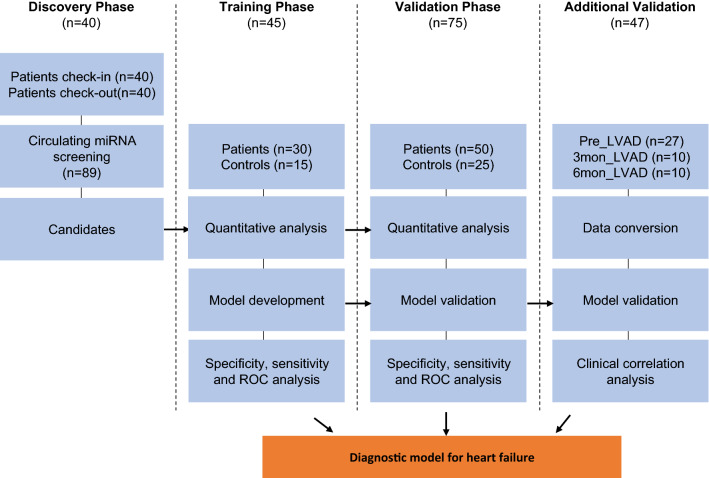
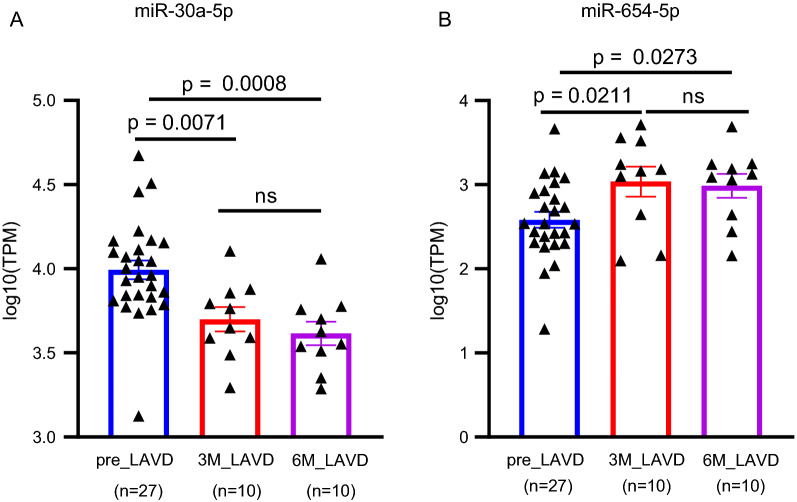
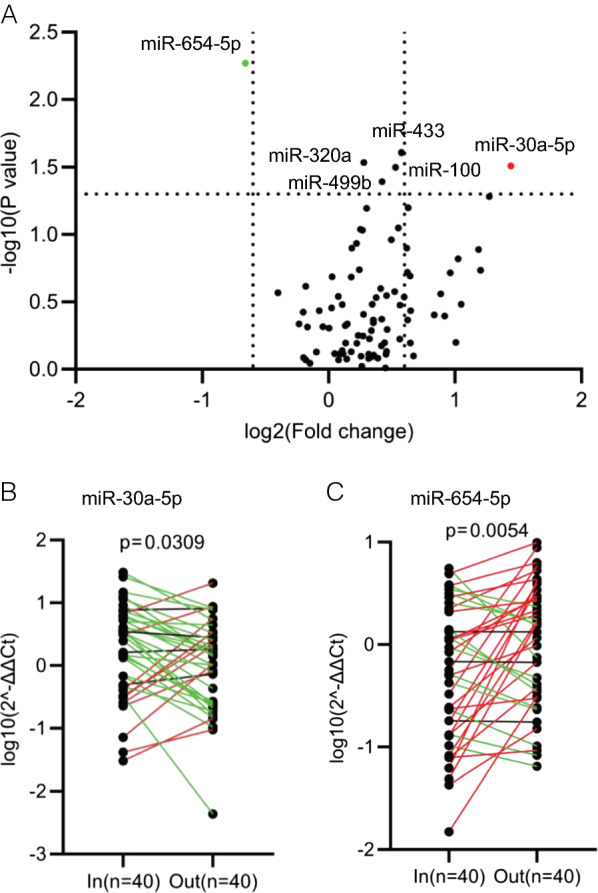
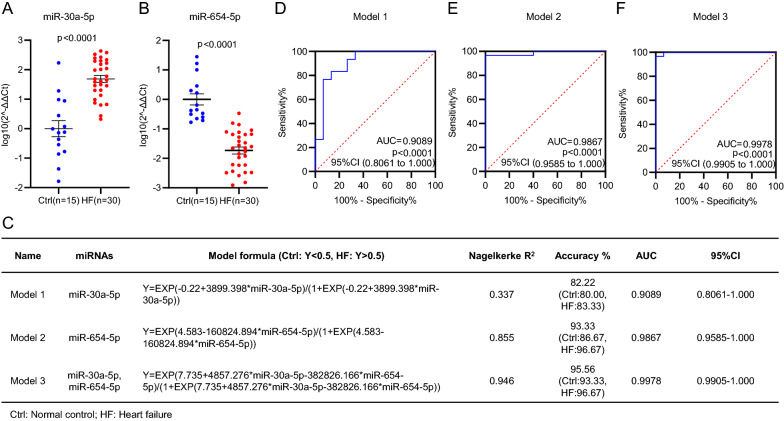
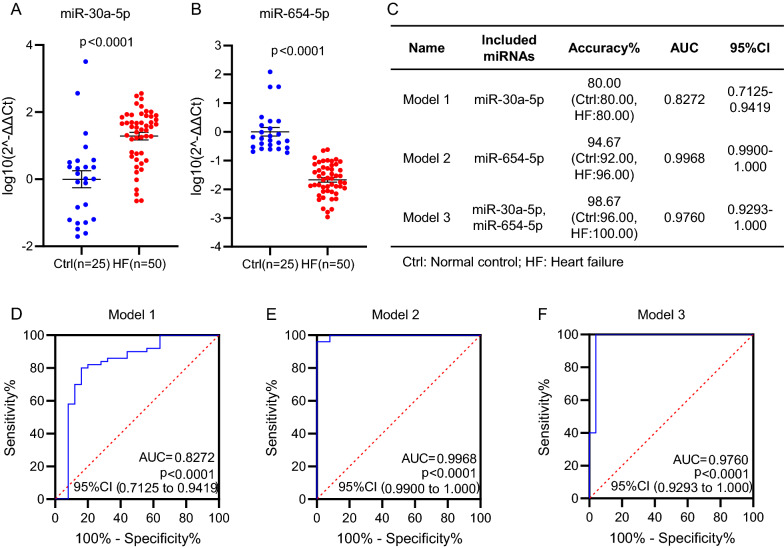
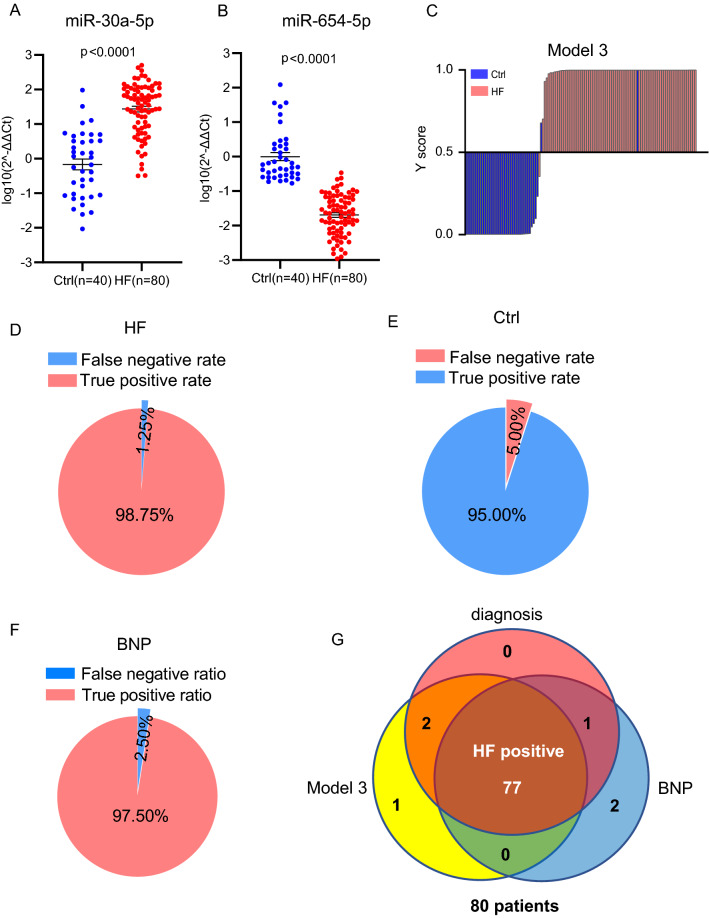
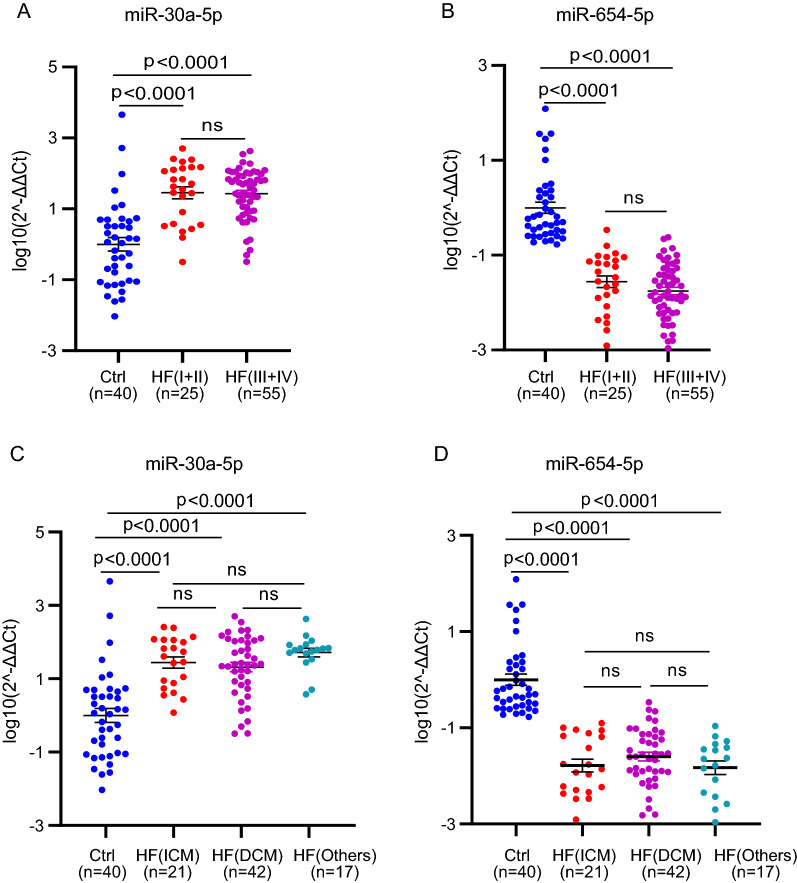
Heart failure (HF), as the leading cause of death, is continuing to increase along with the aging of the general population all over the world. Identification of diagnostic biomarkers for early detection of HF is considered as the most effective way to reduce the risk and mortality. Herein, we collected plasma samples from HF patients (n = 40) before and after medical therapy to determine the change of circulating miRNAs through a quantitative real-time PCR (QRT-PCR)-based miRNA screening analysis. miR-30a-5p and miR-654-5p were identified as the most significantly changed miRNAs in the plasma of patients upon treatment. In consistence, miR-30a-5p showed upregulation and miR-654-5p showed downregulation in the circulation of 30 HF patients, compared to 15 normal controls in the training phase, from which a two-circulating miRNA model was developed for HF diagnosis. Next, we performed the model validation using an independent cohort including 50 HF patients and 30 controls. As high as 98.75% of sensitivity and 95.00% of specificity were achieved. A comparison between the miRNA model and NT-pro BNP in diagnostic accuracy of HF indicated an upward trend of the miRNA model. Moreover, change of the two miRNAs was further verified in association with the therapeutic effect of HF patients, in which miR-30a-5p showed decrease while miR-654-5p showed increase in the plasma of patients after LVAD implantation. In conclusion, the current study not only identified circulating miR-654-5p for the first time as a novel biomarker of HF, but also developed a novel 2-circulating miRNA model with promising potentials for diagnosis and prognosis of HF patients, and in association with therapeutic effects as well.
心力衰竭(HF)是全球人口老龄化背景下导致死亡的主要原因,其发病率仍在不断上升。寻找用于 HF 早期诊断的生物标志物被认为是降低风险和死亡率的最有效方法。在此,我们收集了 HF 患者(n=40)在药物治疗前后的血浆样本,通过基于定量实时 PCR(QRT-PCR)的 miRNA 筛选分析来确定循环 miRNA 的变化。miR-30a-5p 和 miR-654-5p 被鉴定为治疗后患者血浆中变化最显著的 miRNA。一致的是,与训练阶段的 15 名正常对照相比,在 30 名 HF 患者的循环中,miR-30a-5p 呈上调,miR-654-5p 呈下调,由此建立了用于 HF 诊断的双循环 miRNA 模型。接下来,我们使用包括 50 名 HF 患者和 30 名对照的独立队列进行模型验证。该模型的灵敏度高达 98.75%,特异性为 95.00%。将 miRNA 模型与 NT-pro BNP 在 HF 诊断准确性方面进行比较,表明 miRNA 模型呈上升趋势。此外,还进一步验证了这两种 miRNA 的变化与 HF 患者的治疗效果相关,其中 LVAD 植入后患者血浆中 miR-30a-5p 下降,miR-654-5p 上升。总之,本研究不仅首次鉴定出循环 miR-654-5p 是 HF 的新型生物标志物,还开发了一种新型双循环 miRNA 模型,该模型具有用于 HF 患者诊断和预后的潜在价值,并与治疗效果相关。