Imamura Fumihiko, Suppasri Anawat, Arikawa Taro, Koshimura Shunichi, Satake Kenji, Tanioka Yuichiro
International Research Institute of Disaster Science (IRIDeS), Tohoku University, 468-1 Aoba, Aramaki, Aoba-ku, Sendai, Miyagi Japan.
Faculty of Science and Engineering, Chuo University, 1-13-27 Kasuga, Bunkyo-ku, Tokyo, Japan.
Pure Appl Geophys. 2022;179(5):1549-1560. doi: 10.1007/s00024-022-03058-0. Epub 2022 Jun 4.
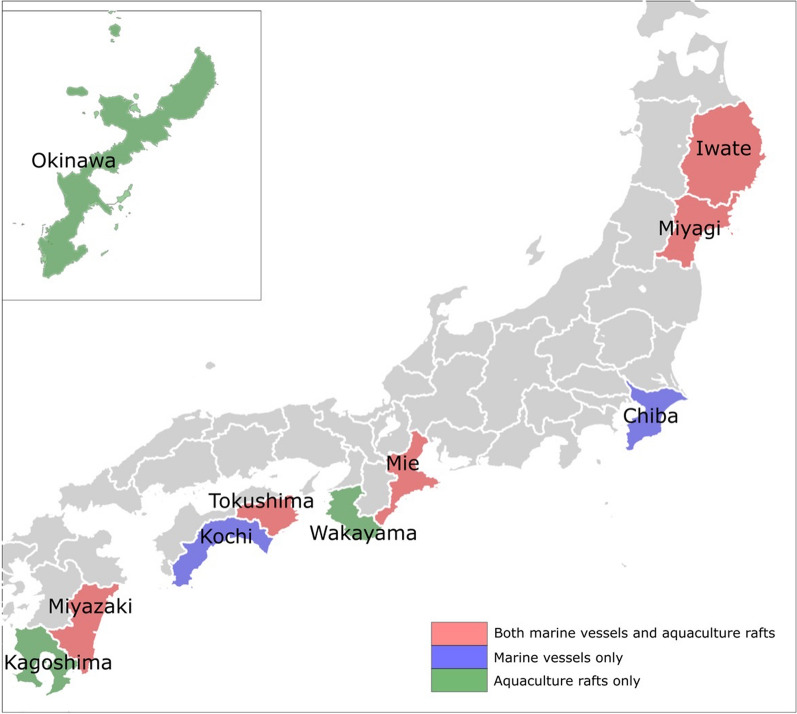
The tsunami caused by the Tonga submarine volcanic eruption that occurred at 13:15 Japan Time (JST) on January 15, 2022, exposed a blind spot in Japan's tsunami monitoring and warning system, which was established in 1952 for local tsunamis and expanded to distant tsunamis after the 1960 Chile tsunami. This paper summarizes how the warning system responded to the unprecedented tsunami, the actual evacuation process, and the damage it caused in Japan. Initially, the tsunami from the volcanic eruption was expected to arrive at approximately midnight with amplitudes of less than 20 cm. However, a series of short waves arrived at approximately 21:00, a few hours earlier than expected. The early arrival of these sea waves coincided with a rapid increase in atmospheric pressure; then, the short-period component was predominant, and the wave height was amplified while forming wave groups. After a 1.2 m tsunami was observed in Amami City in southern Japan at 23:55 JST, the Japan Meteorological Agency issued a tsunami warning/advisory. The tsunami continued, and all advisories were cleared at 14:00 JST on January 16. Information about this tsunami and the response to it are summarized here, including the characteristics and issues of the actual tsunami evacuation situation in each region. There were no casualties, but the issues that emerged included difficulty evacuating on a winter night and traffic congestion due to evacuation by car and under the conditions of the COVID-19 pandemic. In the coastal area, damage to fishing boats and aquaculture facilities was reported due to the flow of the tsunami. In addition, damage to aquaculture facilities, including those producing oysters, scallops, seaweed and other marine products, decreased the supply of marine products, and the economic impact is likely to increase in the future.
2022年1月15日日本时间13时15分汤加海底火山喷发引发的海啸,暴露了日本海啸监测与预警系统的一个盲点。该系统于1952年为本地海啸而建立,在1960年智利海啸后扩展至远程海啸监测。本文总结了该预警系统对这场前所未有的海啸的应对情况、实际疏散过程以及在日本造成的破坏。最初,火山喷发引发的海啸预计在午夜左右抵达,波幅小于20厘米。然而,一系列短波在大约21时抵达,比预期提前了几个小时。这些海浪的提前抵达与大气压力的迅速上升同时出现;随后,短周期分量占主导,波高在形成波群时被放大。在日本标准时间23时55分日本南部奄美市观测到1.2米的海啸后,日本气象厅发布了海啸警报/公告。海啸持续,所有公告在1月16日日本标准时间14时解除。本文总结了有关此次海啸及其应对措施的信息,包括各地区实际海啸疏散情况的特点和问题。此次海啸没有造成人员伤亡,但出现的问题包括冬夜疏散困难以及在新冠疫情条件下因驾车疏散导致的交通拥堵。在沿海地区,有报告称海啸造成渔船和水产养殖设施受损。此外,包括生产牡蛎、扇贝、海藻和其他海产品的设施在内的水产养殖设施受损,减少了海产品供应,未来经济影响可能会增加。