Zhan Choujun, Shao Lujiao, Zhang Xinyu, Yin Ziliang, Gao Ying, Tse Chi K, Yang Dong, Wu Di, Zhang Haijun
School of Computing, South China Normal University, Guangzhou 510641, China.
Department of Computer Science, Harbin Institute of Technology, Shenzhen 518055, China.
Inf Sci (N Y). 2022 Aug;607:418-439. doi: 10.1016/j.ins.2022.05.093. Epub 2022 Jun 6.
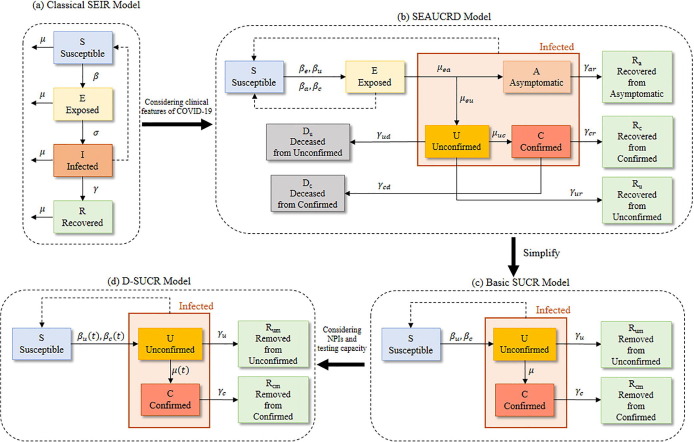
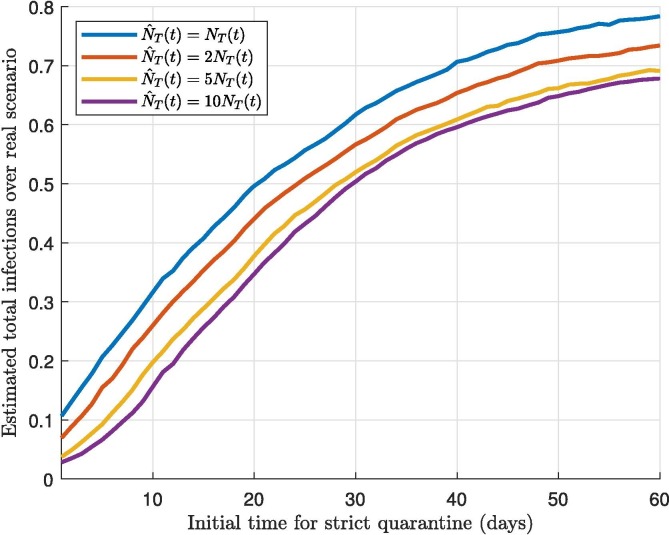
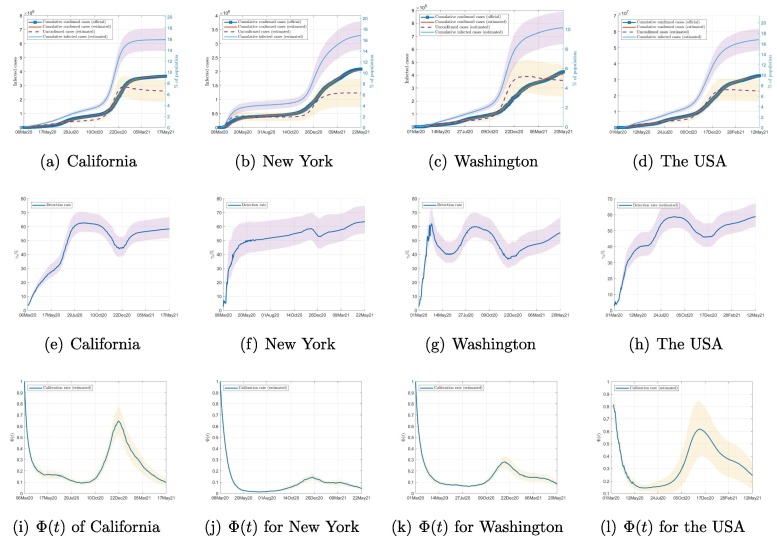
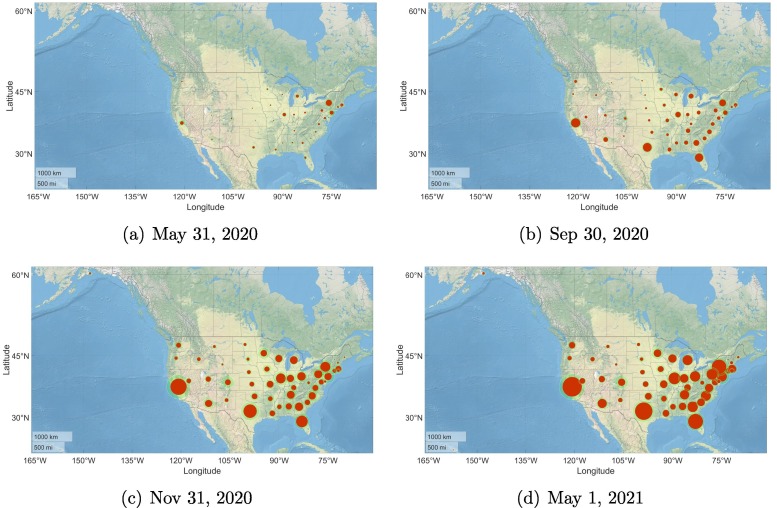
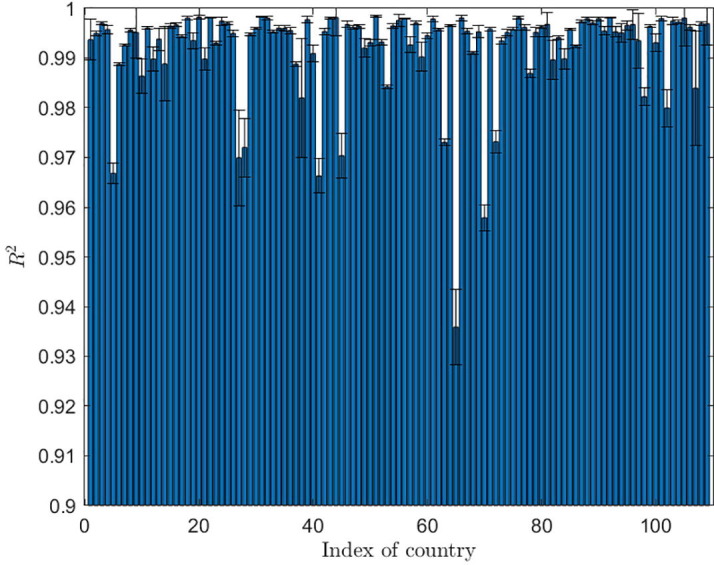
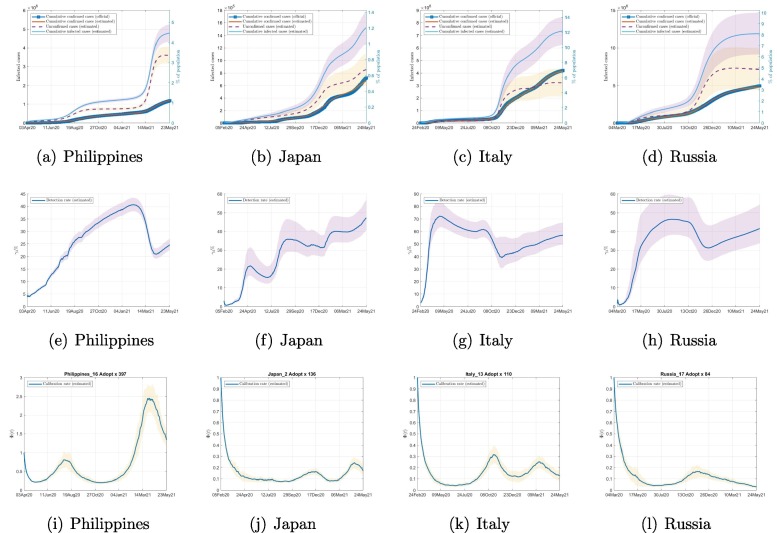
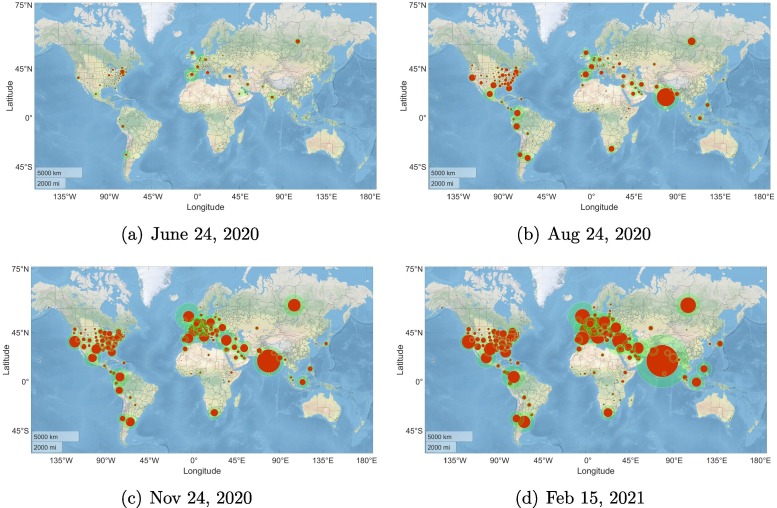
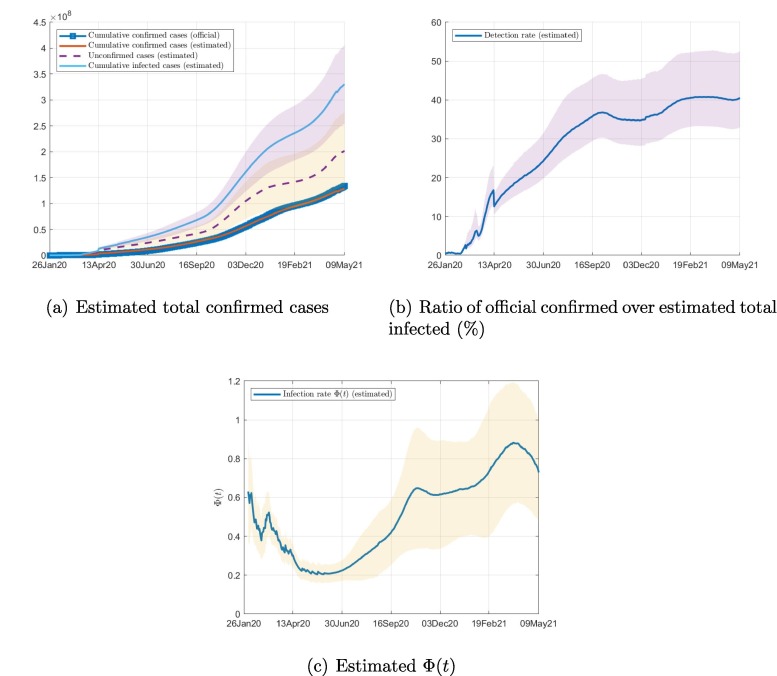
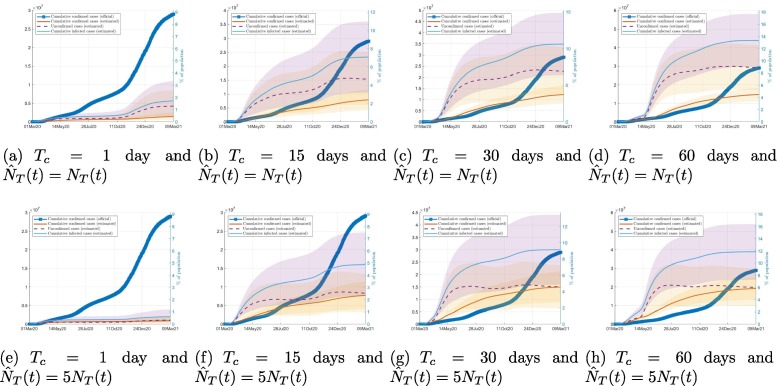
The novel coronavirus disease 2019 (COVID-19), caused by severe acute respiratory syndrome coronavirus 2 (SARS-CoV-2), has unique epidemiological characteristics that include presymptomatic and asymptomatic infections, resulting in a large proportion of infected cases being unconfirmed, including patients with clinical symptoms who have not been identified by screening. These unconfirmed infected individuals move and spread the virus freely, presenting difficult challenges to the control of the pandemic. To reveal the actual pandemic situation in a given region, a simple dynamic susceptible-unconfirmed-confirmed-removed (D-SUCR) model is developed taking into account the influence of unconfirmed cases, the testing capacity, the multiple waves of the pandemic, and the use of non-pharmaceutical interventions. Using this model, the total numbers of infected cases in 51 regions of the USA and 116 countries worldwide are estimated, and the results indicate that only about 40% of the true number of infections have been confirmed. In addition, it is found that if local authorities could enhance their testing capacities and implement a timely strict quarantine strategy after identifying the first infection case, the total number of infected cases could be reduced by more than 90%. Delay in implementing quarantine measures would drastically reduce their effectiveness.
2019年新型冠状病毒病(COVID-19)由严重急性呼吸综合征冠状病毒2(SARS-CoV-2)引起,具有独特的流行病学特征,包括症状前感染和无症状感染,导致很大一部分感染病例未得到确诊,包括那些临床症状患者未通过筛查被识别出来的情况。这些未确诊的感染者自由活动并传播病毒,给疫情防控带来了艰巨挑战。为了揭示特定地区的实际疫情形势,考虑到未确诊病例的影响、检测能力、疫情的多波次以及非药物干预措施的使用,开发了一个简单的动态易感-未确诊-确诊-移除(D-SUCR)模型。利用该模型,对美国51个地区和全球116个国家的感染病例总数进行了估计,结果表明,已确诊的感染病例数仅约占实际感染数的40%。此外,研究发现,如果地方当局能够提高检测能力,并在识别出首例感染病例后及时实施严格的检疫策略,感染病例总数可减少90%以上。延迟实施检疫措施将大幅降低其效果。