Emerg Infect Dis. 2021 Feb;27(2):452-462. doi: 10.3201/eid2702.203412.
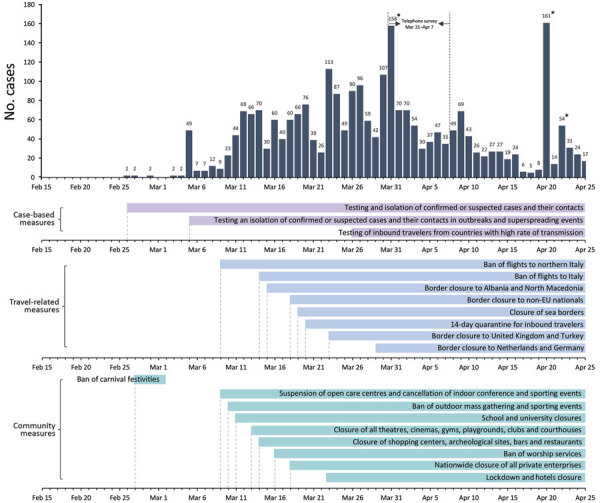
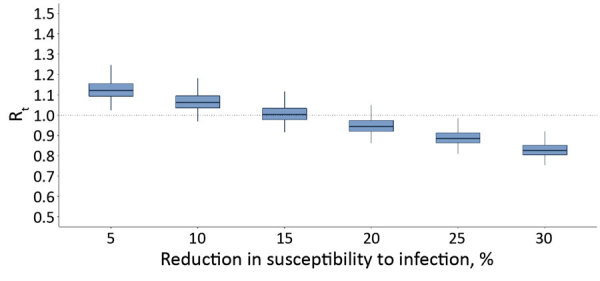
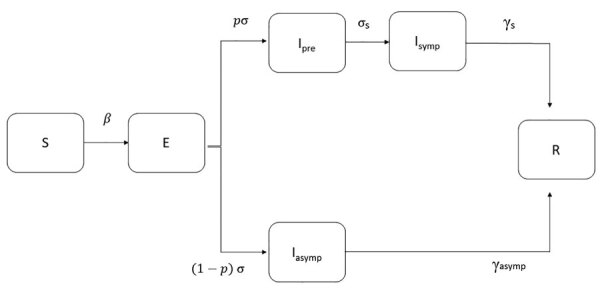
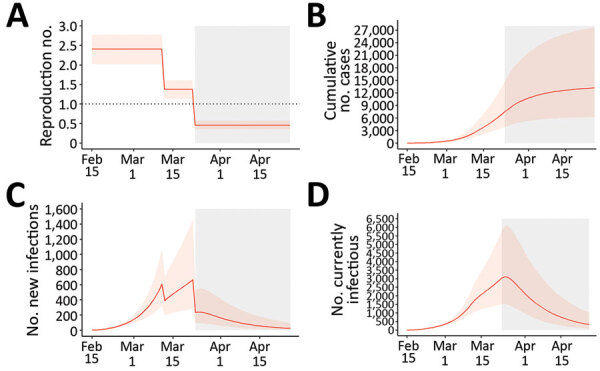
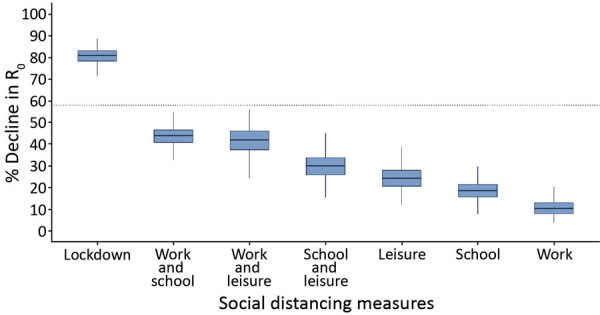
Greece imposed a nationwide lockdown in March 2020 to mitigate transmission of severe acute respiratory syndrome coronavirus 2 during the first epidemic wave. We conducted a survey on age-specific social contact patterns to assess effects of physical distancing measures and used a susceptible-exposed-infectious-recovered model to simulate the epidemic. Because multiple distancing measures were implemented simultaneously, we assessed their overall effects and the contribution of each measure. Before measures were implemented, the estimated basic reproduction number (R) was 2.38 (95% CI 2.01-2.80). During lockdown, daily contacts decreased by 86.9% and R decreased by 81.0% (95% credible interval [CrI] 71.8%-86.0%); each distancing measure decreased R by 10%-24%. By April 26, the attack rate in Greece was 0.12% (95% CrI 0.06%-0.26%), one of the lowest in Europe, and the infection fatality ratio was 1.12% (95% CrI 0.55%-2.31%). Multiple social distancing measures contained the first epidemic wave in Greece.
希腊于 2020 年 3 月实施全国封锁,以减轻严重急性呼吸综合征冠状病毒 2 在第一波疫情中的传播。我们进行了一项关于特定年龄组社会接触模式的调查,以评估身体距离措施的效果,并使用易感-暴露-感染-恢复模型来模拟疫情。由于同时实施了多项隔离措施,我们评估了它们的总体效果以及每项措施的贡献。在实施措施之前,估计的基本繁殖数(R)为 2.38(95%置信区间 2.01-2.80)。在封锁期间,每日接触减少了 86.9%,R 值减少了 81.0%(95%可信区间 71.8%-86.0%);每种隔离措施使 R 值降低了 10%-24%。截至 4 月 26 日,希腊的发病率为 0.12%(95%可信区间 0.06%-0.26%),在欧洲属于较低水平之一,感染病死率为 1.12%(95%可信区间 0.55%-2.31%)。多项社会隔离措施遏制了希腊的第一波疫情。