Zhao Zhuo, Li Rui, Ma Yangmyung, Islam Iman, Rajper Abdul M Azam, Song WenZhan, Ren Hongliang, Tse Zion Tsz Ho
School of Electrical and Computer Engineering University of Georgia Athens, GA United States.
Tandon School of Engineering New York University Brooklyn, NY United States.
JMIRx Med. 2022 May 24;3(2):e30344. doi: 10.2196/30344. eCollection 2022 Apr-Jun.
During COVID-19, clinical and health care demands have been on the rapid rise. Major challenges that have arisen during the pandemic have included a lack of testing kits, shortages of ventilators to treat severe cases of COVID-19, and insufficient accessibility to personal protective equipment for both hospitals and the public. New technologies have been developed by scientists, researchers, and companies in response to these demands.
The primary objective of this review is to compare different supporting technologies in the subjugation of the COVID-19 spread.
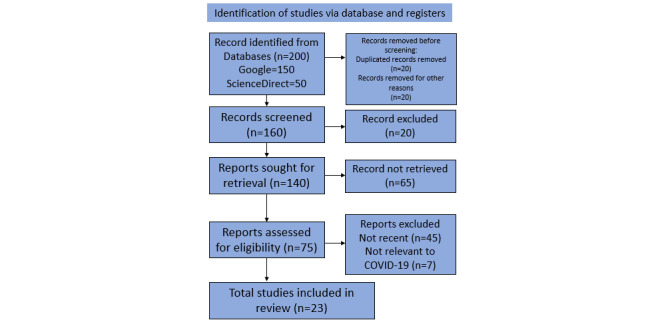
In this paper, 150 news articles and scientific reports on COVID-19-related innovations during 2020-2021 were checked, screened, and shortlisted to yield a total of 23 articles for review. The keywords "COVID-19 technology," "COVID-19 invention," and "COVID-19 equipment" were used in a Google search to generate related news articles and scientific reports. The search was performed on February 1, 2021. These were then categorized into three sections, which are personal protective equipment (PPE), testing methods, and medical treatments. Each study was analyzed for its engineering characteristics and potential social impact on the COVID-19 pandemic.
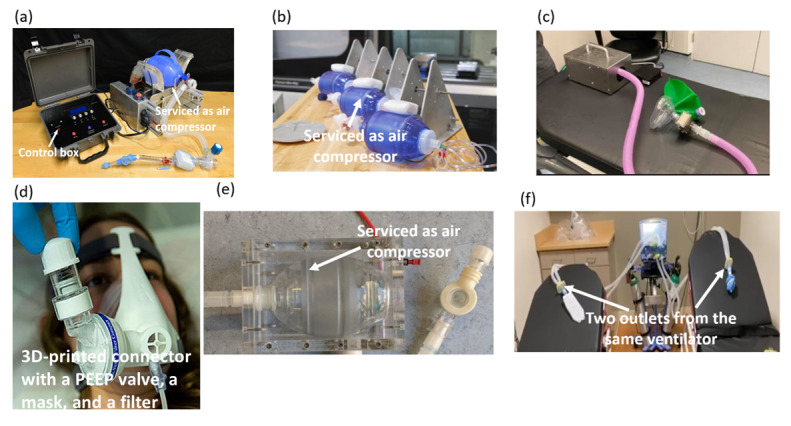
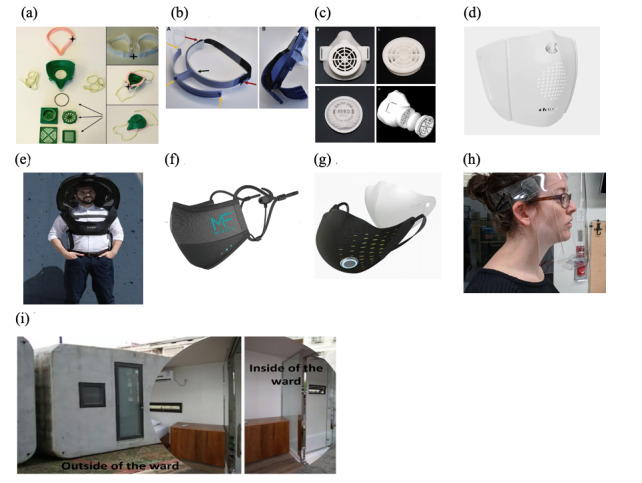
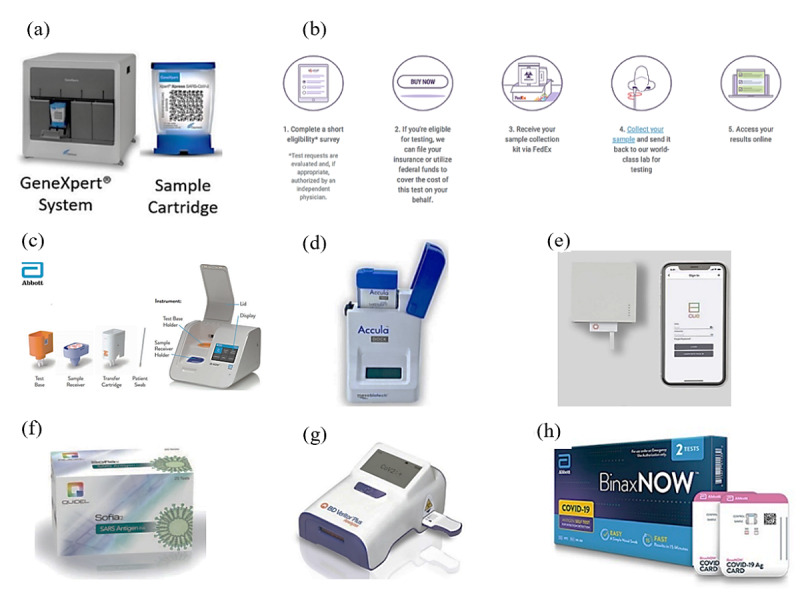
A total of 9 articles were selected for review concerning PPE. In general, the design and fabrication of PPE were moving toward the direction of additive manufacturing and intelligent information feedback while being eco-friendly. Moreover, 8 articles were selected for reviewing testing methods within the two main categories of molecular and antigen tests. All the inventions endeavored to increase sensitivity while reducing the turnaround time. However, the inventions reported in this review paper were not sufficiently tested for their safety and efficiency. Most of the inventions are temporary solutions intended to be used only during shortages of medical resources. Finally, 6 articles were selected for the review of COVID-19 medical treatment. The major challenge identified was the uncertainty in applying novel ideas to speed up the production of ventilators.
The technologies developed during the COVID-19 pandemic were considered for review. In order to better respond to future pandemics, national reserves of critical medical supplies should be increased to improve preparation. This pandemic has also highlighted the need for the automation and optimization of medical manufacturing.
在新冠疫情期间,临床和医疗保健需求迅速增长。疫情期间出现的主要挑战包括检测试剂盒短缺、治疗新冠重症病例的呼吸机短缺,以及医院和公众获取个人防护装备的渠道不足。科学家、研究人员和企业已针对这些需求开发了新技术。
本综述的主要目的是比较不同支持技术在遏制新冠疫情传播方面的作用。
本文对2020年至2021年期间150篇关于新冠相关创新的新闻文章和科学报告进行了检查、筛选和入围,最终选出23篇文章进行综述。在谷歌搜索中使用关键词“新冠技术”“新冠发明”和“新冠设备”来生成相关新闻文章和科学报告。搜索于2021年2月1日进行。这些文章随后被分为三个部分,即个人防护装备(PPE)、检测方法和医疗治疗。对每项研究的工程特性及其对新冠疫情的潜在社会影响进行了分析。
共选出9篇关于个人防护装备的文章进行综述。总体而言,个人防护装备的设计和制造正朝着增材制造和智能信息反馈的方向发展,同时注重环保。此外,选出8篇文章对分子检测和抗原检测这两大类检测方法进行综述。所有发明都致力于提高灵敏度并缩短周转时间。然而,本综述文章中报道的发明在安全性和效率方面尚未得到充分测试。大多数发明都是临时解决方案,仅打算在医疗资源短缺时使用。最后,选出6篇文章对新冠医疗治疗进行综述。确定的主要挑战是在应用新想法加快呼吸机生产方面存在不确定性。
对新冠疫情期间开发的技术进行了综述。为了更好地应对未来的疫情,应增加关键医疗物资的国家储备以加强准备工作。这场疫情还凸显了医疗制造自动化和优化的必要性。