College of Life Sciences, Ganzhou Key Laboratory of Greenhouse Vegetable, Gannan Normal University, 341000, Ganzhou, China.
Crop Research Institute, Sichuan Academy of Agricultural Sciences, 610066, Chendu, China.
BMC Genomics. 2022 Jun 14;23(1):441. doi: 10.1186/s12864-022-08666-7.
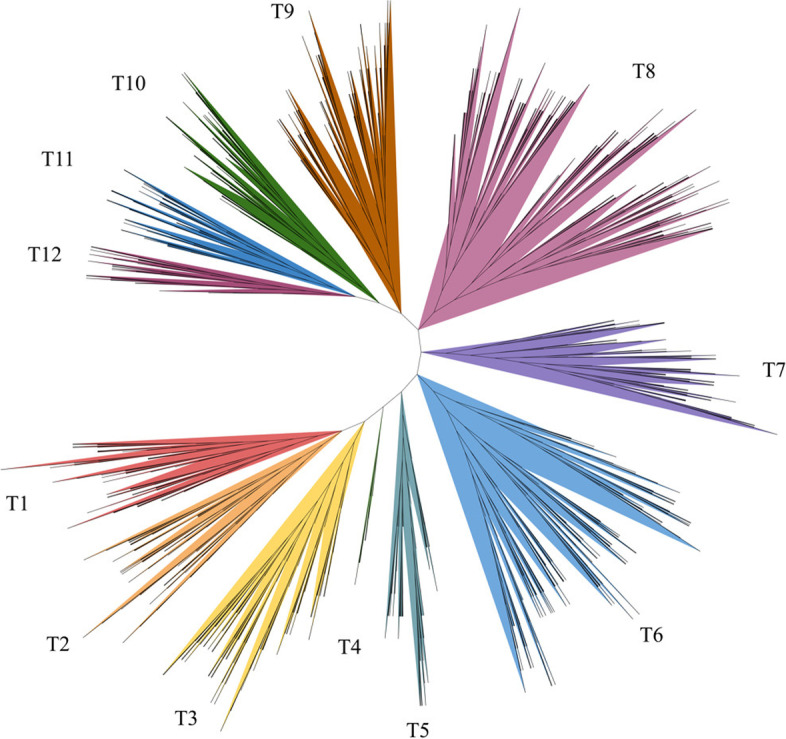
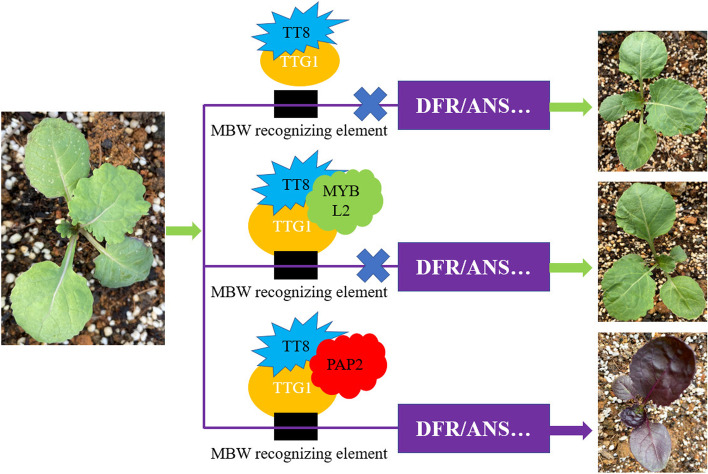
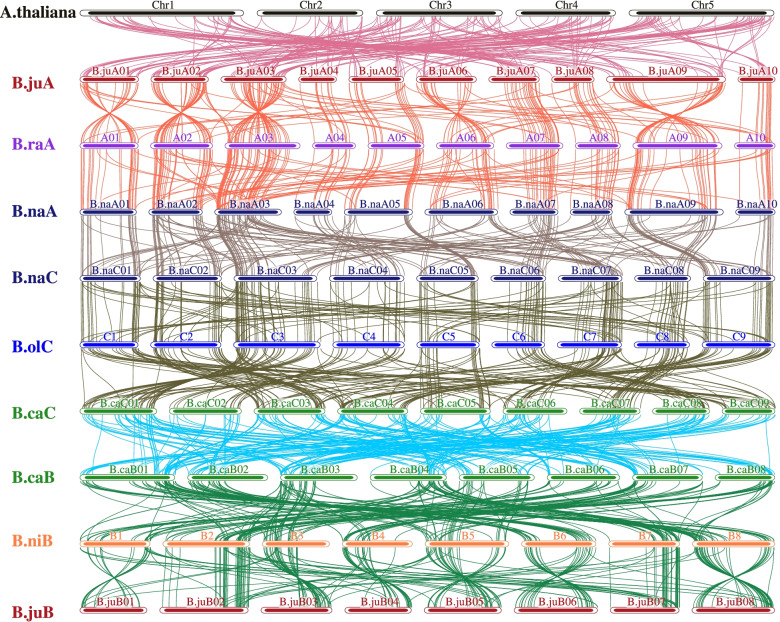
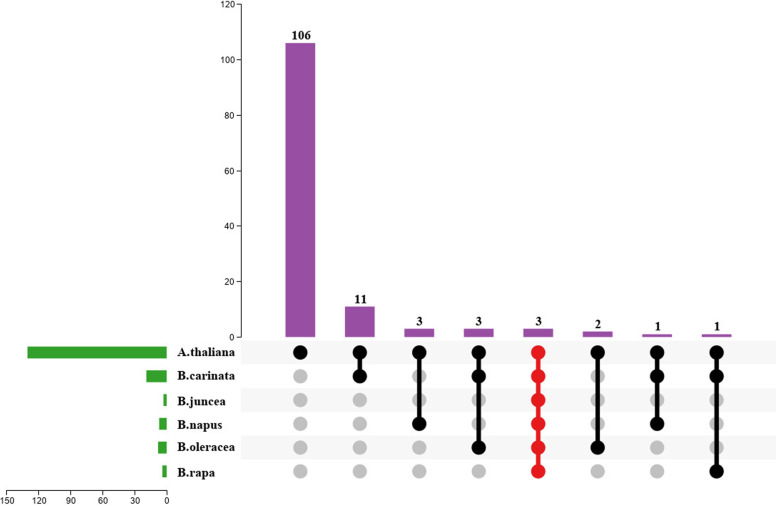
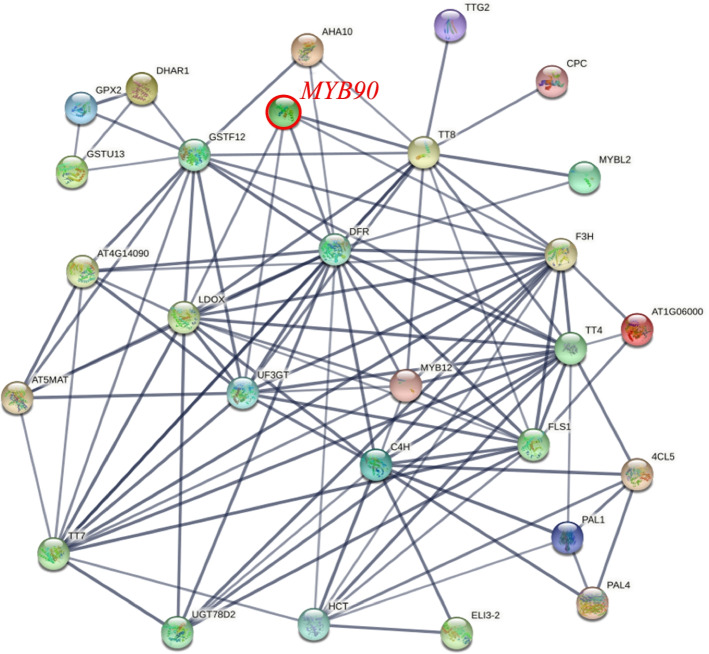
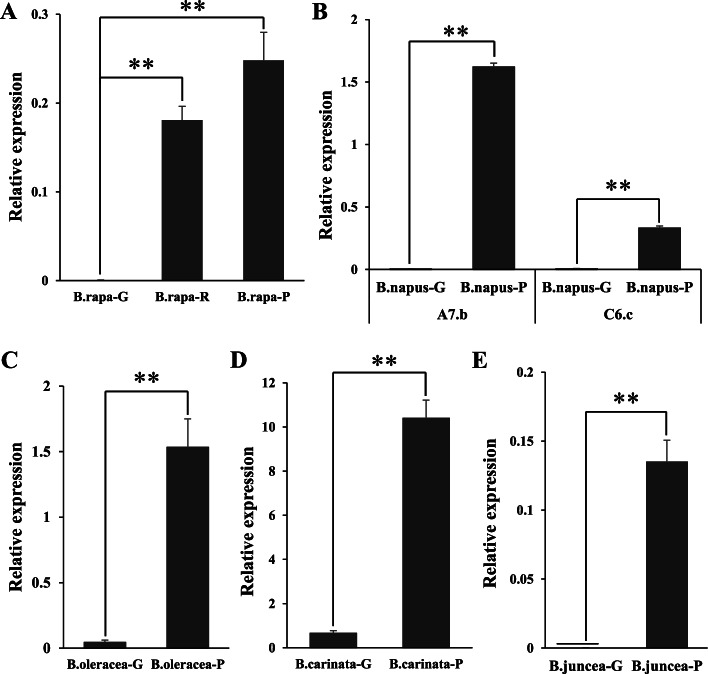
Brassica species include important oil crops and vegetables in the world. The R2R3-MYB gene participates in a variety of plant functions, including the activation or inhibition of anthocyanin biosynthesis. Although previous studies have reported its phylogenetic relationships, gene structures, and expression patterns in Arabidopsis, the number and sequence variation of this gene family in Brassica crops and its involvement in the natural quantitative variation in anthocyanin biosynthesis regulation are still largely unknown. In this study, by using whole genome sequences and comprehensive genome-wide comparative analysis among the six cultivated Brassica species, 2120 R2R3-MYB genes were identified in six Brassica species, in total These R2R3-MYB genes were phylogenetically clustered into 12 groups. The R2R3-MYB family between A and C subgenomes showed better collinearity than between B and C and between A and B. From comparing transcriptional changes of five Brassica species with the purple and green leaves for the detection of the R2R3-MYB genes associated with anthocyanin biosynthesis, 7 R2R3-MYB genes were co-differentially expressed. The promoter and structure analysis of these genes showed that some variations between non-coding region, but they were highly conserved at the protein level and spatial structure. Co-expression analysis of anthocyanin-related genes and R2R3-MYBs indicated that MYB90 was strongly co-expressed with TT8, and they were co-expressed with structural genes F3H, LDOX, ANS and UF3GT at the same time. These results further clarified the roles of the R2R3-MYBs for leaf coloration in Brasica species, which provided new insights into the functions of the R2R3-MYB gene family in Brasica species.
芸薹属物种包括世界上重要的油料作物和蔬菜。R2R3-MYB 基因参与多种植物功能,包括激活或抑制花色素苷生物合成。尽管先前的研究已经报道了它在拟南芥中的系统发育关系、基因结构和表达模式,但该基因家族在芸薹属作物中的数量和序列变异及其在花色素苷生物合成调控的自然数量变异中的作用在很大程度上仍不清楚。在这项研究中,通过使用全基因组序列和六个栽培芸薹属物种的全基因组比较分析,在六个芸薹属物种中鉴定出 2120 个 R2R3-MYB 基因,这些 R2R3-MYB 基因被系统地聚类为 12 组。A 和 C 亚基因组之间的 R2R3-MYB 家族比 B 和 C 之间以及 A 和 B 之间表现出更好的共线性。通过比较五个芸薹属物种的转录变化与紫色和绿色叶片的检测,与花色素苷生物合成相关的 R2R3-MYB 基因有 7 个发生了共差异表达。这些基因的启动子和结构分析表明,非编码区存在一些变异,但它们在蛋白质水平和空间结构上高度保守。花色素苷相关基因和 R2R3-MYB 的共表达分析表明,MYB90 与 TT8 强烈共表达,同时与结构基因 F3H、LDOX、ANS 和 UF3GT 共表达。这些结果进一步阐明了 R2R3-MYB 在芸薹属物种叶片着色中的作用,为 R2R3-MYB 基因家族在芸薹属物种中的功能提供了新的见解。