Burssed Bruna, Zamariolli Malú, Bellucco Fernanda Teixeira, Melaragno Maria Isabel
Genetics Division, Department of Morphology and Genetics, Universidade Federal de São Paulo, São Paulo, SP, Brazil.
Mol Cytogenet. 2022 Jun 14;15(1):23. doi: 10.1186/s13039-022-00600-6.
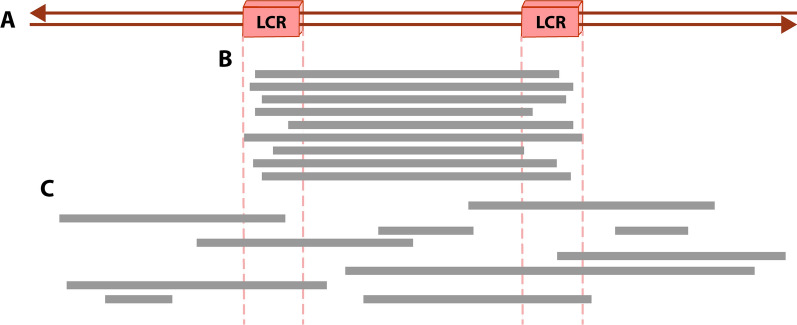
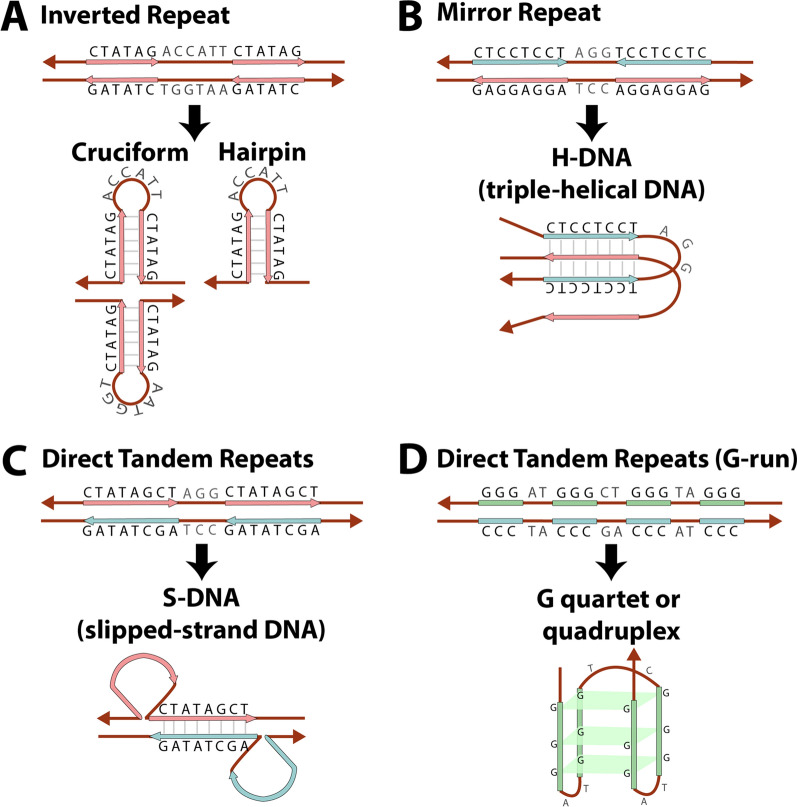
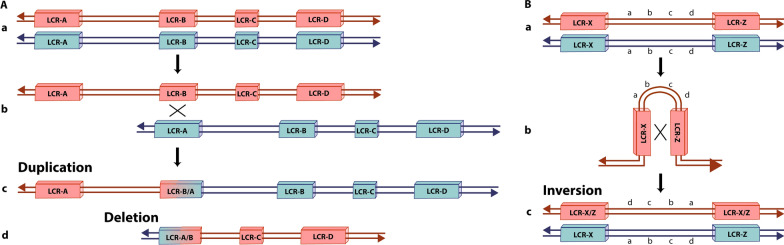
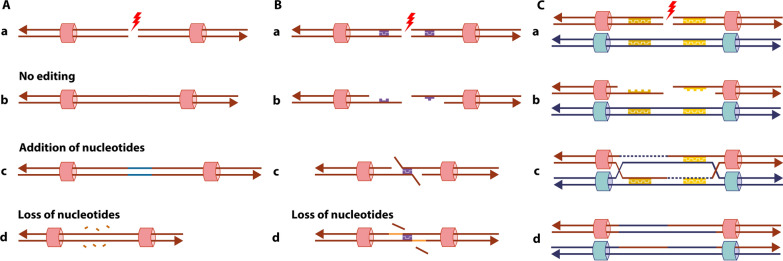
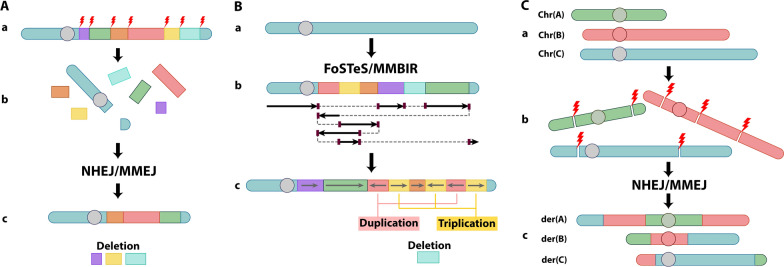
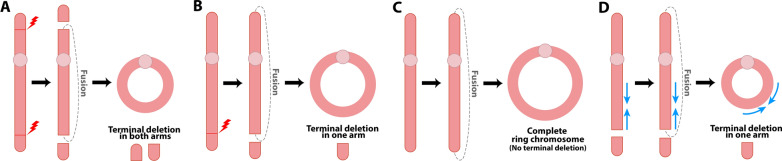
Structural chromosomal rearrangements result from different mechanisms of formation, usually related to certain genomic architectural features that may lead to genetic instability. Most of these rearrangements arise from recombination, repair, or replication mechanisms that occur after a double-strand break or the stalling/breakage of a replication fork. Here, we review the mechanisms of formation of structural rearrangements, highlighting their main features and differences. The most important mechanisms of constitutional chromosomal alterations are discussed, including Non-Allelic Homologous Recombination (NAHR), Non-Homologous End-Joining (NHEJ), Fork Stalling and Template Switching (FoSTeS), and Microhomology-Mediated Break-Induced Replication (MMBIR). Their involvement in chromoanagenesis and in the formation of complex chromosomal rearrangements, inverted duplications associated with terminal deletions, and ring chromosomes is also outlined. We reinforce the importance of high-resolution analysis to determine the DNA sequence at, and near, their breakpoints in order to infer the mechanisms of formation of structural rearrangements and to reveal how cells respond to DNA damage and repair broken ends.
染色体结构重排源于不同的形成机制,通常与某些可能导致基因不稳定的基因组结构特征有关。这些重排大多源于双链断裂或复制叉停滞/断裂后发生的重组、修复或复制机制。在此,我们综述染色体结构重排的形成机制,突出其主要特征和差异。讨论了构成性染色体改变的最重要机制,包括非等位基因同源重组(NAHR)、非同源末端连接(NHEJ)、叉停滞与模板转换(FoSTeS)以及微同源性介导的断裂诱导复制(MMBIR)。还概述了它们在染色体发生以及复杂染色体重排、与末端缺失相关的反向重复和环状染色体形成中的作用。我们强调高分辨率分析对于确定其断点处及附近DNA序列的重要性,以便推断染色体结构重排的形成机制,并揭示细胞如何应对DNA损伤和修复断裂末端。