Department of Ophthalmology, Icahn School of Medicine at Mount Sinai, New York, NY 10029, USA.
Department of Ophthalmology, Icahn School of Medicine at Mount Sinai, New York, NY 10029, USA; Department of Neuroscience, Icahn School of Medicine at Mount Sinai, New York, NY 10029, USA; Department of Cell, Developmental and Regenerative Biology, Icahn School of Medicine at Mount Sinai, New York, NY 10029, USA.
Cell Rep. 2022 Jun 14;39(11):110960. doi: 10.1016/j.celrep.2022.110960.
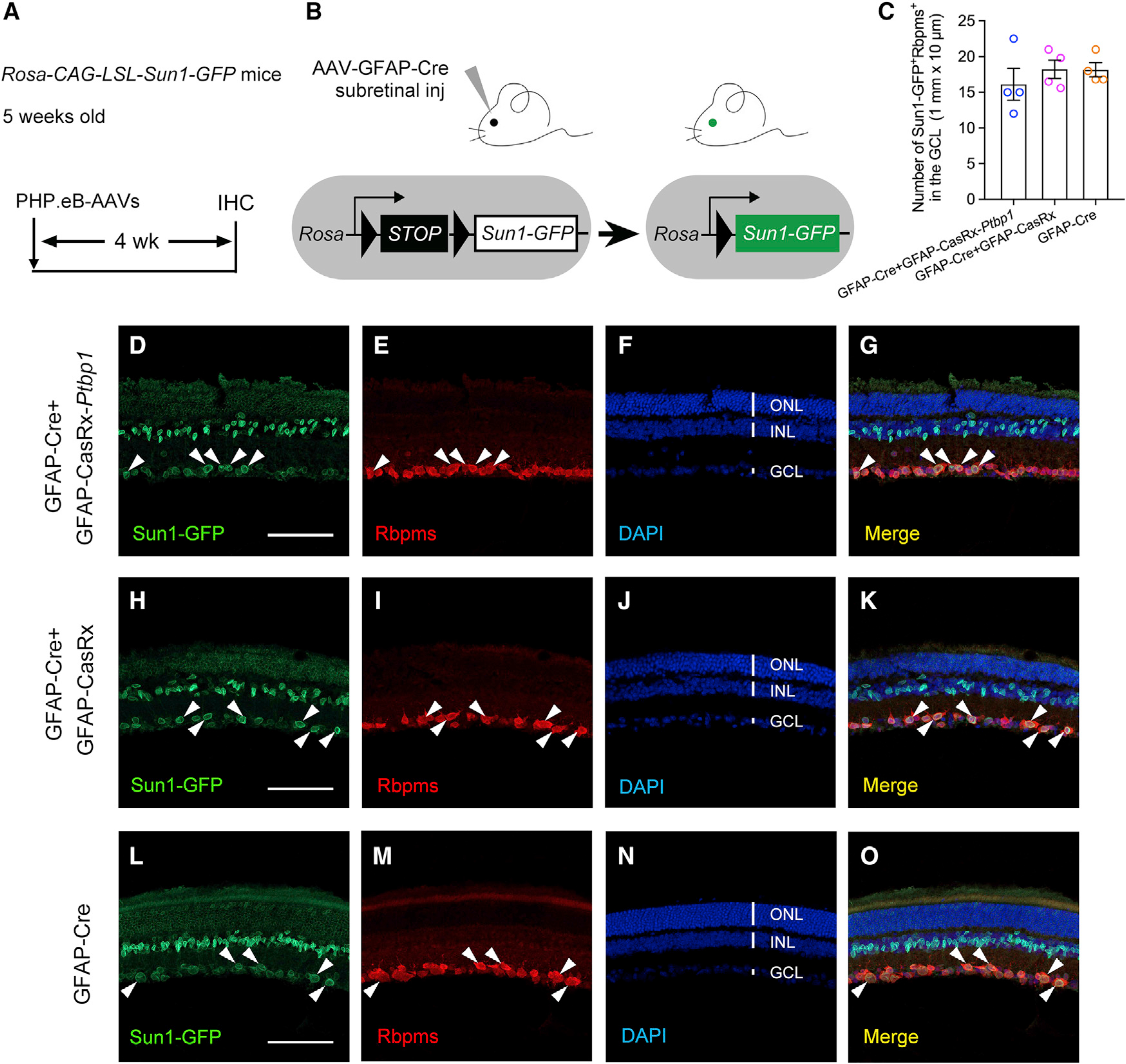
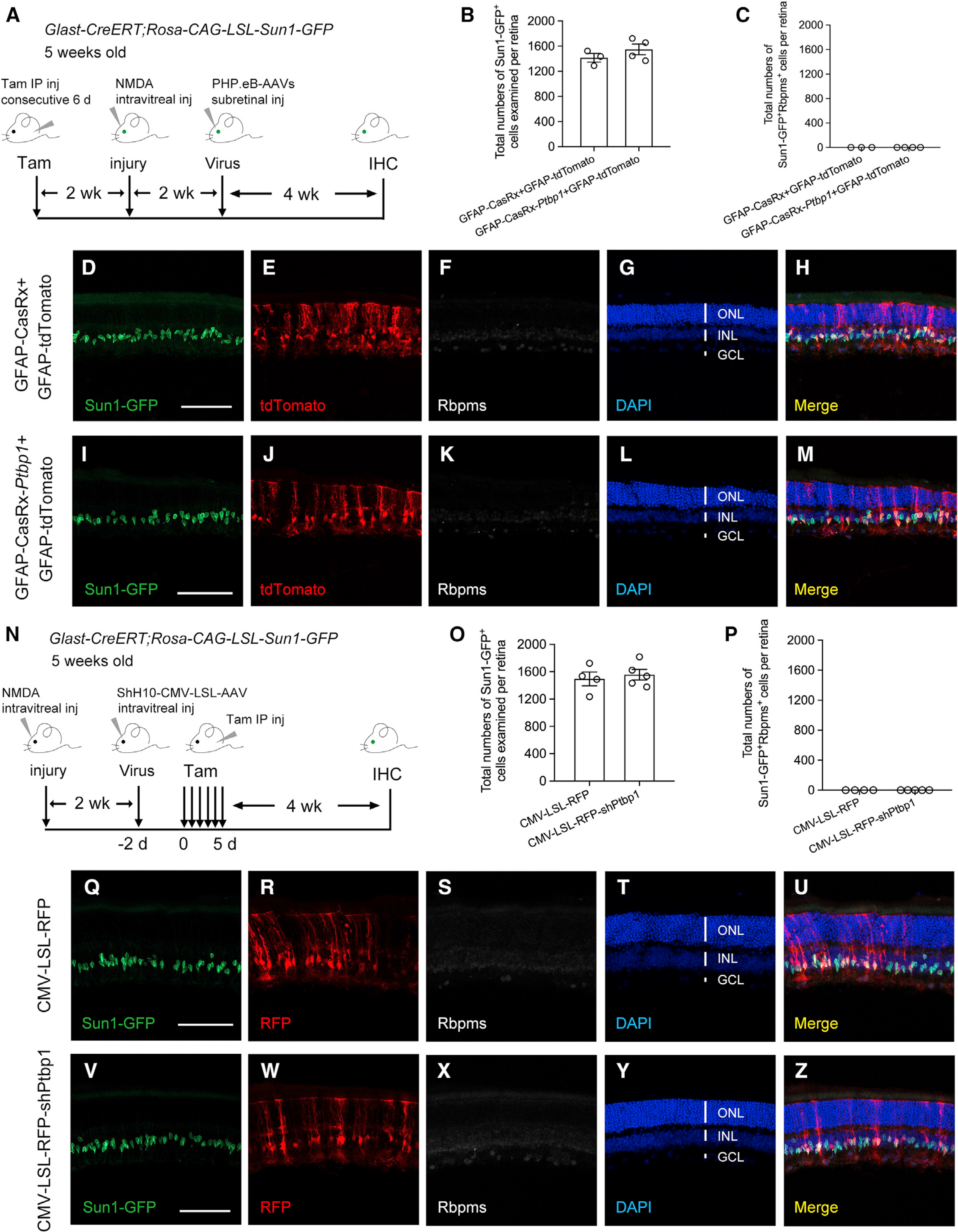
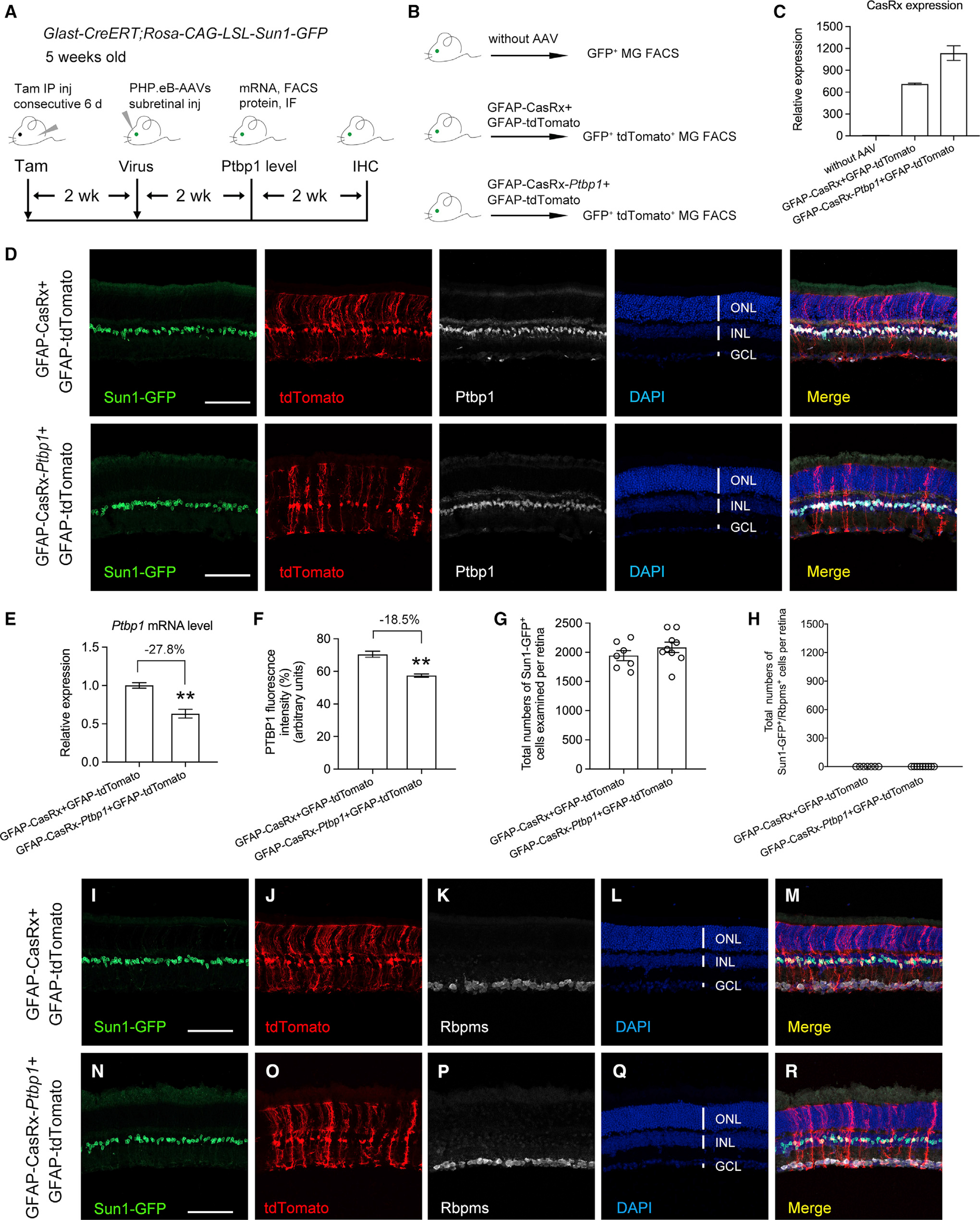
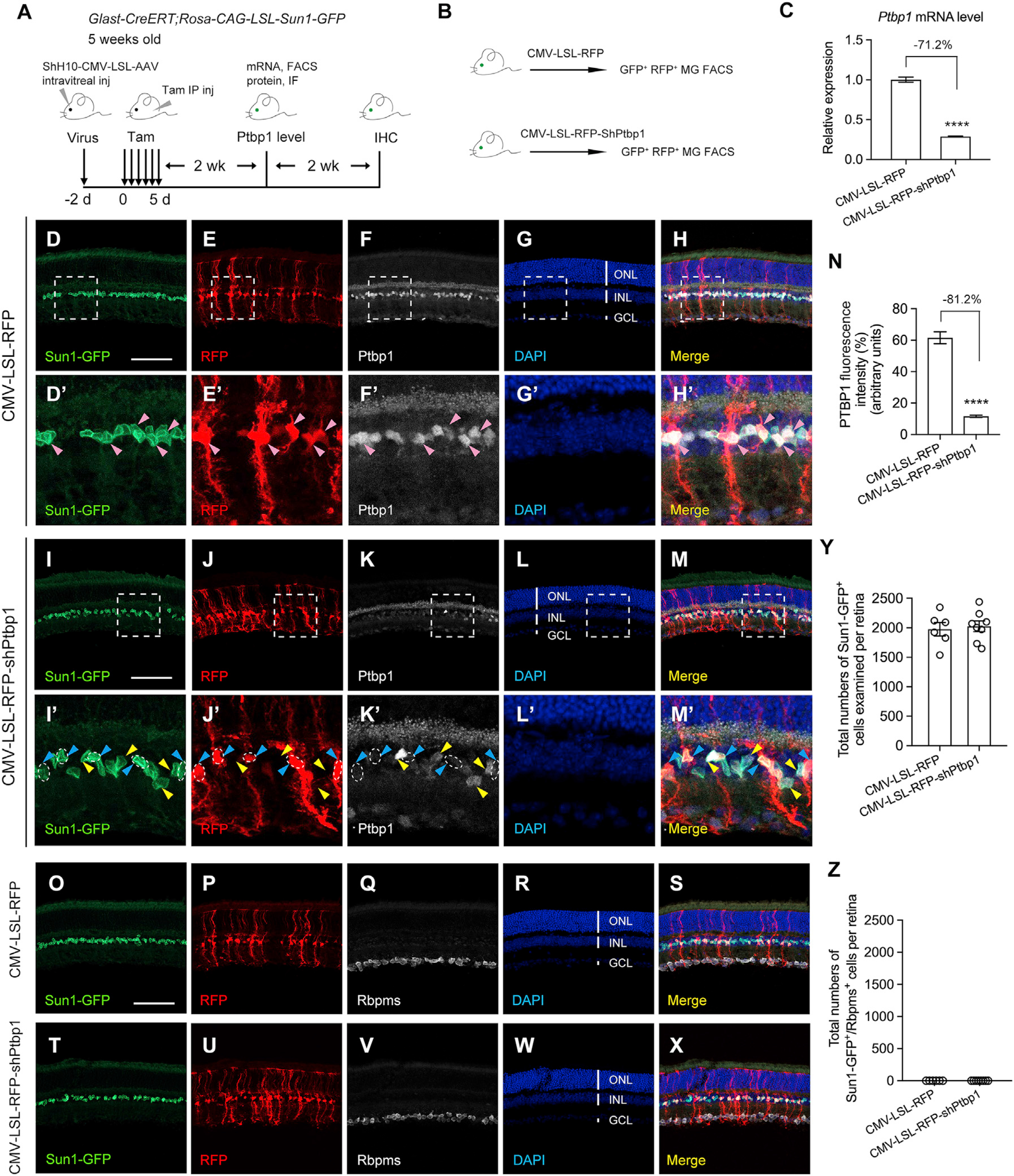
Reprogramming glial cells to convert them into neurons represents a potential therapeutic strategy that could repair damaged neural circuits and restore function. Recent studies show that downregulation of the RNA-binding protein PTBP1 leads to one-step conversion of Müller glia (MG) into retinal ganglion cells (RGCs) with a high efficiency. However, the original study did not perform fate-mapping experiments to confirm MG-to-RGC conversion after Ptbp1 downregulation. To address the fundamental question of whether Ptbp1 downregulation can convert MG into RGCs in the mouse retina, we perform fate-mapping experiments to lineage trace MG independent of the adeno-associated virus (AAV)-mediated labeling system. Here, we report that Ptbp1 downregulation by CRISPR-CasRx or small hairpin RNA is insufficient to convert MG to RGCs. The original conclusion of MG-to-RGC conversion is due to leaky labeling of endogenous RGCs. Our results emphasize the importance of using stringent fate mapping to determine glia-to-neuron conversion in cell reprogramming research.
将神经胶质细胞重编程为神经元代表了一种潜在的治疗策略,它可以修复受损的神经回路并恢复功能。最近的研究表明,RNA 结合蛋白 PTBP1 的下调导致 Müller 胶质细胞(MG)高效地一步转化为视网膜神经节细胞(RGC)。然而,最初的研究并没有进行命运映射实验来确认 Ptbp1 下调后 MG 到 RGC 的转化。为了解决 PTBP1 下调是否能将 MG 转化为小鼠视网膜中的 RGC 的基本问题,我们进行了命运映射实验,以谱系追踪 MG,而不依赖于腺相关病毒(AAV)介导的标记系统。在这里,我们报告说,CRISPR-CasRx 或短发夹 RNA 下调 Ptbp1 不足以将 MG 转化为 RGC。MG 到 RGC 转化的原始结论是由于内源性 RGC 的漏标。我们的结果强调了在细胞重编程研究中使用严格的命运映射来确定胶质细胞到神经元转化的重要性。