Institute of Animal Science, Chinese Academy of Agricultural Sciences, Beijing, 100193, China.
BMC Plant Biol. 2022 Jun 15;22(1):295. doi: 10.1186/s12870-022-03678-7.
SQUAMOSA promoter-binding protein-like (SPL) transcription factors are widely present in plants and are involved in signal transduction, the stress response and development. The SPL gene family has been characterized in several model species, such as A. thaliana and G. max. However, there is no in-depth analysis of the SPL gene family in forage, especially alfalfa (Medicago sativa L.), one of the most important forage crops worldwide.
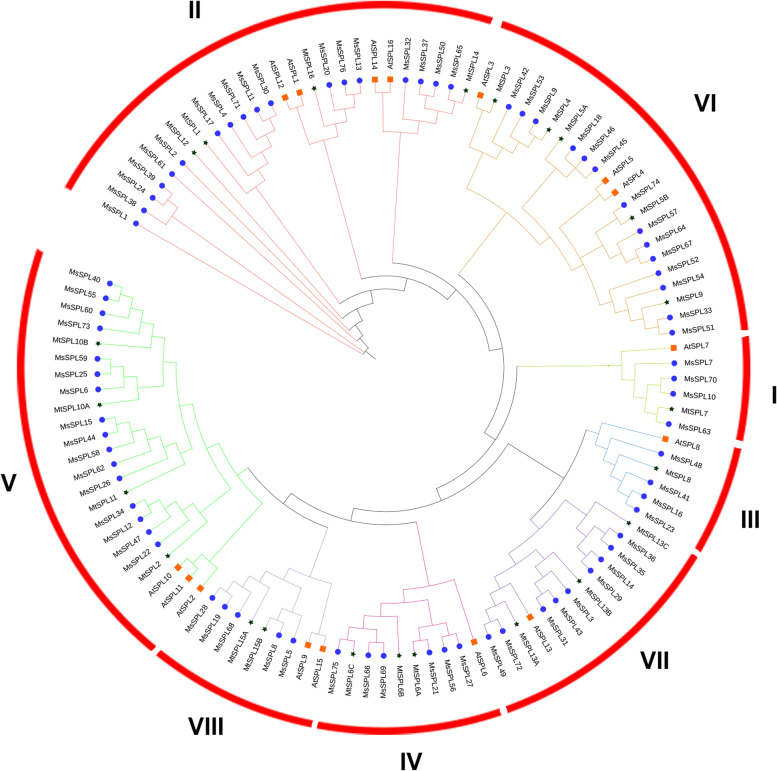
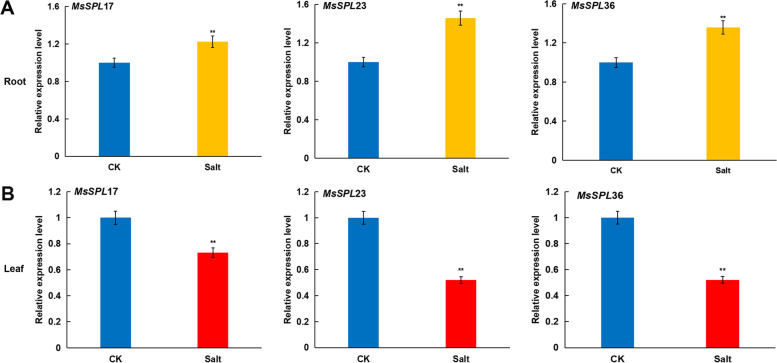
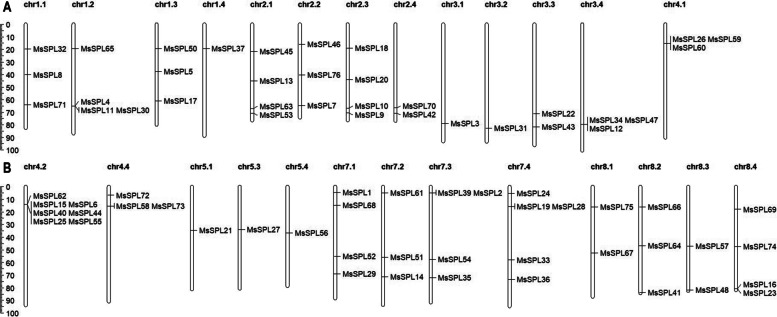
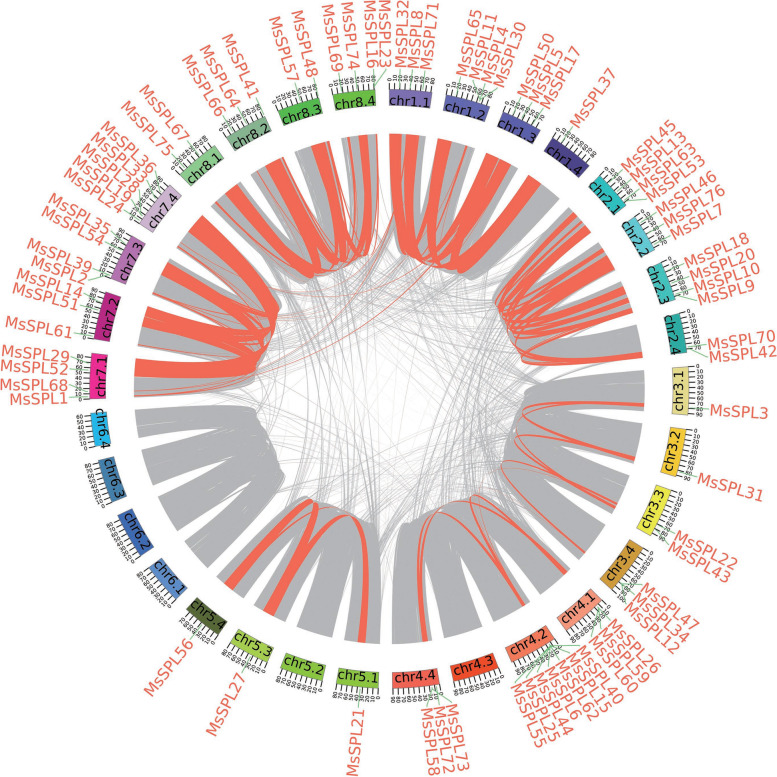
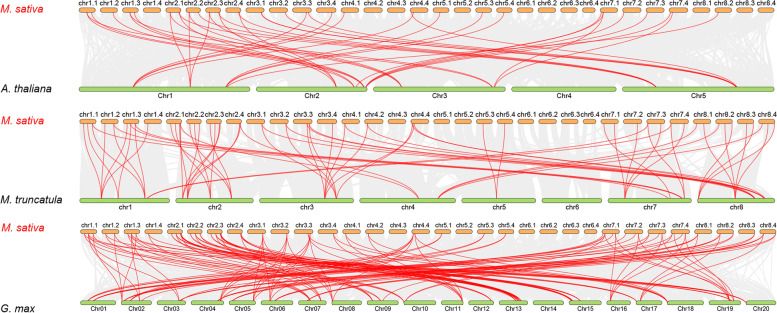
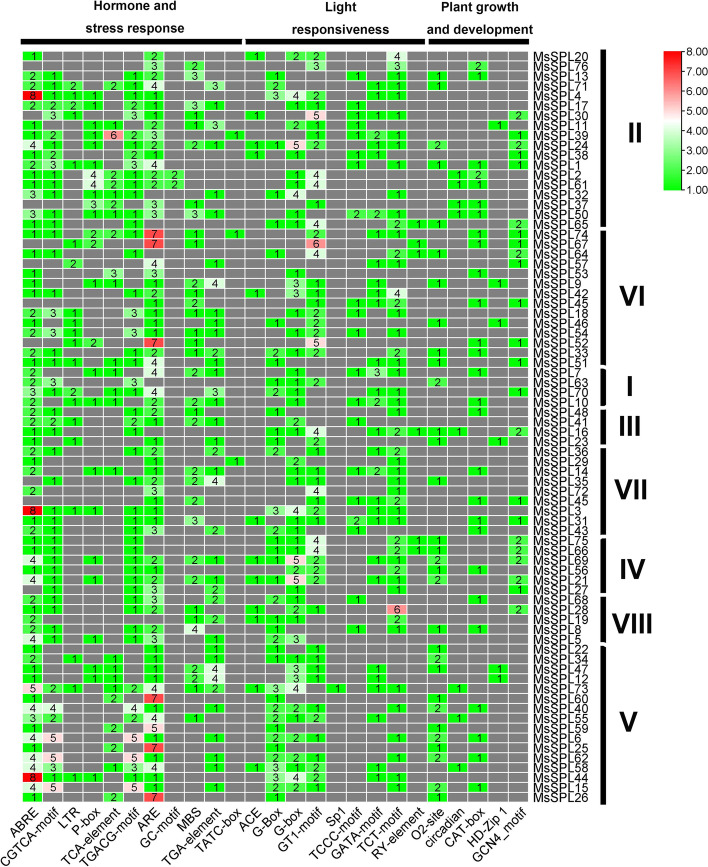
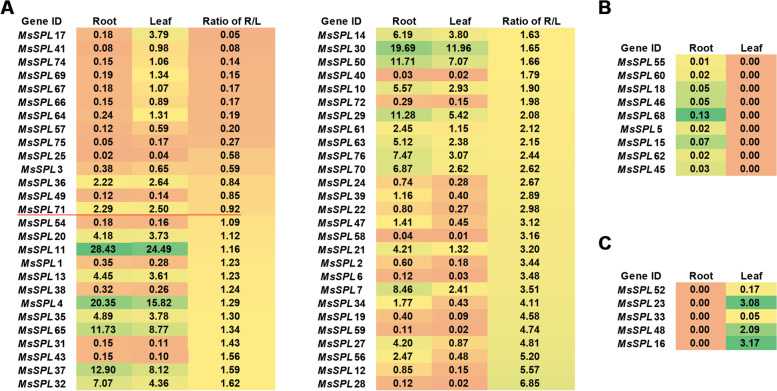
In total, 76 putative MsSPL genes were identified in the alfalfa genome with an uneven distribution. Based on their identity and gene structure, these MsSPLs were divided into eight phylogenetic groups. Seventy-three MsSPL gene pairs arose from segmental duplication events, and the MsSPLs on the four subgenomes of individual chromosomes displayed high collinearity with the corresponding M. truncatula genome. The prediction of the cis-elements in the promoter regions of the MsSPLs detected two copies of ABA (abscisic acid)-responsive elements (ABREs) on average, implying their potential involvement in alfalfa adaptation to adverse environments. The transcriptome sequencing of MsSPLs in roots and leaves revealed that 54 MsSPLs were expressed in both tissues. Upon salt treatment, three MsSPLs (MsSPL17, MsSPL23 and MsSPL36) were significantly regulated, and the transcription level of MsSPL36 in leaves was repressed to 46.6% of the control level.
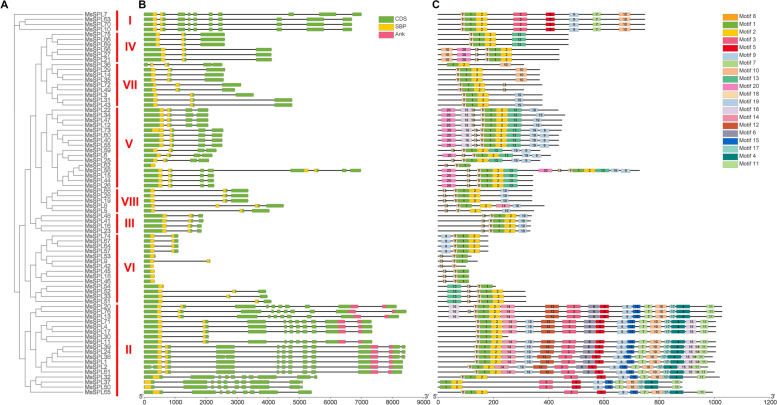
In this study, based on sequence homology, we identified 76 SPL genes in the alfalfa. The SPLs with high identity shared similar gene structures and motifs. In total, 71.1% (54 of 76) of the MsSPLs were expressed in both roots and leaves, and the majority (74.1%) preferred underground tissues to aerial tissues. MsSPL36 in leaves was significantly repressed under salt stress. These findings provide comprehensive information regarding the SPB-box gene family for improve alfalfa tolerance to high salinity.
启动子结合蛋白样(SPL)转录因子广泛存在于植物中,参与信号转导、应激反应和发育。SPL 基因家族已在几种模式物种中得到了描述,如拟南芥和大豆。然而,在牧草,特别是紫花苜蓿(Medicago sativa L.)中,对 SPL 基因家族的深入分析还没有进行。紫花苜蓿是世界上最重要的牧草之一。
在紫花苜蓿基因组中,共鉴定出 76 个推定的 MsSPL 基因,其分布不均匀。根据它们的同一性和基因结构,这些 MsSPLs 被分为 8 个系统发育组。73 个 MsSPL 基因对是由片段复制事件产生的,个体染色体上的四个亚基因组的 MsSPLs 与相应的 M. truncatula 基因组表现出高度的共线性。对 MsSPLs 启动子区顺式元件的预测发现,ABRE(脱落酸响应元件)的平均拷贝数为 2 个,这表明它们可能参与了紫花苜蓿对不利环境的适应。MsSPLs 在根和叶中的转录组测序显示,54 个 MsSPLs 在两种组织中都有表达。在盐处理后,有 3 个 MsSPLs(MsSPL17、MsSPL23 和 MsSPL36)的表达受到显著调控,MsSPL36 在叶片中的转录水平被抑制至对照水平的 46.6%。
本研究基于序列同源性,在紫花苜蓿中鉴定出 76 个 SPL 基因。具有高度同源性的 SPLs 具有相似的基因结构和基序。总的来说,76 个 MsSPLs 中有 71.1%(54 个)在根和叶中都有表达,其中大多数(74.1%)更喜欢地下组织而不是地上组织。盐胁迫下叶片中的 MsSPL36 表达显著下调。这些发现为提高紫花苜蓿对高盐度的耐受性提供了关于 SPB 盒基因家族的综合信息。