Taylor Alexander I P, Staniforth Rosemary A
School of Biosciences, University of Sheffield, Sheffield, United Kingdom.
Front Neurosci. 2022 Jun 2;16:878869. doi: 10.3389/fnins.2022.878869. eCollection 2022.
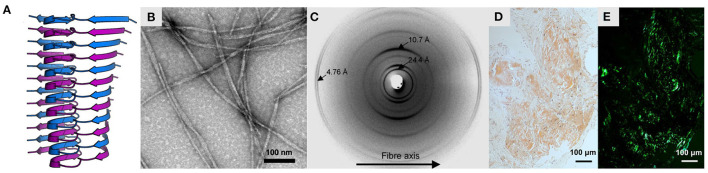
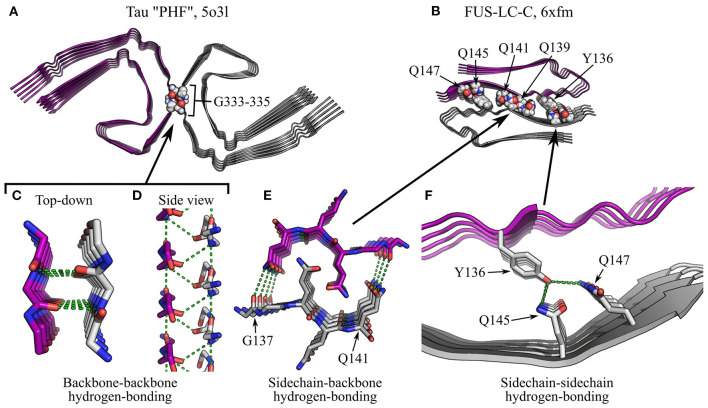
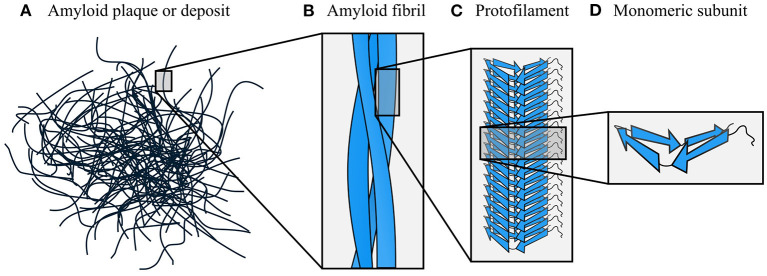
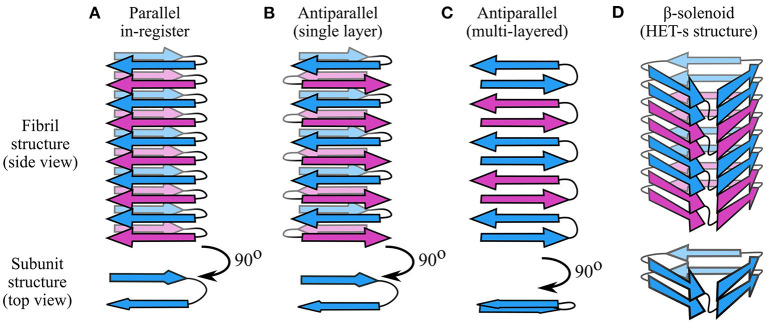
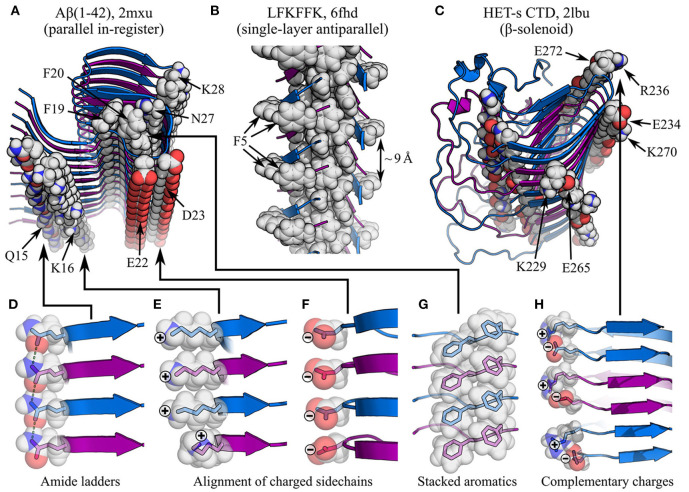
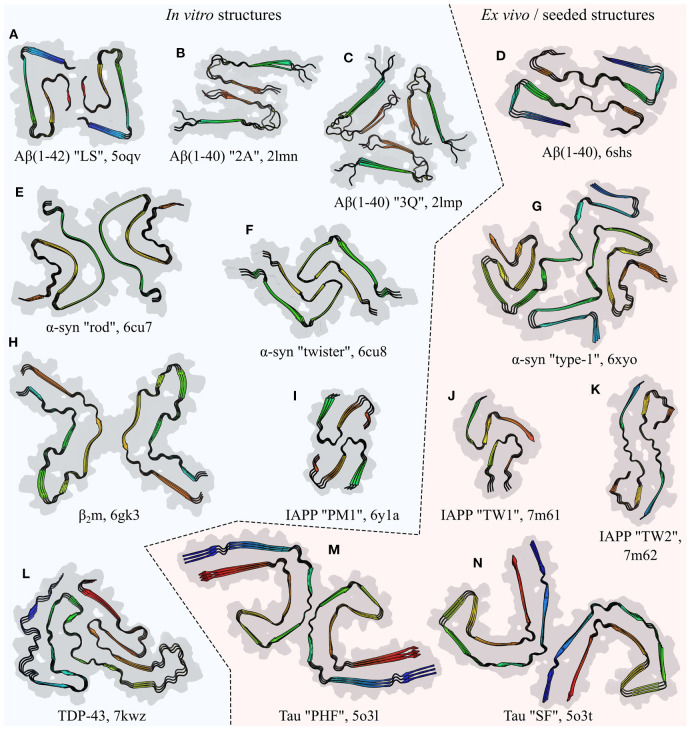
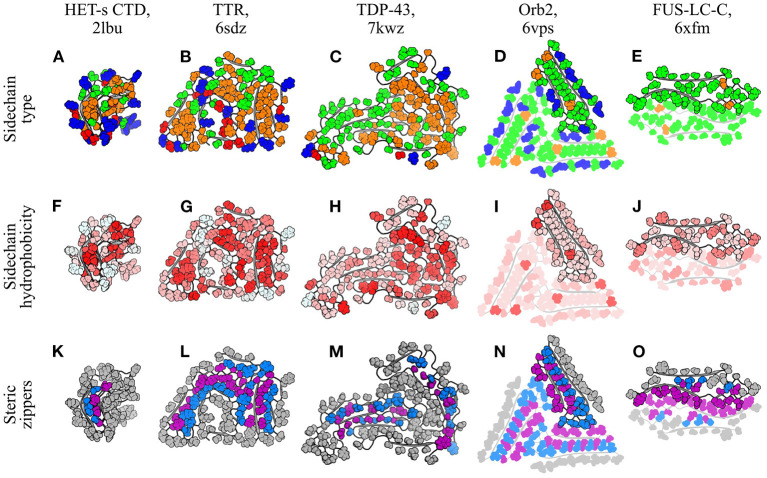
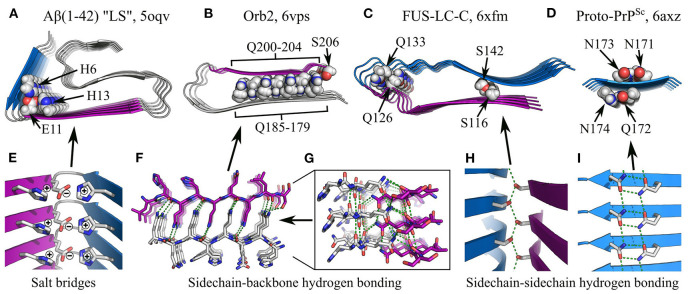
Amyloid fibrils are a pathologically and functionally relevant state of protein folding, which is generally accessible to polypeptide chains and differs fundamentally from the globular state in terms of molecular symmetry, long-range conformational order, and supramolecular scale. Although amyloid structures are challenging to study, recent developments in techniques such as cryo-EM, solid-state NMR, and AFM have led to an explosion of information about the molecular and supramolecular organization of these assemblies. With these rapid advances, it is now possible to assess the prevalence and significance of proposed general structural features in the context of a diverse body of high-resolution models, and develop a unified view of the principles that control amyloid formation and give rise to their unique properties. Here, we show that, despite system-specific differences, there is a remarkable degree of commonality in both the structural motifs that amyloids adopt and the underlying principles responsible for them. We argue that the inherent geometric differences between amyloids and globular proteins shift the balance of stabilizing forces, predisposing amyloids to distinct molecular interaction motifs with a particular tendency for massive, lattice-like networks of mutually supporting interactions. This general property unites previously characterized structural features such as steric and polar zippers, and contributes to the long-range molecular order that gives amyloids many of their unique properties. The shared features of amyloid structures support the existence of shared structure-activity principles that explain their self-assembly, function, and pathogenesis, and instill hope in efforts to develop broad-spectrum modifiers of amyloid function and pathology.
淀粉样纤维是蛋白质折叠的一种与病理和功能相关的状态,多肽链通常可形成这种状态,它在分子对称性、长程构象有序性和超分子尺度方面与球状状态有根本区别。尽管淀粉样结构的研究具有挑战性,但冷冻电镜、固态核磁共振和原子力显微镜等技术的最新发展,带来了关于这些聚集体分子和超分子组织的大量信息。随着这些快速进展,现在有可能在大量高分辨率模型的背景下评估所提出的一般结构特征的普遍性和重要性,并形成对控制淀粉样形成并赋予其独特性质的原理的统一观点。在这里,我们表明,尽管存在系统特异性差异,但淀粉样蛋白所采用的结构基序以及导致这些基序的潜在原理都有显著的共性。我们认为,淀粉样蛋白与球状蛋白之间固有的几何差异改变了稳定力的平衡,使淀粉样蛋白倾向于形成独特的分子相互作用基序,尤其倾向于形成大量相互支撑的晶格状网络。这一普遍特性将先前已表征的结构特征(如空间和极性拉链)统一起来,并有助于形成赋予淀粉样蛋白许多独特性质的长程分子有序性。淀粉样结构的共同特征支持了共享的结构 - 活性原理的存在这些原理解释了它们的自组装、功能和发病机制,并为开发淀粉样蛋白功能和病理学的广谱调节剂的努力带来了希望。