Fakhro Mohammed Ali, AlAmeen Fatima, Fayad Rim
Faculty of Sport Sciences, Université Antonine, B.P. 40016, Hadat-Baabda, Lebanon.
Faculty of Public Health, Department of Physical Therapy, Lebanese German University, P.O Box 206, Jounieh, Lebanon.
J Exp Orthop. 2022 Jun 22;9(1):59. doi: 10.1186/s40634-022-00497-5.
The purpose of the study is to compare the effects of total cold-water immersion to ice massage on muscle damage, performance, and delayed onset of muscle soreness.
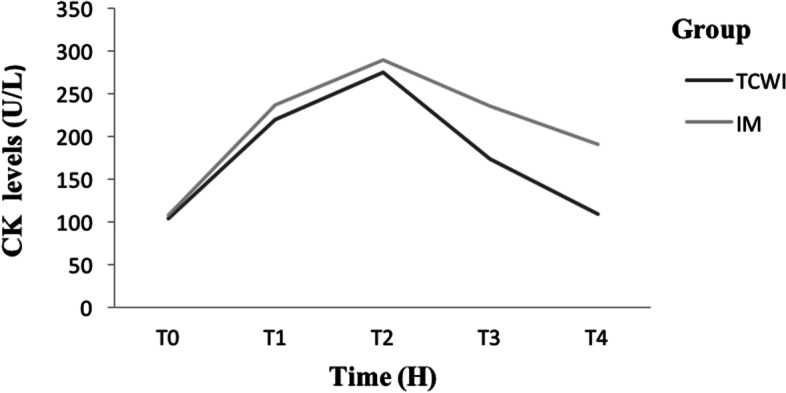
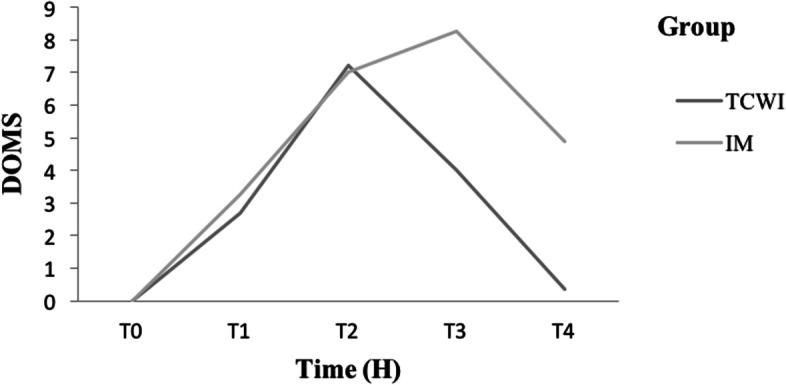
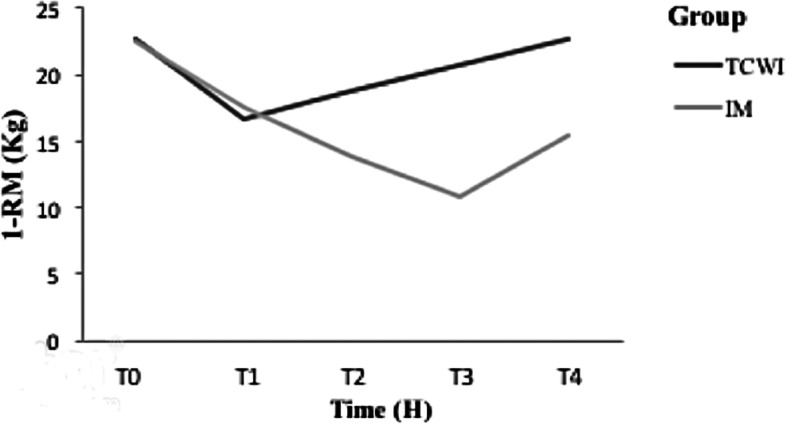
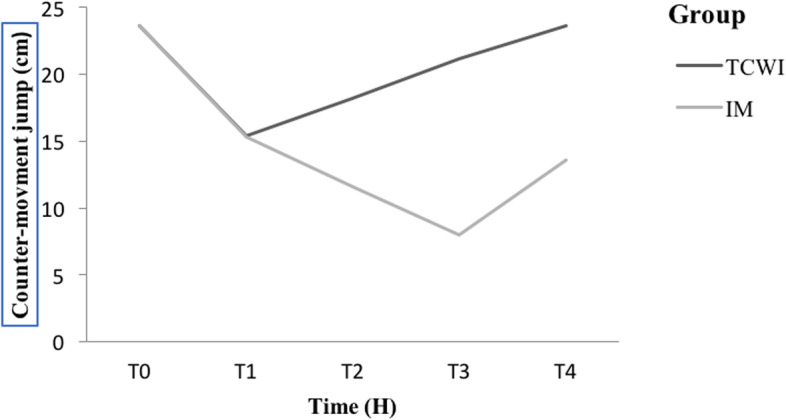
Sixty participants were randomized into two groups where they completed a muscle damage protocol. Afterward, muscle damage, muscle performance, and delayed onset muscle soreness were respectively measured by serum Creatine Kinase (CK) test, one-repetition maximum (1-RM) test, countermovement jump (CMJ) test, and visual analog scale (VAS). The measurements were taken at five different timelines (Baseline, 2 H, 24 H, 48 H, and 72 H).
Data showed that values of all within-group measures of the dependent variables had extremely significant statistical differences (p < 0.001) for both intervention groups. Serum CK values peaked at 24 H for both groups. At 72 H, serum CK values dropped to baseline values in the total cold-water immersion group, while remaining high in the ice massage group. At 72 H, the values of the 1-RM test, CMJ test, and VAS approximated baseline values only in the total cold-water immersion group (p < 0.001).
Total cold-water immersion (TCWI) was more effective when compared to ice massage (IM) on improving values of recovery from exercise-induced muscle damage (EIMD). Hence, this modality may be considered during athletic recovery to maximize athletic performance.
This trial was registered in ClinicalTrials.gov under the trial registration number ( NCT04183816 ).
本研究旨在比较全身冷水浸泡与冰敷对肌肉损伤、运动表现和延迟性肌肉酸痛的影响。
60名参与者被随机分为两组,完成肌肉损伤方案。之后,分别通过血清肌酸激酶(CK)测试、一次重复最大重量(1-RM)测试、反向移动跳(CMJ)测试和视觉模拟量表(VAS)测量肌肉损伤、肌肉表现和延迟性肌肉酸痛。在五个不同时间点(基线、2小时、24小时、48小时和72小时)进行测量。
数据显示,两个干预组的所有组内因变量测量值均存在极其显著的统计学差异(p < 0.001)。两组的血清CK值均在24小时达到峰值。在72小时时,全身冷水浸泡组的血清CK值降至基线值,而冰敷组仍保持较高水平。在72小时时,仅全身冷水浸泡组的1-RM测试、CMJ测试和VAS值接近基线值(p < 0.001)。
与冰敷(IM)相比,全身冷水浸泡(TCWI)在改善运动诱发肌肉损伤(EIMD)后的恢复值方面更有效。因此,在运动恢复期间可考虑采用这种方式以最大化运动表现。
本试验已在ClinicalTrials.gov上注册,试验注册号为(NCT04183816)。