Centre for Healthy Eating and Food Innovation, Faculty of Science and Engineering, Maastricht University, Campus Venlo, Venlo, The Netherlands.
Division Infectious Diseases and Immunology, Department Biomolecular Health Sciences, Faculty of Veterinary Medicine, Utrecht University, Utrecht, The Netherlands.
Sci Rep. 2022 Jun 22;12(1):10563. doi: 10.1038/s41598-022-14875-7.
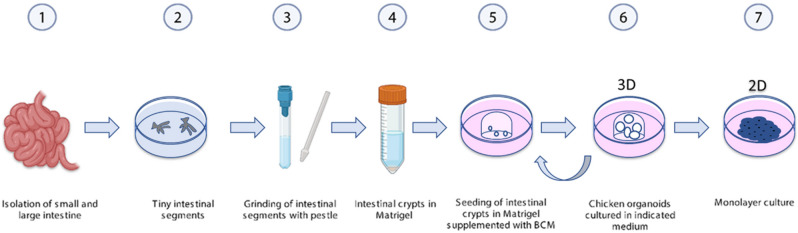
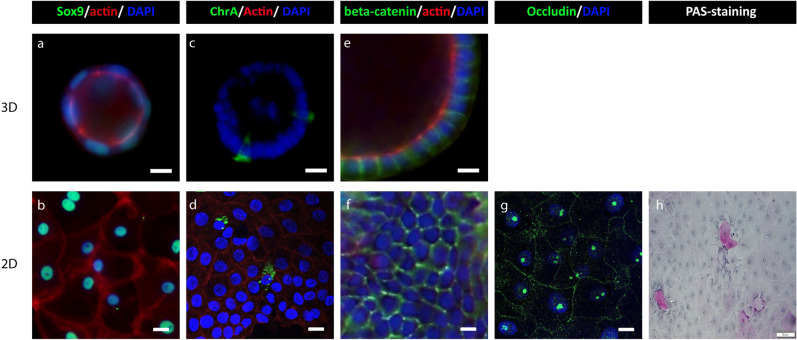
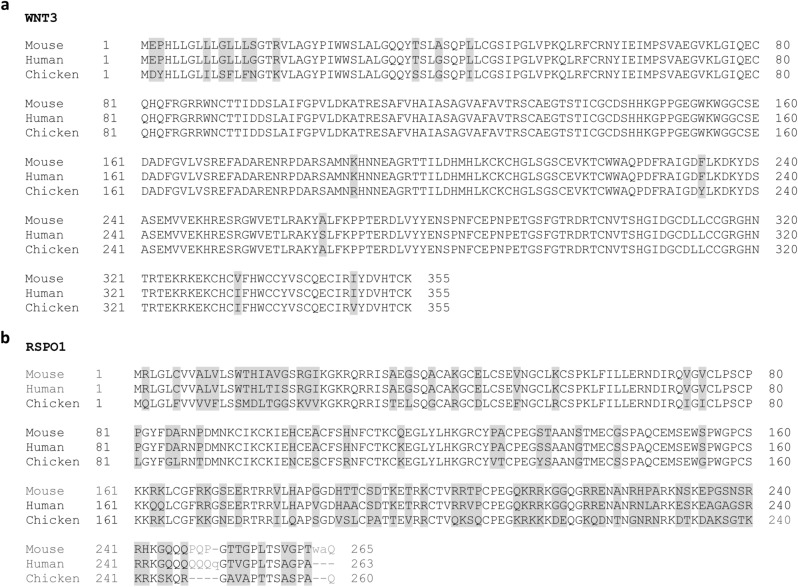
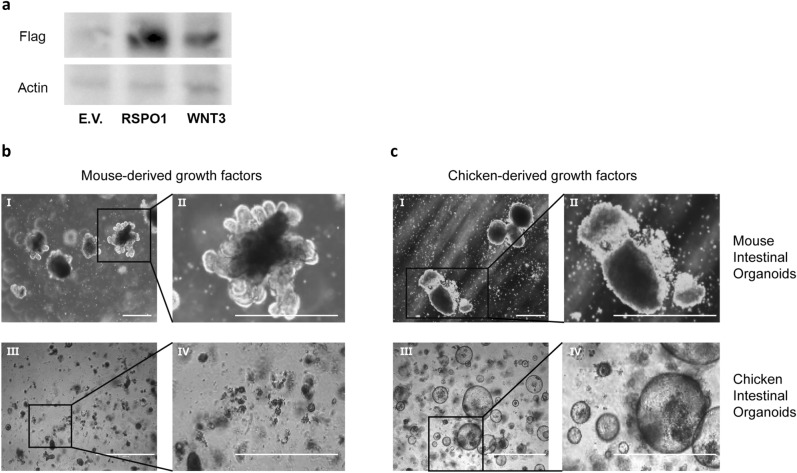
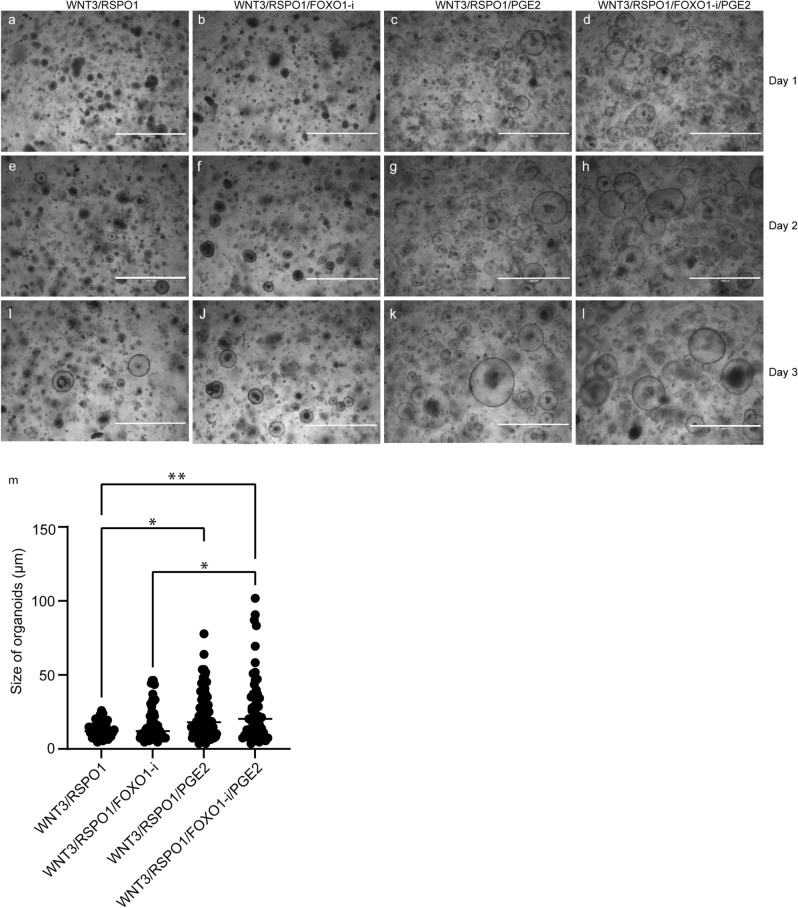
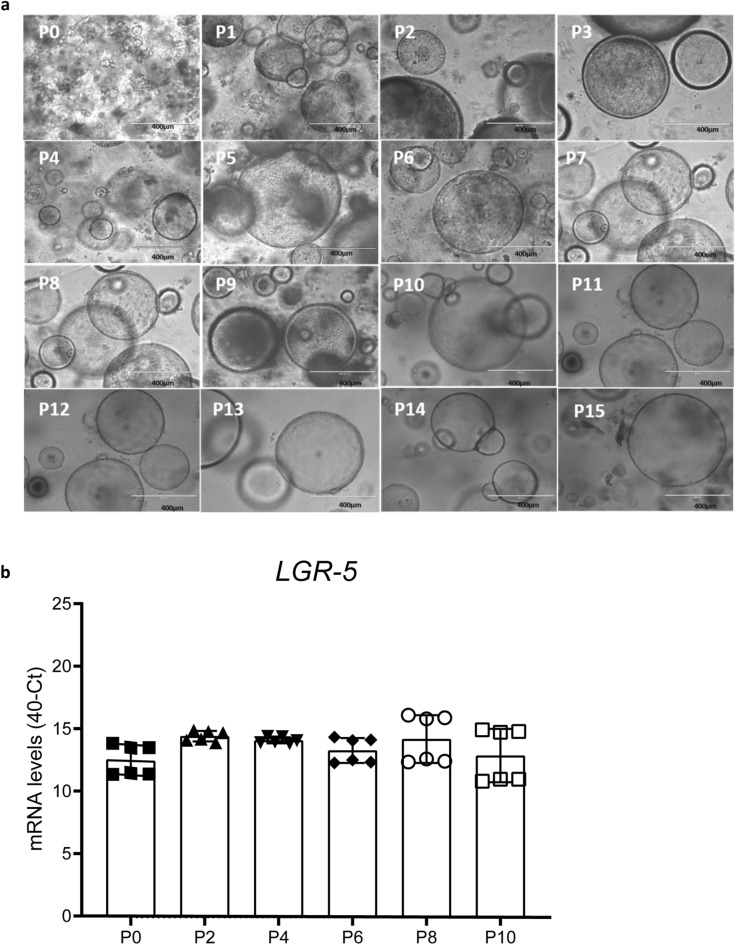
Intestinal organoids are advanced cellular models, which are widely used in mammalian studies to mimic and study in vivo intestinal function and host-pathogen interactions. Growth factors WNT3 and RSPO1 are crucial for the growth of intestinal organoids. Chicken intestinal organoids are currently cultured with mammalian Wnt3a and Rspo1, however, maintaining their longevity has shown to be challenging. Based on the limited homology between mammalian and avian RSPO1, we expect that chicken-derived factors are required for the organoid cultures. Isolated crypts from embryonic tissue of laying hens were growing in the presence of chicken WNT3 and RSPO1, whereas growth in the presence of mammalian Wnt3a and Rspo1 was limited. Moreover, the growth was increased by using Prostaglandin E2 (PGE) and a Forkhead box O1-inhibitor (FOXO1-inhibitor), allowing to culture these organoids for 15 passages. Furthermore, stem cells maintained their ability to differentiate into goblets, enterocytes and enteroendocrine cells in 2D structures. Overall, we show that chicken intestinal organoids can be cultured for multiple passages using chicken-derived WNT3 and RSPO1, PGE, and FOXO1-inhibitor.
肠类器官是一种先进的细胞模型,广泛应用于哺乳动物研究中,以模拟和研究体内肠道功能和宿主-病原体相互作用。生长因子 WNT3 和 RSPO1 对于肠类器官的生长至关重要。目前,鸡肠类器官是用哺乳动物 Wnt3a 和 Rspo1 培养的,然而,保持其长期存活一直是一个挑战。基于哺乳动物和禽类 RSPO1 之间有限的同源性,我们预计鸡源性因子对于类器官培养是必需的。从产蛋母鸡胚胎组织中分离出的隐窝在鸡 WNT3 和 RSPO1 的存在下生长,而在哺乳动物 Wnt3a 和 Rspo1 的存在下生长受到限制。此外,使用前列腺素 E2(PGE)和叉头框 O1 抑制剂(FOXO1 抑制剂)可以增加生长,从而允许这些类器官培养 15 代。此外,干细胞在 2D 结构中保持分化为杯状细胞、肠上皮细胞和肠内分泌细胞的能力。总的来说,我们表明使用鸡源性 WNT3 和 RSPO1、PGE 和 FOXO1 抑制剂可以培养鸡肠类器官进行多次传代。