Correia Magda, Santos Francisco, da Silva Ferreira Rita, Ferreira Rita, Bernardes de Jesus Bruno, Nóbrega-Pereira Sandrina
Department of Medical Sciences, Institute of Biomedicine-iBiMED, University of Aveiro, 3810-193 Aveiro, Portugal.
Associated Laboratory for Green Chemistry-LAQV, Department of Chemistry, University of Aveiro, 3810-193 Aveiro, Portugal.
Metabolites. 2022 May 31;12(6):500. doi: 10.3390/metabo12060500.
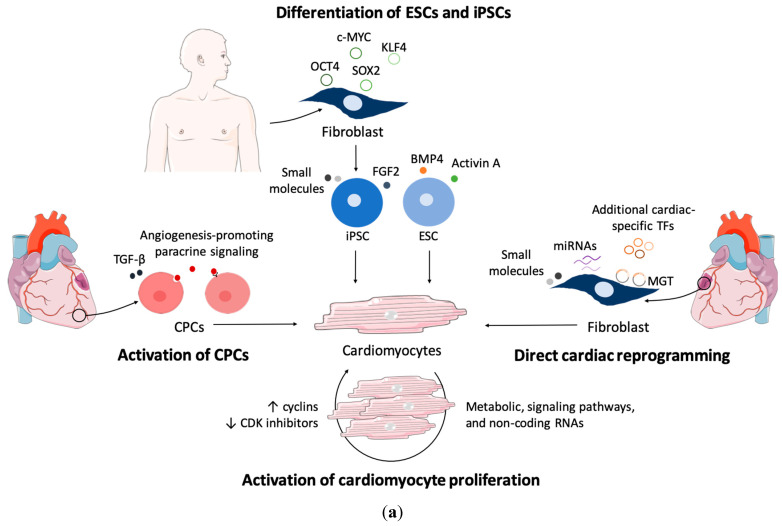
Heart disease is the leading cause of mortality in developed countries. The associated pathology is characterized by a loss of cardiomyocytes that leads, eventually, to heart failure. In this context, several cardiac regenerative strategies have been developed, but they still lack clinical effectiveness. The mammalian neonatal heart is capable of substantial regeneration following injury, but this capacity is lost at postnatal stages when cardiomyocytes become terminally differentiated and transit to the fetal metabolic switch. Cardiomyocytes are metabolically versatile cells capable of using an array of fuel sources, and the metabolism of cardiomyocytes suffers extended reprogramming after injury. Apart from energetic sources, metabolites are emerging regulators of epigenetic programs driving cell pluripotency and differentiation. Thus, understanding the metabolic determinants that regulate cardiomyocyte maturation and function is key for unlocking future metabolic interventions for cardiac regeneration. In this review, we will discuss the emerging role of metabolism and nutrient signaling in cardiomyocyte function and repair, as well as whether exploiting this axis could potentiate current cellular regenerative strategies for the mammalian heart.
心脏病是发达国家的主要死因。相关病理特征是心肌细胞丧失,最终导致心力衰竭。在此背景下,已开发出多种心脏再生策略,但仍缺乏临床疗效。哺乳动物新生儿心脏在受伤后能够进行大量再生,但在出生后阶段,当心肌细胞终末分化并转变为胎儿代谢模式时,这种能力就会丧失。心肌细胞是代谢功能多样的细胞,能够利用一系列燃料来源,并且心肌细胞的代谢在损伤后会经历广泛的重编程。除了能量来源外,代谢产物正成为驱动细胞多能性和分化的表观遗传程序的调节因子。因此,了解调节心肌细胞成熟和功能的代谢决定因素是开启未来心脏再生代谢干预的关键。在这篇综述中,我们将讨论代谢和营养信号在心肌细胞功能和修复中的新作用,以及利用这一轴是否可以增强当前针对哺乳动物心脏的细胞再生策略。