Bae Jiyoung, Paltzer Wyatt G, Mahmoud Ahmed I
Department of Cell and Regenerative Biology, University of Wisconsin-Madison School of Medicine and Public Health, Madison, WI, United States.
Front Cardiovasc Med. 2021 Jul 16;8:702920. doi: 10.3389/fcvm.2021.702920. eCollection 2021.
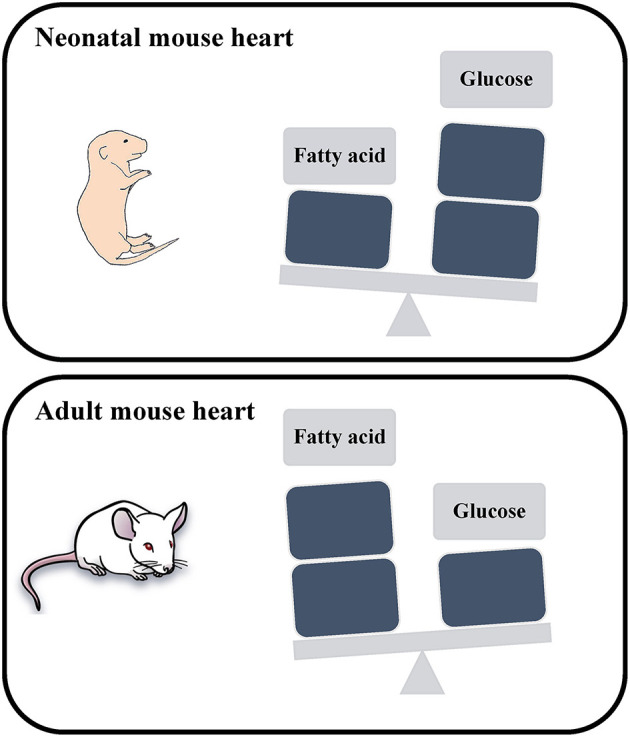
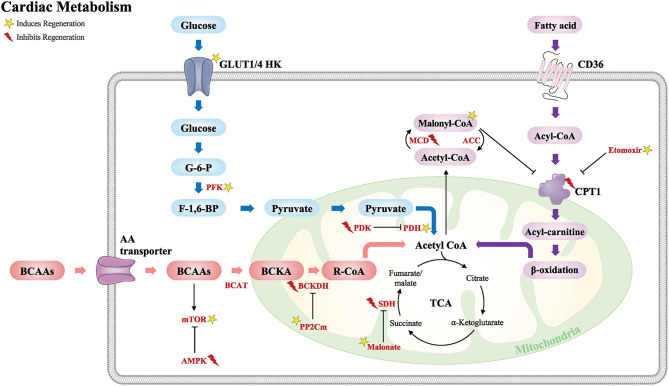
Heart failure is the leading cause of death worldwide. The inability of the adult mammalian heart to regenerate following injury results in the development of systolic heart failure. Thus, identifying novel approaches toward regenerating the adult heart has enormous therapeutic potential for adult heart failure. Mitochondrial metabolism is an essential homeostatic process for maintaining growth and survival. The emerging role of mitochondrial metabolism in controlling cell fate and function is beginning to be appreciated. Recent evidence suggests that metabolism controls biological processes including cell proliferation and differentiation, which has profound implications during development and regeneration. The regenerative potential of the mammalian heart is lost by the first week of postnatal development when cardiomyocytes exit the cell cycle and become terminally differentiated. This inability to regenerate following injury is correlated with the metabolic shift from glycolysis to fatty acid oxidation that occurs during heart maturation in the postnatal heart. Thus, understanding the mechanisms that regulate cardiac metabolism is key to unlocking metabolic interventions during development, disease, and regeneration. In this review, we will focus on the emerging role of metabolism in cardiac development and regeneration and discuss the potential of targeting metabolism for treatment of heart failure.
心力衰竭是全球主要的死亡原因。成年哺乳动物心脏在受伤后无法再生,导致收缩性心力衰竭的发展。因此,确定成年心脏再生的新方法对成年心力衰竭具有巨大的治疗潜力。线粒体代谢是维持生长和存活的重要稳态过程。线粒体代谢在控制细胞命运和功能方面的新作用开始受到重视。最近的证据表明,代谢控制包括细胞增殖和分化在内的生物过程,这在发育和再生过程中具有深远影响。哺乳动物心脏的再生潜力在出生后第一周就丧失了,此时心肌细胞退出细胞周期并最终分化。这种受伤后无法再生的情况与出生后心脏成熟过程中发生的从糖酵解到脂肪酸氧化的代谢转变有关。因此,了解调节心脏代谢的机制是在发育、疾病和再生过程中开启代谢干预的关键。在这篇综述中,我们将重点关注代谢在心脏发育和再生中的新作用,并讨论针对代谢治疗心力衰竭的潜力。