Yeste Natalia, Pérez-Valle Jorge, Vázquez-Gómez Marta, García-Contreras Consolación, González-Bulnes Antonio, Bassols Anna
Departament de Bioquímica i Biologia Molecular, Facultat de Veterinària, Universitat Autònoma de Barcelona, Cerdanyola del Vallès, 08193 Barcelona, Spain.
Faculty of Veterinary Sciences, UCM, Ciudad Universitaria s/n, 28040 Madrid, Spain.
Antioxidants (Basel). 2022 Jun 9;11(6):1135. doi: 10.3390/antiox11061135.
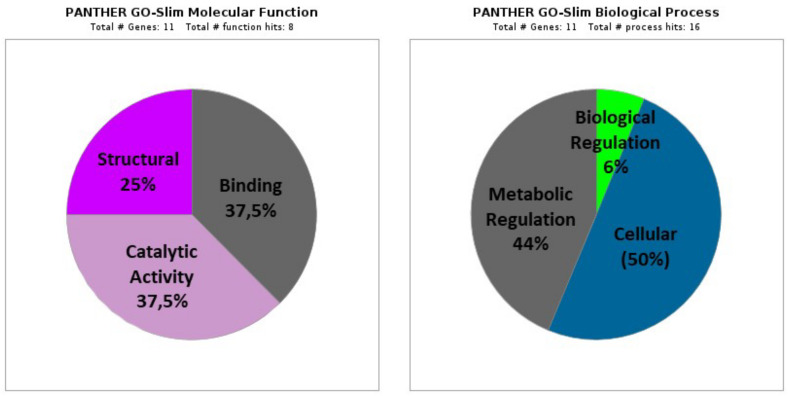
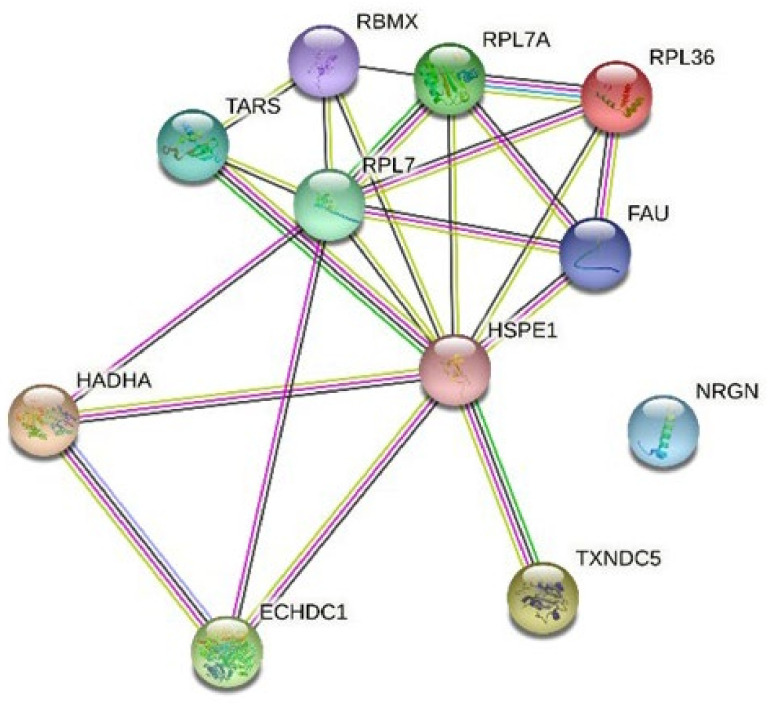
Supplementation of a mother's diet with antioxidants such as hydroxytyrosol (HTX) has been proposed to ameliorate the adverse phenotypes of foetuses affected by intrauterine growth restriction (IUGR). Our previous studies showed, in a porcine model of IUGR, an effect of maternal HTX supplementation on the neurotransmitter profile of several brain areas and the morphology of the hippocampus in 100 days old foetuses. The present study analyzed the impact of maternal HTX supplementation on the hippocampus proteome at this foetal age by TMT10plex labelling. Eleven differentially abundant proteins were identified by comparing both conditions, and eight of them downregulated and three upregulated in the HTX-treated group. The downregulated proteins were mainly involved in protein synthesis and RNA metabolism and may explain the differences in neuron differentiation in the HTX-treated group. The upregulated proteins were related to cell detoxification and could represent a potential mechanism to explain the neuroprotective effect of HTX.
有人提出,在母亲的饮食中补充抗氧化剂,如羟基酪醇(HTX),可以改善受宫内生长受限(IUGR)影响的胎儿的不良表型。我们之前的研究表明,在IUGR的猪模型中,母体补充HTX对100日龄胎儿几个脑区的神经递质谱和海马体形态有影响。本研究通过TMT10plex标记分析了母体补充HTX对该胎儿期海马体蛋白质组的影响。通过比较两种情况,鉴定出11种差异丰富的蛋白质,其中8种在HTX处理组中下调,3种上调。下调的蛋白质主要参与蛋白质合成和RNA代谢,这可能解释了HTX处理组中神经元分化的差异。上调的蛋白质与细胞解毒有关,可能是解释HTX神经保护作用的潜在机制。