Varghese Nimmy, Werner Selina, Grimm Amandine, Eckert Anne
Neurobiology Lab for Brain Aging and Mental Health, Transfaculty Research Platform, Molecular & Cognitive Neuroscience, University of Basel, 4002 Basel, Switzerland.
Psychiatric University Clinics Basel, Medical Faculty, University of Basel, 4002 Basel, Switzerland.
Antioxidants (Basel). 2020 Sep 29;9(10):932. doi: 10.3390/antiox9100932.
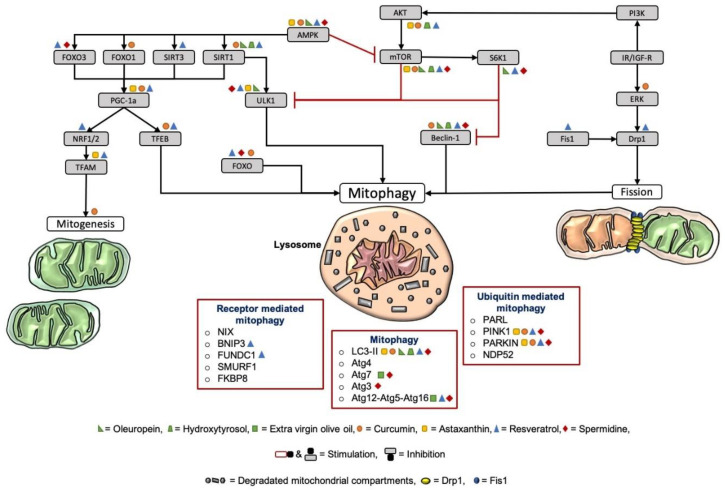
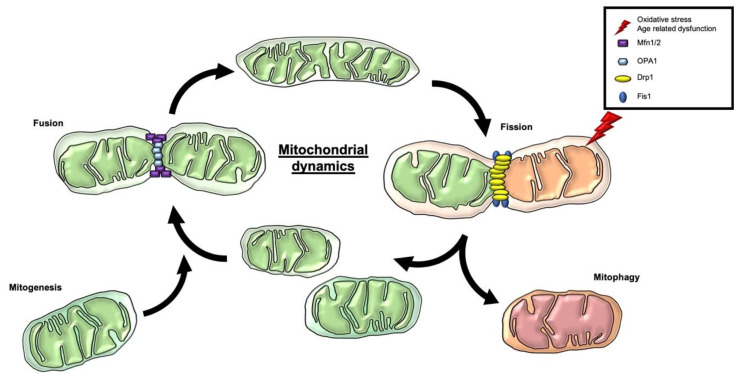
Recently, nutritional interventions have received attention as promising approaches to promote human health during a lifespan. The Mediterranean and Okinawan diets have been associated with longevity and decreasing risk for age-related diseases in contrast to the Western diet. The effect might be due to several antioxidative bioactive compounds highly consumed in both diets, namely, resveratrol, hydroxytyrosol, oleuropein, curcumin, and spermidine. This review aims to address the underlying mechanisms of these compounds to enhance mental fitness throughout life with a focus on brain mitophagy. Mitophagy is the autophagic clearance of dysfunctional, redundant, and aged mitochondria. In aging and neurodegenerative disorders, mitophagy is crucial to preserve the autophagy mechanism of the whole cell, especially during oxidative stress. Growing evidence indicates that curcumin, astaxanthin, resveratrol, hydroxytyrosol, oleuropein, and spermidine might exert protective functions via antioxidative properties and as well the enhanced induction of mitophagy mediators. The compounds seem to upregulate mitophagy and thereby alleviate the clearance of dysfunctional and aged mitochondria as well as mitogenesis. Thus, the Mediterranean or Okinawan diet could represent a feasible nutritional approach to reduce the risk of developing age-related cognitive impairment and corresponding disorders via the stimulation of mitophagy and thereby ensure a balanced redox state of brain cells.
最近,营养干预作为在整个生命周期中促进人类健康的有前景的方法受到了关注。与西方饮食相比,地中海饮食和冲绳饮食与长寿以及降低与年龄相关疾病的风险有关。这种效果可能归因于这两种饮食中大量摄入的几种具有抗氧化作用的生物活性化合物,即白藜芦醇、羟基酪醇、橄榄苦苷、姜黄素和亚精胺。本综述旨在探讨这些化合物增强一生中心理健康的潜在机制,重点是脑线粒体自噬。线粒体自噬是对功能失调、多余和老化的线粒体进行自噬清除。在衰老和神经退行性疾病中,线粒体自噬对于维持整个细胞的自噬机制至关重要,尤其是在氧化应激期间。越来越多的证据表明,姜黄素、虾青素、白藜芦醇、羟基酪醇、橄榄苦苷和亚精胺可能通过抗氧化特性以及增强线粒体自噬介质的诱导发挥保护作用。这些化合物似乎上调线粒体自噬,从而减轻功能失调和老化线粒体的清除以及线粒体发生。因此,地中海或冲绳饮食可能代表一种可行的营养方法,通过刺激线粒体自噬来降低患与年龄相关的认知障碍和相应疾病的风险,从而确保脑细胞的氧化还原状态平衡。