Hultström Michael, Fromell Karin, Larsson Anders, Persson Barbro, Nilsson Bo, Quaggin Susan E, Betsholtz Christer, Frithiof Robert, Lipcsey Miklos, Jeansson Marie
Anaesthesiology and Intensive Care Medicine, Department of Surgical Sciences, Uppsala University, 751 85 Uppsala, Sweden.
Integrative Physiology, Department of Medical Cell Biology, Uppsala University, 751 23 Uppsala, Sweden.
Biomedicines. 2022 Jun 6;10(6):1333. doi: 10.3390/biomedicines10061333.
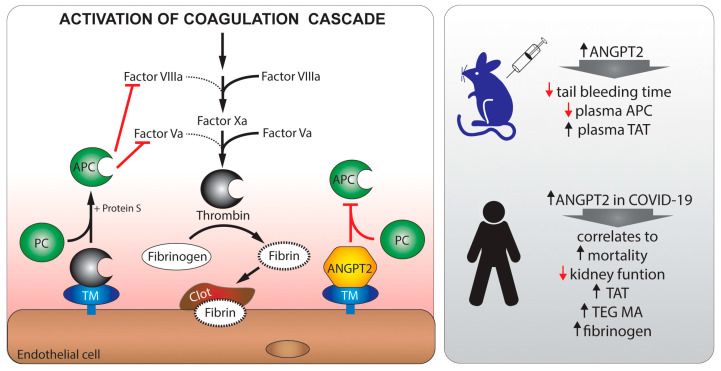
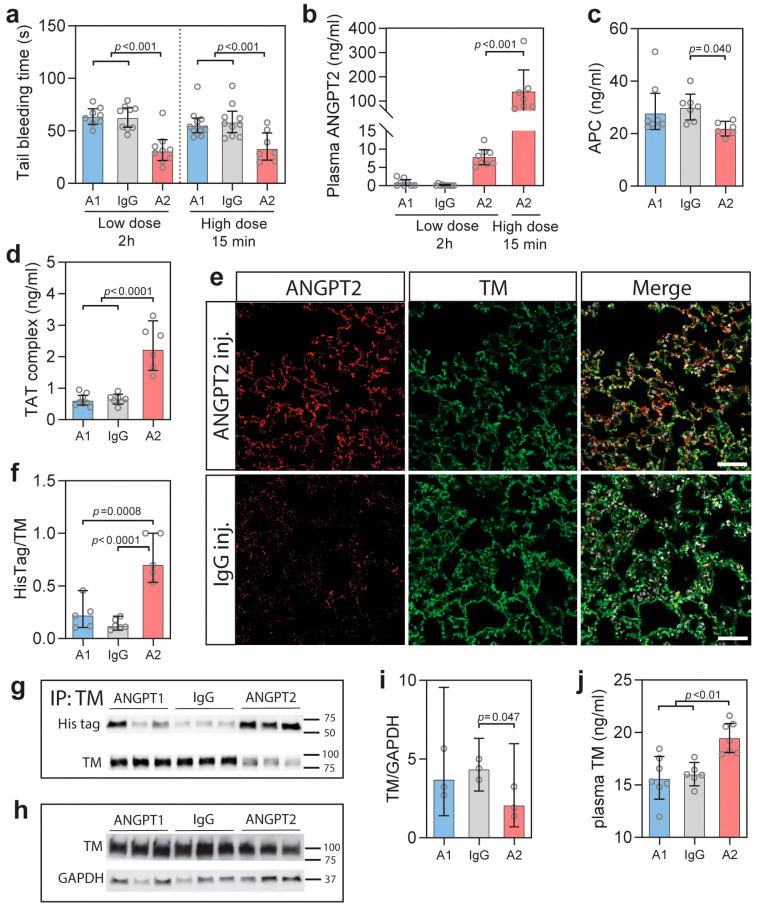
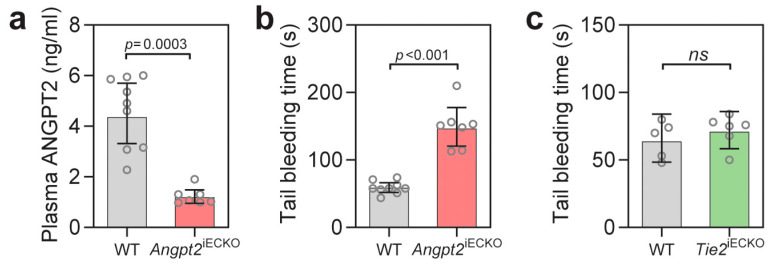
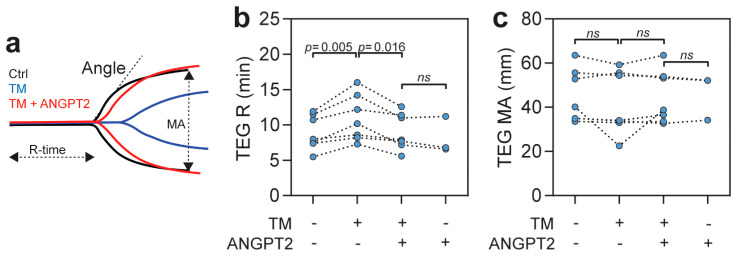
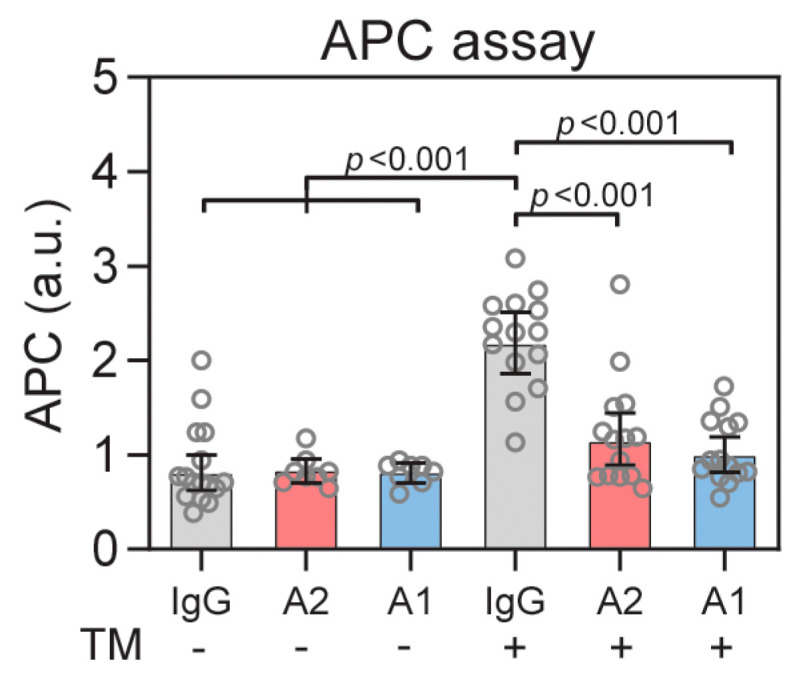
Hypercoagulation and endothelial dysfunction play central roles in severe forms of COVID-19 infections, but the molecular mechanisms involved are unclear. Increased plasma levels of the inflammatory cytokine and TIE2 receptor antagonist Angiopoietin-2 were reported in severely ill COVID-19 patients. In vitro experiments suggest that Angiopoietin-2 bind and inhibits thrombomodulin. Thrombomodulin is expressed on the luminal surface of endothelial cells where it is an important member of the intrinsic anticoagulant pathway through activation of protein C. Using clinical data, mouse models, and in vitro assays, we tested if Angiopoietin-2 plays a causal role in COVID-19-associated hypercoagulation through direct inhibition of thrombin/thrombomodulin-mediated physiological anticoagulation. Angiopoietin-2 was measured in 61 patients at admission, and after 10 days in the 40 patients remaining in the ICU. We found that Angiopoietin-2 levels were increased in COVID-19 patients in correlation with disease severity, hypercoagulation, and mortality. In support of a direct effect of Angiopoietin-2 on coagulation, we found that injected Angiopoietin-2 in mice associated to thrombomodulin and resulted in a shortened tail bleeding time, decreased circulating levels of activated protein C, and increased plasma thrombin/antithrombin complexes. Conversely, bleeding time was increased in endothelial-specific Angiopoietin-2 knockout mice, while knockout of Tie2 had no effect on tail bleeding. Using in vitro assays, we found that Angiopoietin-2 inhibited thrombomodulin-mediated anticoagulation and protein C activation in human donor plasma. Our data suggest a novel in vivo mechanism for Angiopoietin-2 in COVID-19-associated hypercoagulation, implicating that Angiopoietin-2 inhibitors may be effective in the treatment of hypercoagulation in severe COVID-19 infection.
高凝状态和内皮功能障碍在重症新型冠状病毒肺炎(COVID-19)感染中起核心作用,但其中涉及的分子机制尚不清楚。据报道,重症COVID-19患者血浆中炎性细胞因子及TIE2受体拮抗剂血管生成素-2(Angiopoietin-2)水平升高。体外实验表明,血管生成素-2可结合并抑制血栓调节蛋白。血栓调节蛋白在内皮细胞腔面表达,通过激活蛋白C在体内抗凝途径中发挥重要作用。我们利用临床数据、小鼠模型和体外试验,检测血管生成素-2是否通过直接抑制凝血酶/血栓调节蛋白介导的生理性抗凝作用,在COVID-19相关的高凝状态中起因果作用。在61例患者入院时检测血管生成素-2水平,对40例入住重症监护病房(ICU)的患者在10天后再次检测。我们发现,COVID-19患者的血管生成素-2水平升高,且与疾病严重程度、高凝状态及死亡率相关。为证实血管生成素-2对凝血的直接作用,我们发现给小鼠注射血管生成素-2后,可与血栓调节蛋白结合,导致尾部出血时间缩短、活化蛋白C循环水平降低及血浆凝血酶/抗凝血酶复合物增加。相反,内皮特异性血管生成素-2基因敲除小鼠的出血时间延长,而敲除Tie2对尾部出血无影响。利用体外试验,我们发现血管生成素-2可抑制人供体血浆中血栓调节蛋白介导的抗凝作用及蛋白C活化。我们的数据提示血管生成素-2在COVID-19相关高凝状态中存在一种新的体内机制,这意味着血管生成素-2抑制剂可能对重症COVID-19感染的高凝状态治疗有效。