Neurovascular Research Group, Neurology Department, Hospital de Mar, 08003 Barcelona, Spain.
Int J Mol Sci. 2022 Jun 9;23(12):6479. doi: 10.3390/ijms23126479.
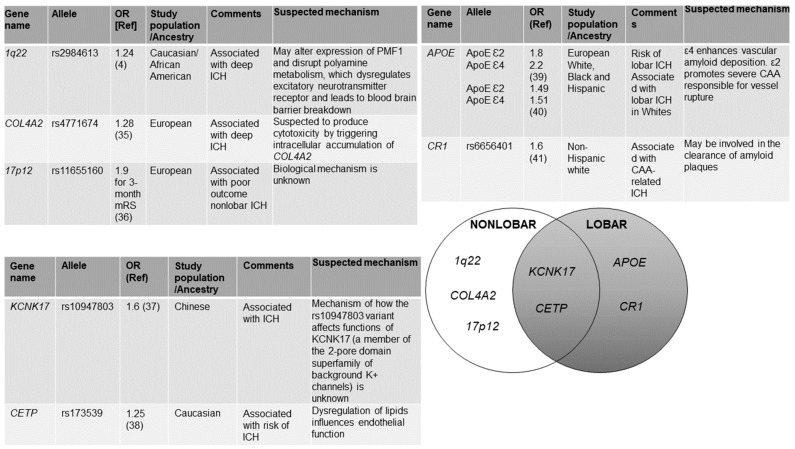
Intracerebral hemorrhage (ICH) is a complex and heterogeneous disease, and there is no effective treatment. Spontaneous ICH represents the final manifestation of different types of cerebral small vessel disease, usually categorized as: lobar (mostly related to cerebral amyloid angiopathy) and nonlobar (hypertension-related vasculopathy) ICH. Accurate phenotyping aims to reflect these biological differences in the underlying mechanisms and has been demonstrated to be crucial to the success of genetic studies in this field. This review summarizes how current knowledge on genetics and epigenetics of this devastating stroke subtype are contributing to improve the understanding of ICH pathophysiology and their potential role in developing therapeutic strategies.
脑出血(ICH)是一种复杂且异质性的疾病,目前尚无有效的治疗方法。自发性 ICH 代表了不同类型的脑小血管疾病的最终表现,通常分为:脑叶(主要与脑淀粉样血管病有关)和非脑叶(与高血压相关的血管病变)ICH。准确的表型分析旨在反映这些潜在机制中的生物学差异,并且已经证明对于该领域的遗传研究的成功至关重要。这篇综述总结了目前关于这种破坏性中风亚型的遗传学和表观遗传学的知识如何有助于提高对 ICH 病理生理学的理解及其在开发治疗策略中的潜在作用。