State Key Laboratory of Animal Nutrition, College of Animal Science and Technology, China Agricultural University, Beijing 100193, China.
Key Laboratory of Biological Feed, Ministry of Agriculture and Rural Affairs, Boen Biotechnology Co., Ltd., Ganzhou 341000, China.
Nutrients. 2022 Jun 16;14(12):2511. doi: 10.3390/nu14122511.
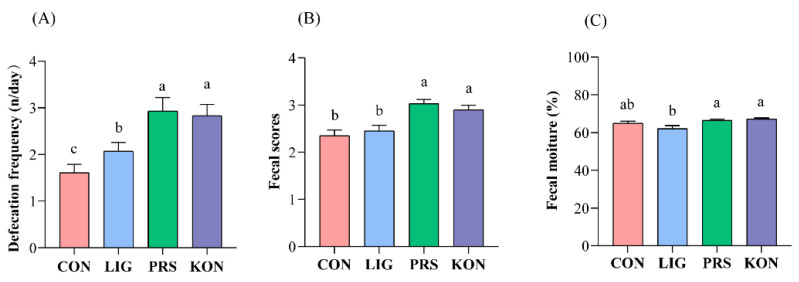
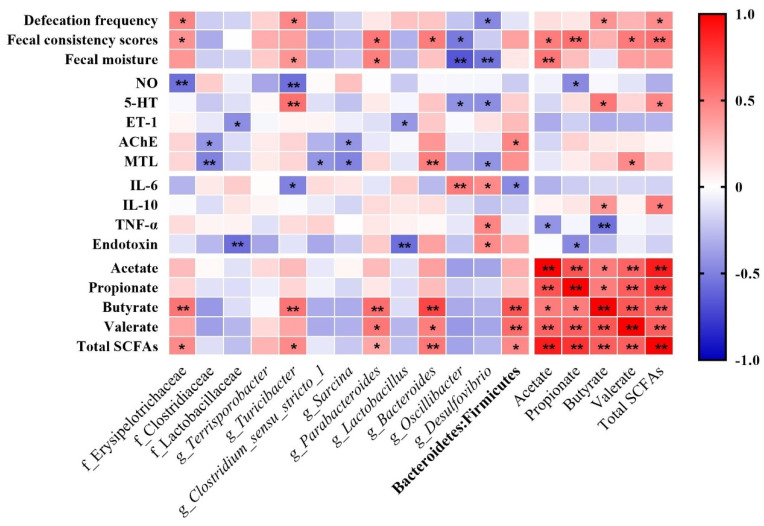
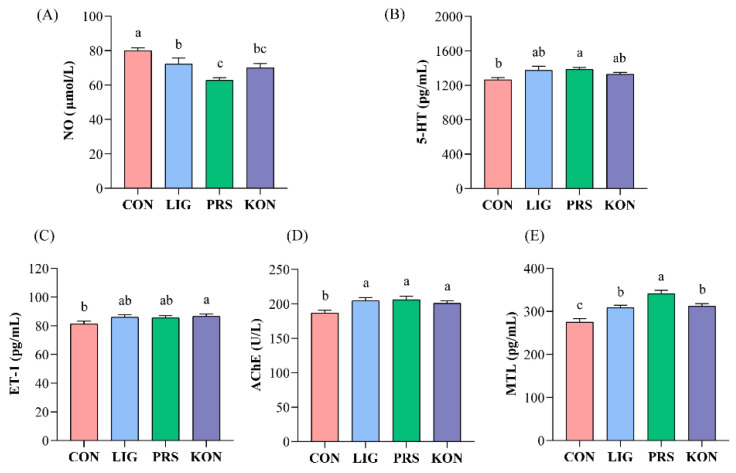
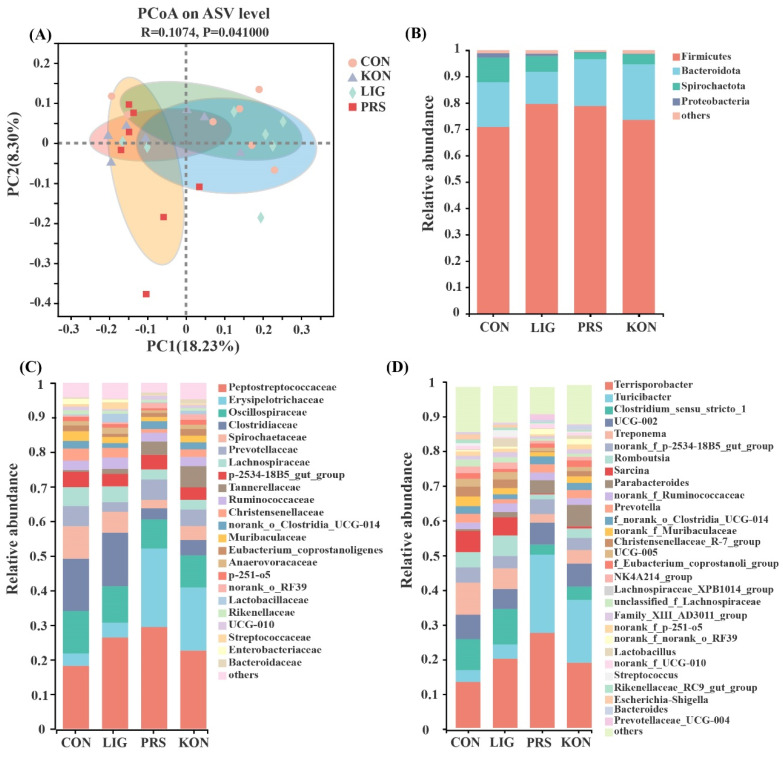
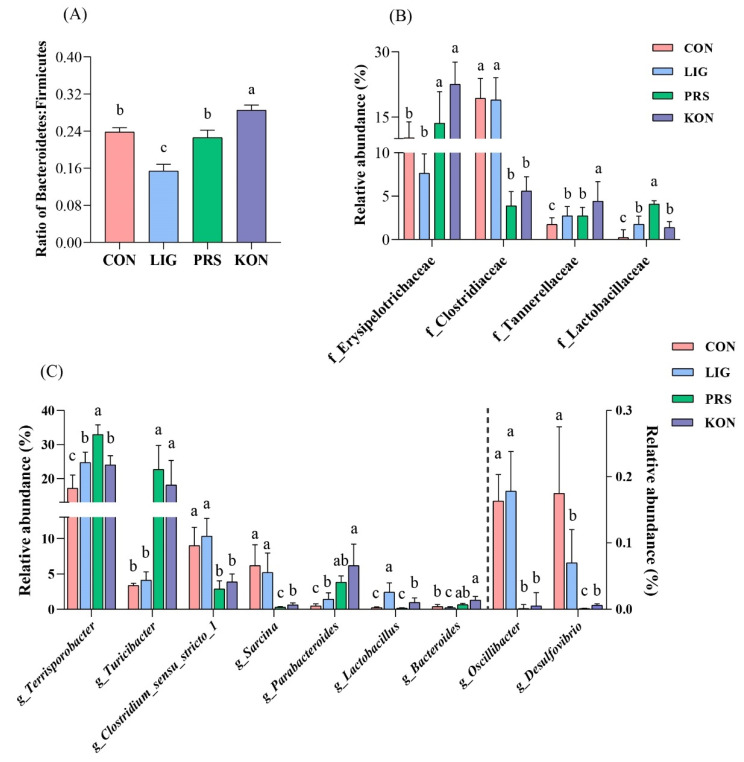
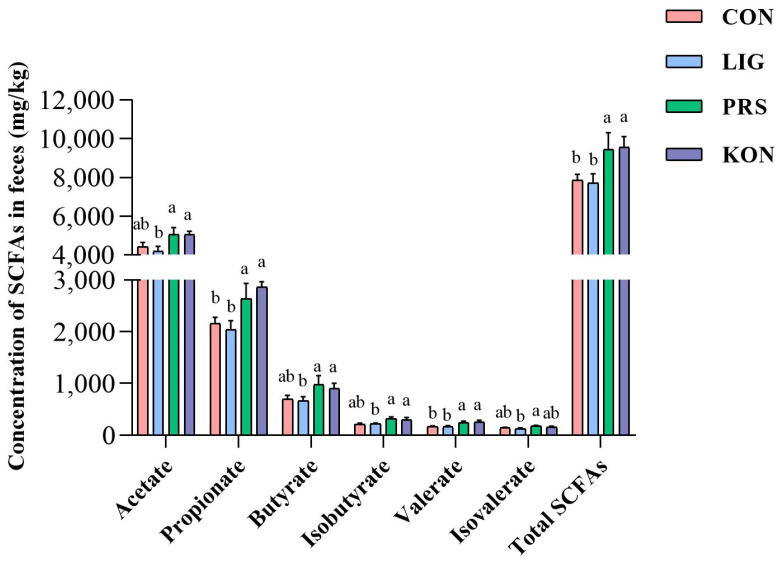
Constipation is a common problem in sows and women during late pregnancy. Dietary fiber has potential in the regulation of intestinal microbiota, thereby promoting intestinal motility and reducing constipation. However, the effects of fibers with different physicochemical properties on intestinal microbe and constipation during late pregnancy have not been fully explored. In this study, a total of 80 sows were randomly allocated to control and one of three dietary fiber treatments from day 85 of gestation to delivery: LIG (lignocellulose), PRS (resistant starch), and KON (konjaku flour). Results showed that the defecation frequency and fecal consistency scores were highest in PRS. PRS and KON significantly increased the level of gut motility regulatory factors, 5-hydroxytryptamine (5-HT), motilin (MTL), and acetylcholinesterase (AChE) in serum. Moreover, PRS and KON promoted the IL-10 level and reduced the TNF-α level in serum. Furthermore, maternal PRS and KON supplementation significantly reduced the number of stillborn piglets. Microbial sequencing analysis showed that PRS and KON increased short-chain fatty acids (SCFAs)-producing genera and and decreased the abundance of endotoxin-producing bacteria and in feces. Moreover, the relative abundance of and the fecal butyrate concentration in PRS were the highest. Correlation analysis further revealed that the defecation frequency and serum 5-HT were positively correlated with and butyrate. In conclusion, PRS is the best fiber source for promoting gut motility, which was associated with increased levels of 5-HT under specific bacteria and butyrate stimulation, thereby relieving constipation. Our findings provide a reference for dietary fiber selection to improve intestinal motility in late pregnant mothers.
便秘是母猪和妊娠晚期妇女的常见问题。膳食纤维具有调节肠道微生物群的潜力,从而促进肠道蠕动,减少便秘。然而,具有不同物理化学特性的纤维对妊娠晚期肠道微生物和便秘的影响尚未得到充分探索。本研究将 80 头母猪从妊娠第 85 天到分娩时随机分为对照组和三种膳食纤维处理组:LIG(木质纤维素)、PRS(抗性淀粉)和 KON(魔芋粉)。结果表明,PRS 的排便频率和粪便稠度评分最高。PRS 和 KON 显著提高了血清中肠道运动调节因子 5-羟色胺(5-HT)、胃动素(MTL)和乙酰胆碱酯酶(AChE)的水平。此外,PRS 和 KON 促进了 IL-10 水平的提高和 TNF-α 水平的降低。此外,母体 PRS 和 KON 补充剂显著减少了死胎仔猪的数量。微生物测序分析表明,PRS 和 KON 增加了短链脂肪酸(SCFA)产生菌 和 ,减少了内毒素产生菌 和 在粪便中的丰度。此外,PRS 中 和粪便丁酸盐浓度的相对丰度最高。相关性分析进一步表明,排便频率和血清 5-HT 与 和丁酸盐呈正相关。总之,PRS 是促进肠道蠕动的最佳纤维来源,这与特定细菌 和丁酸盐刺激下 5-HT 水平的升高有关,从而缓解了便秘。本研究结果为改善妊娠晚期母体肠道动力选择膳食纤维提供了参考。