Center for Cardiovascular Research, Departmental of Medicine, Cardiovascular Division, Washington University School of Medicine, 660 South Euclid Campus Box 8086, St. Louis, MO 63110, USA.
Department of Pathology and Immunology, Washington University School of Medicine, St. Louis, MO 63110, USA.
Viruses. 2022 May 25;14(6):1137. doi: 10.3390/v14061137.
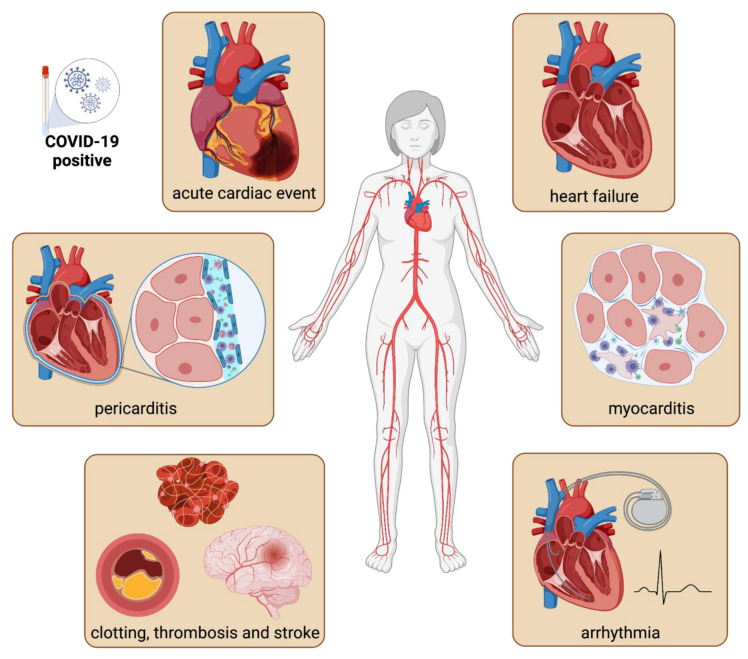
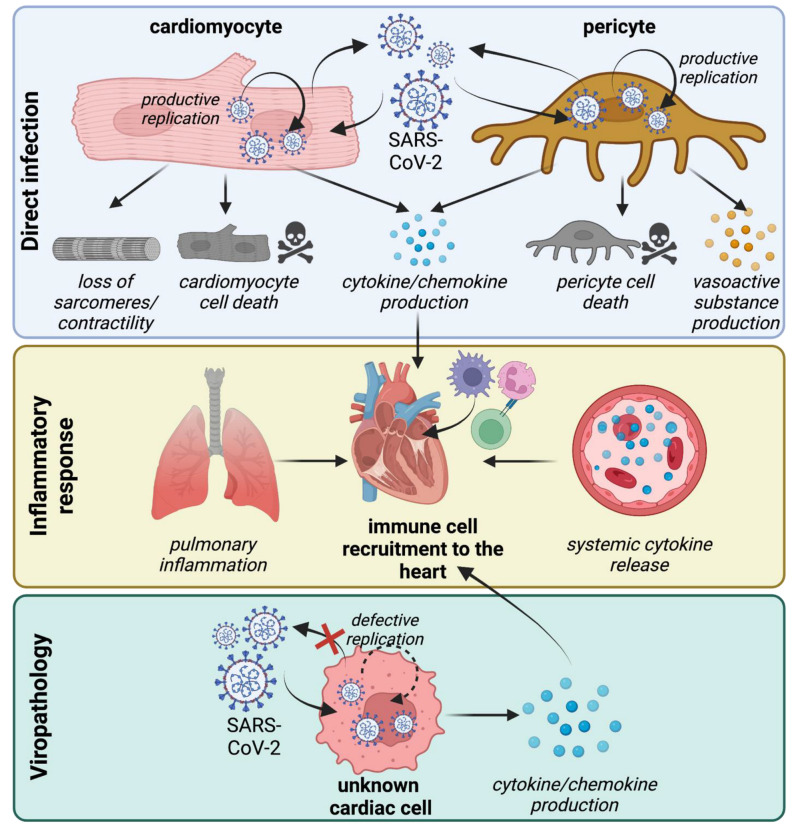
The extrapulmonary manifestation of coronavirus disease-19 (COVID-19), caused by severe acute respiratory syndrome coronavirus 2 (SARS-CoV-2), became apparent early in the ongoing pandemic. It is now recognized that cells of the cardiovascular system are targets of SARS-CoV-2 infection and associated disease pathogenesis. While some details are emerging, much remains to be understood pertaining to the mechanistic basis by which SARS-CoV-2 contributes to acute and chronic manifestations of COVID-19. This knowledge has the potential to improve clinical management for the growing populations of patients impacted by COVID-19. Here, we review the epidemiology and pathophysiology of cardiovascular sequelae of COVID-19 and outline proposed disease mechanisms, including direct SARS-CoV-2 infection of major cardiovascular cell types and pathogenic effects of non-infectious viral particles and elicited inflammatory mediators. Finally, we identify the major outstanding questions in cardiovascular COVID-19 research.
新型冠状病毒病(COVID-19)是由严重急性呼吸系统综合征冠状病毒 2(SARS-CoV-2)引起的肺部外表现,在当前大流行的早期就已显现。现在人们已经认识到,心血管系统的细胞是 SARS-CoV-2 感染和相关疾病发病机制的靶标。虽然一些细节正在出现,但仍有许多方面需要了解 SARS-CoV-2 导致 COVID-19 急性和慢性表现的机制基础。这些知识有可能改善 COVID-19 患者数量不断增加的临床管理。在这里,我们回顾了 COVID-19 的心血管后遗症的流行病学和病理生理学,并概述了拟议的疾病机制,包括主要心血管细胞类型的直接 SARS-CoV-2 感染以及非传染性病毒颗粒和引发的炎症介质的致病作用。最后,我们确定了心血管 COVID-19 研究中的主要悬而未决的问题。