Zoonosis Science Center, Department of Medical Biochemistry and Microbiology, Uppsala University, 751 23 Uppsala, Sweden.
Department of Zoology, University of Oxford, Oxford OX1 4BH, UK.
Viruses. 2022 Jun 1;14(6):1205. doi: 10.3390/v14061205.
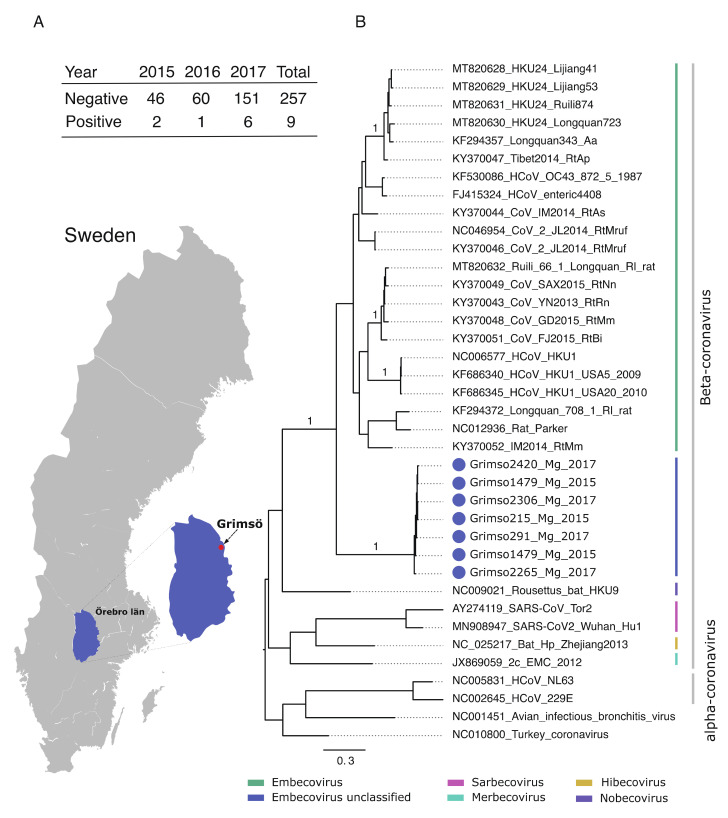
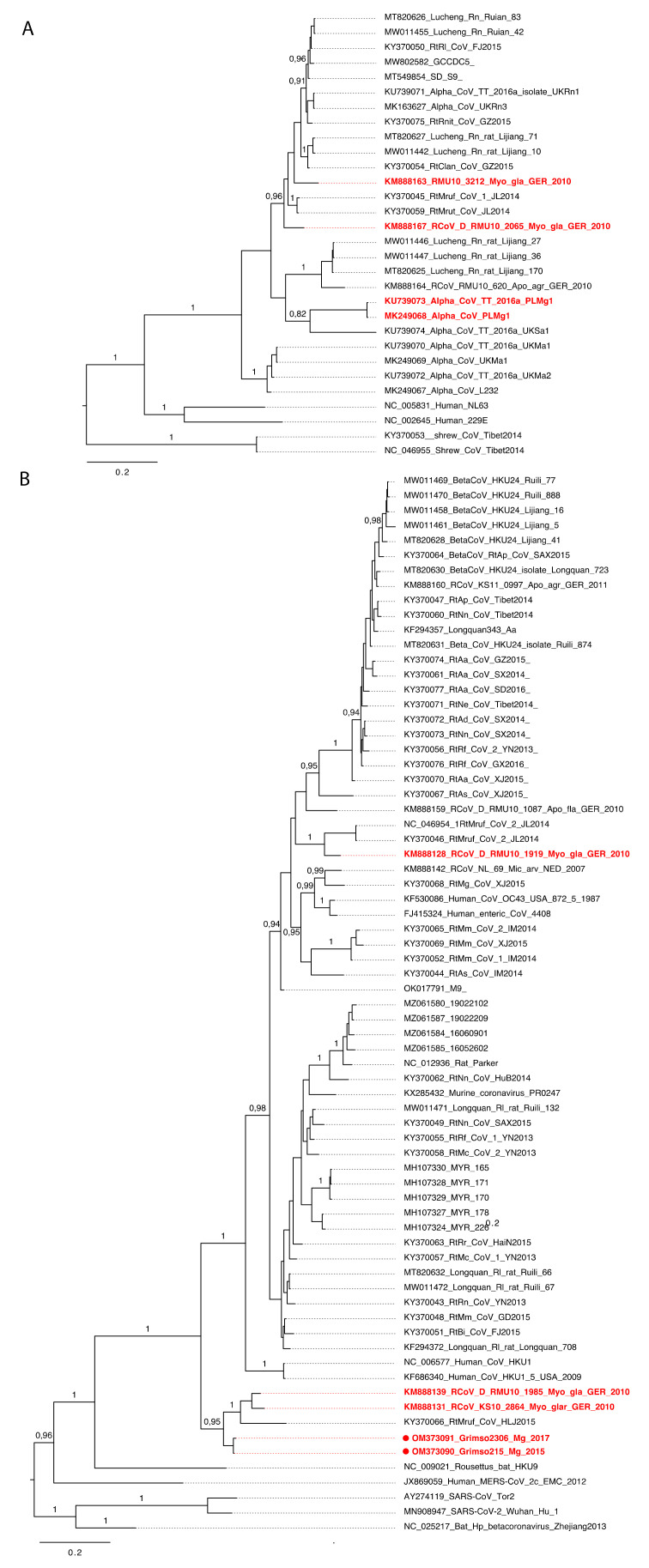
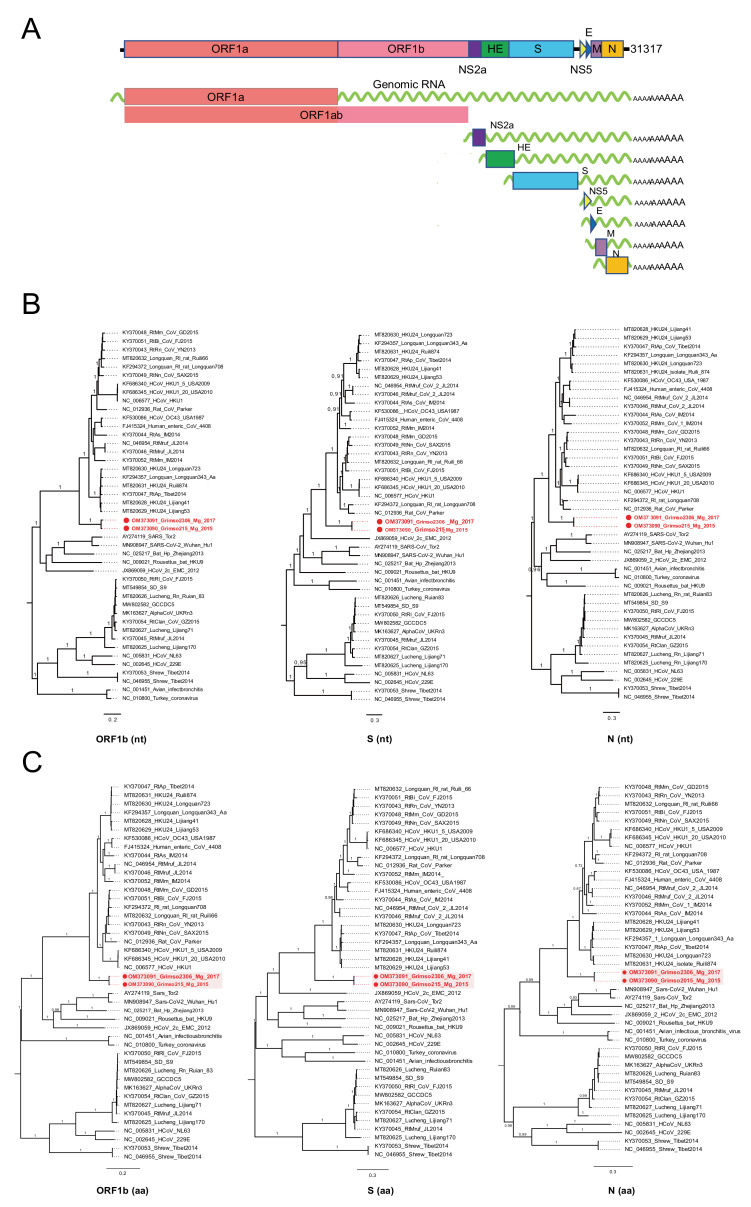
The unprecedented pandemic COVID-19, caused by severe acute respiratory syndrome coronavirus 2 (SARS-CoV-2), with bats as original reservoirs, has once again highlighted the importance of exploring the interface of wildlife diseases and human health. In this study, we identified a novel from bank voles () in Grimsö, Sweden, and this virus is designated as Grimso virus. Repeated detection over three years and an overall prevalence of 3.4% suggest that the virus commonly occurs in bank voles. Furthermore, phylogenetic analyses indicate that the Grimso virus belongs to a highly divergent lineage predominantly associated with bank voles. Given that bank voles are one of the most common rodent species in Sweden and Europe, our findings indicate that Grimso virus might be circulating widely in bank voles and further point out the importance of sentinel surveillance of coronaviruses in wild small mammalian animals, especially in wild rodents.
由严重急性呼吸系统综合症冠状病毒 2(SARS-CoV-2)引起的、史无前例的大流行病 COVID-19,其原始宿主是蝙蝠,这再次强调了探索野生动物疾病与人类健康之间接口的重要性。在这项研究中,我们在瑞典格里姆斯(Grimsö)的林姬鼠中鉴定出一种新型病毒,将其命名为格里姆斯病毒。三年来的反复检测和总体 3.4%的流行率表明,这种病毒在林姬鼠中普遍存在。此外,系统发育分析表明,格里姆斯病毒属于一种高度分化的谱系,主要与林姬鼠有关。鉴于林姬鼠是瑞典和欧洲最常见的啮齿动物物种之一,我们的研究结果表明,格里姆斯病毒可能在林姬鼠中广泛传播,并进一步指出了对野生小型哺乳动物冠状病毒进行哨点监测的重要性,特别是在野生啮齿动物中。