Institute of Diagnostic Virology, Friedrich-Loeffler-Institut, Südufer 10, 17493 Greifswald - Insel Riems, Germany.
Institute of Infectology, Friedrich-Loeffler-Institut, Südufer 10, 17493 Greifswald - Insel Riems, Germany.
Viruses. 2019 Nov 15;11(11):1069. doi: 10.3390/v11111069.
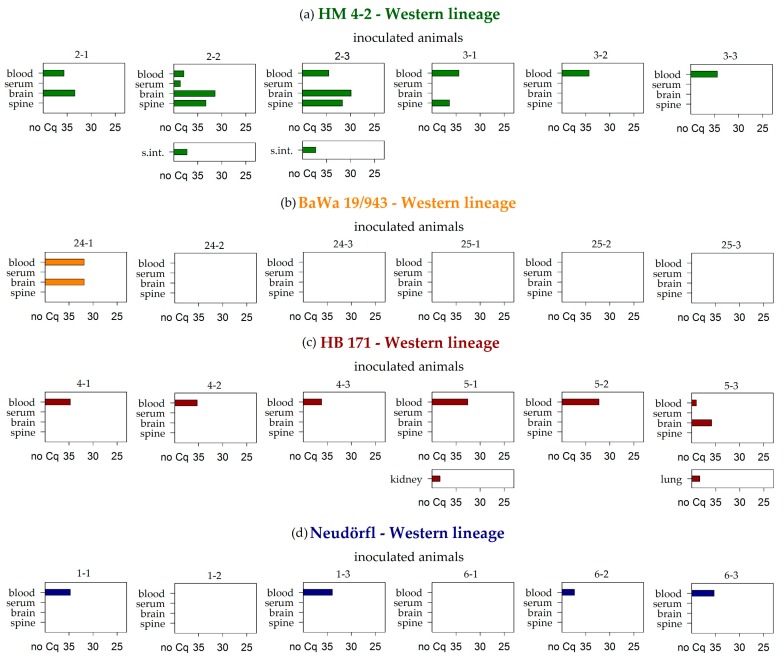
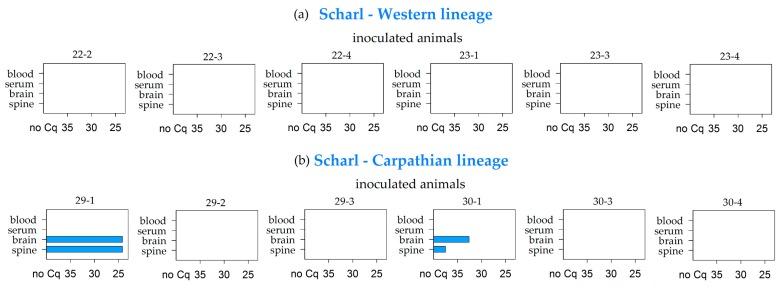
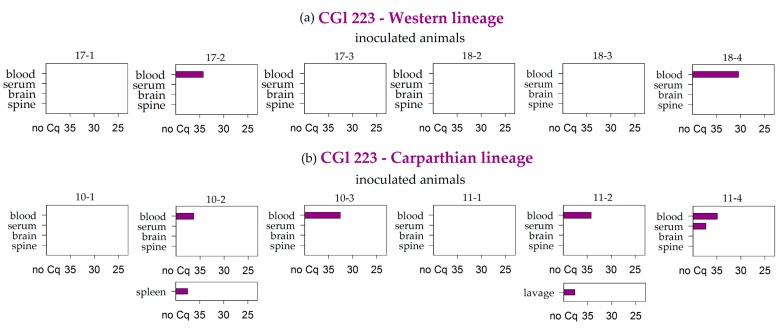
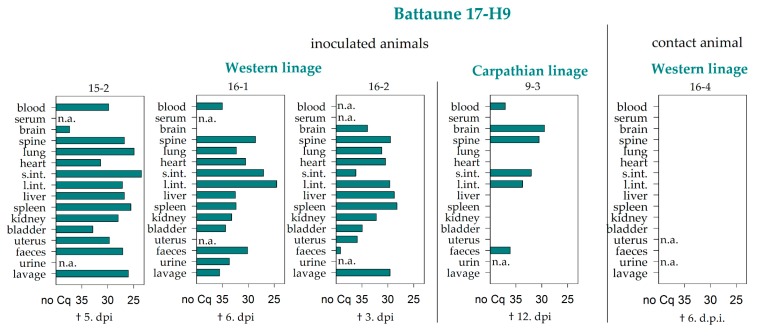
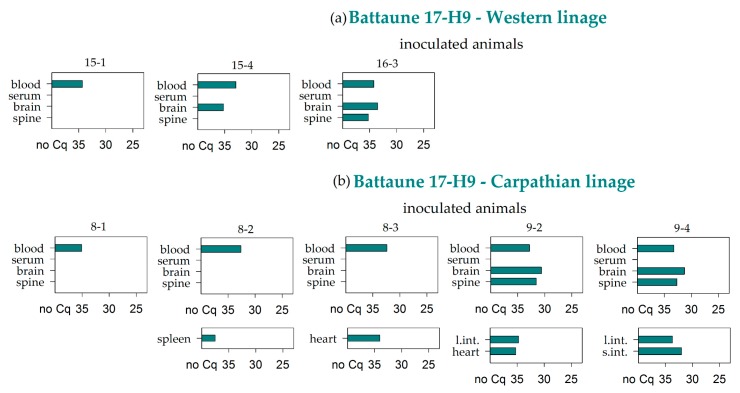
Tick-borne encephalitis is the most important tick-transmitted zoonotic virus infection in Eurasia, causing severe neurological symptoms in humans. The causative agent, the tick-borne encephalitis virus (TBEV), circulates between ticks and a variety of mammalian hosts. To study the interaction between TBEV and one of its suspected reservoir hosts, bank voles of the Western evolutionary lineage were inoculated subcutaneously with either one of eight TBEV strains or the related attenuated Langat virus, and were euthanized after 28 days. In addition, a subset of four strains was characterized in bank voles of the Carpathian linage. Six bank voles were inoculated per strain, and were housed together in groups of three with one uninfected in-contact animal each. Generally, most bank voles did not show any clinical signs over the course of infection. However, one infected bank vole died and three had to be euthanized prematurely, all of which had been inoculated with the identical TBEV strain (Battaune 17-H9, isolated in 2017 in Germany from a bank vole). All inoculated animals seroconverted, while none of the in-contact animals did. Viral RNA was detected via real-time RT-PCR in the whole blood samples of 31 out of 74 inoculated and surviving bank voles. The corresponding serum sample remained PCR-negative in nearly all cases (29/31). In addition, brain and/or spine samples tested positive in 11 cases, mostly correlating with a positive whole blood sample. Our findings suggest a good adaption of TBEV to bank voles, combining in most cases a low virulence phenotype with detectable virus replication and hinting at a reservoir host function of bank voles for TBEV.
蜱传脑炎是欧亚大陆最重要的蜱传动物源性病毒感染,可导致人类严重的神经症状。病原体为蜱传脑炎病毒(TBEV),在蜱和多种哺乳动物宿主之间循环。为了研究 TBEV 与其疑似宿主之一西方进化谱系中的林姬鼠之间的相互作用,用 8 种 TBEV 株或相关减毒的兰格特病毒中的一种通过皮下途径对林姬鼠进行接种,并在 28 天后对其进行安乐死。此外,还对来自喀尔巴阡山脉谱系的林姬鼠中的一组 4 种株系进行了特征描述。每株系接种 6 只林姬鼠,每 3 只一组饲养,每组有 1 只未感染的对照动物。通常,大多数林姬鼠在感染过程中没有出现任何临床症状。然而,有一只感染的林姬鼠死亡,有 3 只不得不提前安乐死,它们都接种了相同的 TBEV 株(Battaune 17-H9,于 2017 年在德国从林姬鼠中分离)。所有接种动物均发生血清转换,而接触动物均未发生血清转换。通过实时 RT-PCR 在 74 只接种和存活的林姬鼠的全血样本中检测到病毒 RNA。在几乎所有情况下,相应的血清样本均为 PCR 阴性(29/31)。此外,在 11 例中检测到脑和/或脊柱样本呈阳性,这主要与全血样本阳性相关。我们的研究结果表明,TBEV 对林姬鼠具有良好的适应性,大多数情况下表现出低毒力表型和可检测到的病毒复制,并暗示林姬鼠可能是 TBEV 的储存宿主。